

Winemaker Notes
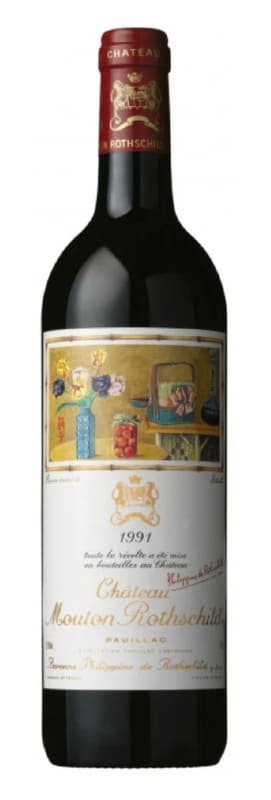
About the Label Artwork
Setsuko was born in Japan in 1942 and was the daughter of an ancient Samurai family. She received a Western education, but also learned the traditional arts of her native country: music, poetry and shimai dancing.
In Tokyo in 1962 she met Balthus, painter of the Turkish Room and many other major works, and very soon afterwards went to join him in Rome, where he was President of the Villa Medici. It was there, after their marriage, that they entertained all the great writers, painters and film-makers of the day. They also bought the medieval castle of Monte Calvello in the countryside outside Rome. In furnishing it, she managed to create a happy marriage of two styles, the old stonework of the castle harmonising perfectly with the Japanese furniture and decor of her childhood.
Since 1977 they have lived in Switzerland, creating a new environment for her work in the Grand Chalet at Rossinière, another place of pure enchantment, where Setsuko's talent finally found its fullest expression. The hostess and decorator became a painter.
Her first patron was her daughter Harumi. For her she drew stories in pictures, created gleaming marionettes, giving new life and colour, not only to her familiar toy animals, but also to the princesses in her fairy stories.
For Balthus she made patchwork cushions, patterned with the silhouettes of strange, oddly human-looking cats.
She is essentially a painter of still-lives, and yet everything in them seems to have a life and movement of its own. Setsuko reinvents each object line by line, transforming it with glowing colour and lustre, becoming in a sense its maker a second time, endowing every-day things with grace and harmony in the tradition of Japanese painting.
The keenness of her eye, the purity of her line, the detail of her drawing, the lack of shadow and near-absence of perspective all evoke a universe of sleek serenity, a world apart, secure in their own space, their own time.
For the Mouton Rothschild 1991 label, Setsuko retells in her own way the timeless story of wine: the brunch of grapes that once was blossom and became fruit, full as an ear of wheat at harvest time; then, in the end, the long-awaited denouement, the wine in the decanter and the pleasure in drinking it.


One of the world’s most classic and popular styles of red wine, Bordeaux-inspired blends have spread from their homeland in France to nearly every corner of the New World. Typically based on either Cabernet Sauvignon or Merlot and supported by Cabernet Franc, Malbec and Petit Verdot, the best of these are densely hued, fragrant, full of fruit and boast a structure that begs for cellar time. Somm Secret—Blends from Bordeaux are generally earthier compared to those from the New World, which tend to be fruit-dominant.

The leader on the Left Bank in number of first growth classified producers within its boundaries, Pauillac has more than any of the other appellations, at three of the five. Chateau Lafite Rothschild and Mouton Rothschild border St. Estephe on its northern end and Chateau Latour is at Pauillac’s southern end, bordering St. Julien.
While the first growths are certainly some of the better producers of the Left Bank, today they often compete with some of the “lower ranked” producers (second, third, fourth, fifth growth) in quality and value. The Left Bank of Bordeaux subscribes to an arguably outdated method of classification that goes back to 1855. The finest chateaux in that year were judged on the basis of reputation and trading price; changes in rank since then have been miniscule at best. Today producers such as Chateau Pontet-Canet, Chateau Grand Puy-Lacoste, Chateau Lynch-Bages, among others (all fifth growth) offer some of the most outstanding wines in all of Bordeaux.
Defining characteristics of fine wines from Pauillac (i.e. Cabernet-based Bordeaux Blends) include inky and juicy blackcurrant, cedar or cigar box and plush or chalky tannins.
Layers of gravel in the Pauillac region are key to its wines’ character and quality. The layers offer excellent drainage in the relatively flat topography of the region allowing water to run off into “jalles” or streams, which subsequently flow off into the Gironde.