


Winemaker Notes
The 1998 Rothschild is deeply colored, the wine is an attractive purple-red. The relatively discreet first nose displays aromas of black fruit, blackcurrant and leather with a mineral cast, while more intense, oaky notes appear on airing, together with a touch of mocha. The clean and well-structured attack displays a lovely, acidulated freshness that heralds high-quality texture. Powerful and smooth tannins support a mid-palate of surprising volume and depth, leading into a powerful and elegant finish.
Blend: 86% Cabernet Sauvignon, 12% Merlot, 2% Cabernet Franc
About the Label Artwork
Born in Oaxaca (Mexico) into a family of Indian origin, Rufino Tamayo (1899-1991) soon discovered the fascinating mysteries and diversity of pre-Columbian art, which was to inspire all his work. His career was divided between Mexico and the Unites States. Also a patron of the arts, in 1974 he donated a number of pre-Columbian artifacts to his home town. Likewise, he offered the Mexican people and outstanding collection of contemporary art, leading to the creation of Rufino Tamayo International Museum in Mexico City in 1981.
Tamayo’s painting, with its abundant richness of color, ranging from pastel shades to the most flamboyant red, displays a radiant inner energy in which Octavio Paz sees a “constellation of forces”. In his works, disturbing, even hallucinatory creatures seem to emanate at once from immemorial tradition and from the artist’s unconscious.
In 1990, Tamayo agreed to create an original artwork for the Mouton Rothschild label. Fate decreed otherwise, but his family wanted the master’s wish to be fulfilled. So to illustrate the 1998 vintage they gave us “Brindis”, a man proposing a toast: a commonplace ritual that Tamayo transforms, under a glowing sun, into striking allegory of raw desire.
Professional Ratings
-
Robert Parker's Wine Advocate
Composed of 86% Cabernet Sauvignon, 12% Merlot and 2% Cabernet Franc, the 1998 Mouton Rothschild is deep garnet-brick in color with lovely crème de cassis, dried roses, hoisin and baking spice notes with underlying notions of dried cherries and mulberries plus touches of wood smoke, incense and forest floor. Medium to full-bodied and packed with rich fruit framed by firm, chewy tannins, it is stacked with complex, evolving flavors and finishes with incredibly long-lasting perfumed notes. According to winemaker Philippe Dhalluin, this needs about three hours of decanting at this stage. I simply love the place this wine is in right now, possessing plenty of mature, tertiary characters yet still sporting bags of fruit. It won’t be fading anytime soon either and should cellar nicely for 20-25+ more years.
-
Jeb Dunnuck
A blend of 86% Cabernet Sauvignon, 12% Merlot, and 2% Cabernet Franc, the 1998 Château Mouton Rothschild comes from a vintage that saw beautiful early season weather but rain in September and October that made the vintage more complicated for the Médoc and Graves region. A more medium to full-bodied effort, it has terrific complexity in its red and black currant fruits as well as smoked tobacco, loamy earth, spice box, and chocolate. Balanced, elegant, and silky on the palate, its oak is perfectly integrated, it has fine tannins, and it’s smack in the middle of its prime drinking window.
-
Decanter
In his Wine Buyer’s Guide to France, Robert Parker felt this was the finest Mouton since 1986. At Vivat Bacchus, this was the most variable wine of the tasting, with one bottled corked, two distinctly edgy and a little green. The best bottle (described here) was much better. Deep and intensely purple in colour, there is still plenty of concentration and potential for this Mouton to blossom further. Ripe red/black cherry aromas combined with warm, spicy oak. The issues at harvest time are most evident on the palate with slightly hard, furry tannins. Harvested 28 September to 6 October. 86% Cabernet Sauvignon, 12% Merlot, 2% Cabernet Franc. 57% of production used for the Grand Vin.
-
James Suckling
This is spicy and peppery with dried fruits and currants. It's full and velvety on the palate, showing pretty berries and toasted coffee beans. Long, long finish.
-
Wine Spectator
Blackberry and violets on the nose, with hints of roses. Sweet tobacco too. Full-bodied, with a solid core of fruit and round tannins. A little tight and reserved now. Give it time.



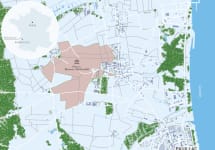
A First Classified Growth, Château Mouton Rothschild spans 82 hectares (202 acres) of vines at Pauillac in the Médoc, planted with the classic varieties of the region: Cabernet Sauvignon (79%), Merlot (17%), Cabernet Franc (3 %), Petit Verdot (1 %). The average age of the vines is 50 years.
The estate benefits from exceptionally favourable natural conditions, in the quality of the soil, the position of its vines and their exposure to the sun. Combining respect for tradition with the latest technology, it receives meticulous attention from grape to bottle. The wine is matured in new French oak barrels.
Le Petit Mouton de Mouton Rothschild is the second wine of Château Mouton Rothschild.
The estate also comprises 6 hectares (15 acres) of sandy, gravelly soil planted with Sauvignon Blanc (51%), Semillon (40%) and Sauvignon Gris (9%), used to make its white wine, Aile d’Argent.
Brought to the pinnacle by two exceptional people, Baron Philippe de Rothschild (1902-1988) then his daughter Baroness Philippine (1933-2014), its destiny has now been taken in hand by her three children: Camille and Philippe Sereys de Rothschild, and Julien de Beaumarchais de Rothschild. True to their grandfather’s and mother’s work, all three are committed, with the same enthusiasm and determination, to perpetuating Baron Philippe’s dictum: “Live for the vine”. Almost a command, it means being there for the vineyard in good times and in hardship, serving it with skill and honouring it with art.
Château Mouton Rothschild is a place of art and beauty, famous for the spectacular vista of its great barrel hall, its remarkable vat room and its Museum of Wine in Art. Every year since 1945, the Château Mouton Rothschild label has been illustrated with an original artwork by a great contemporary artist. Dalí, César, Miró, Chagall, Warhol, Soulages, Bacon, Balthus, Tàpies, Koons and Doig are only some of the artists featured in a fascinating collection to which a new work is added each year and which makes up the Paintings for the Labels exhibition.

One of the world’s most classic and popular styles of red wine, Bordeaux-inspired blends have spread from their homeland in France to nearly every corner of the New World. Typically based on either Cabernet Sauvignon or Merlot and supported by Cabernet Franc, Malbec and Petit Verdot, the best of these are densely hued, fragrant, full of fruit and boast a structure that begs for cellar time. Somm Secret—Blends from Bordeaux are generally earthier compared to those from the New World, which tend to be fruit-dominant.

The leader on the Left Bank in number of first growth classified producers within its boundaries, Pauillac has more than any of the other appellations, at three of the five. Chateau Lafite Rothschild and Mouton Rothschild border St. Estephe on its northern end and Chateau Latour is at Pauillac’s southern end, bordering St. Julien.
While the first growths are certainly some of the better producers of the Left Bank, today they often compete with some of the “lower ranked” producers (second, third, fourth, fifth growth) in quality and value. The Left Bank of Bordeaux subscribes to an arguably outdated method of classification that goes back to 1855. The finest chateaux in that year were judged on the basis of reputation and trading price; changes in rank since then have been miniscule at best. Today producers such as Chateau Pontet-Canet, Chateau Grand Puy-Lacoste, Chateau Lynch-Bages, among others (all fifth growth) offer some of the most outstanding wines in all of Bordeaux.
Defining characteristics of fine wines from Pauillac (i.e. Cabernet-based Bordeaux Blends) include inky and juicy blackcurrant, cedar or cigar box and plush or chalky tannins.
Layers of gravel in the Pauillac region are key to its wines’ character and quality. The layers offer excellent drainage in the relatively flat topography of the region allowing water to run off into “jalles” or streams, which subsequently flow off into the Gironde.