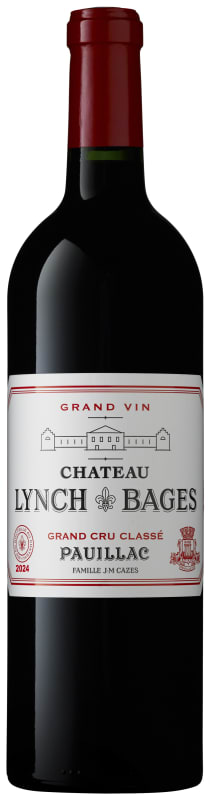


Winemaker Notes
Château Lynch-Bages 2024 displays a deep garnet hue and an expressive bouquet combining black fruits with menthol and spicy notes. The palate is round and silky, supported by a vibrant freshness. The tannins are smooth and well-balanced, leading to a long finish that highlights the elegance and purity of this vintage.
Blend: 70% Cabernet Sauvignon, 24% Merlot, 3% Cabernet Franc, 3% Petit Verdot
This wine does not include the blanket 10% tariff imposed in April 2025. When the wines are shippable in fall of 2027, customers will have the option to pay any tariff in place at the time or to keep their wines stored in a temperature-controlled facility free of charge in France.
Professional Ratings
-
Jeb Dunnuck
Based on 70% Cabernet Sauvignon, 24% Merlot, and 3% each of Cabernet Franc and Petit Verdot, the 2024 Château Lynch-Bages will spend 18 months in 75% new oak. It reached 13% alcohol with a pH of 3.67. This is a rich, powerful Pauillac, just as you'd expect from this address, with a dense purple hue and rocking aromatics of smoky currants, cassis, violets, lead pencil, and spicy wood. Medium to full-bodied, it has beautiful purity, ripe tannins, and a great finish. This is a classic, impeccably balanced Lynch-Bages that will be long-lived.
Barrel Sample: 93-95 -
James Suckling
A brooding nose, showing pulpy blackberries, ripe mulberries, peppercorns and violet extract. The signature Lynch-Bages tannin structure with good concentration of fruit helps deliver an almost full-bodied, structured red and a long, fruity finish. Wait and see.
Barrel Sample: 94-95 -
Vinous
The 2024 Lynch-Bages is packed. Cedar, scorched earth, licorice, incense and pipe tobacco weave through a core of dark, sepia-toned fruit. I especially admire the long, polished finish and overall balance here. The 2024 is a virile Lynch Bages with a bright future. Tasted two times. –Antonio Galloni
Barrel Sample: 93-95 -
Decanter
Floral and herbal on the nose with dark bramble fruit. Very Cabernet. Milk chocolate and vanilla too. Charming and relaxed with lovely tannin finesse. There’s ripeness and richness, this is silky with some fleshiness that adds a layer of texture but overall feels gentle and calm. Some bite at the end, wet stone and liquorice but actually this feels very complete. I like this expression, really not trying too hard. Sophisticated. Balanced. Nothing sticks out and although there’s tension and a sense of high, lean acidity the tannins do well to balance it out. This will be very enjoyable. Accomplished winemaking. 3% Petit Verdot completes the blend. Ageing 75% new oak for 18 months in French oak barrels.
Barrel Sample: 94
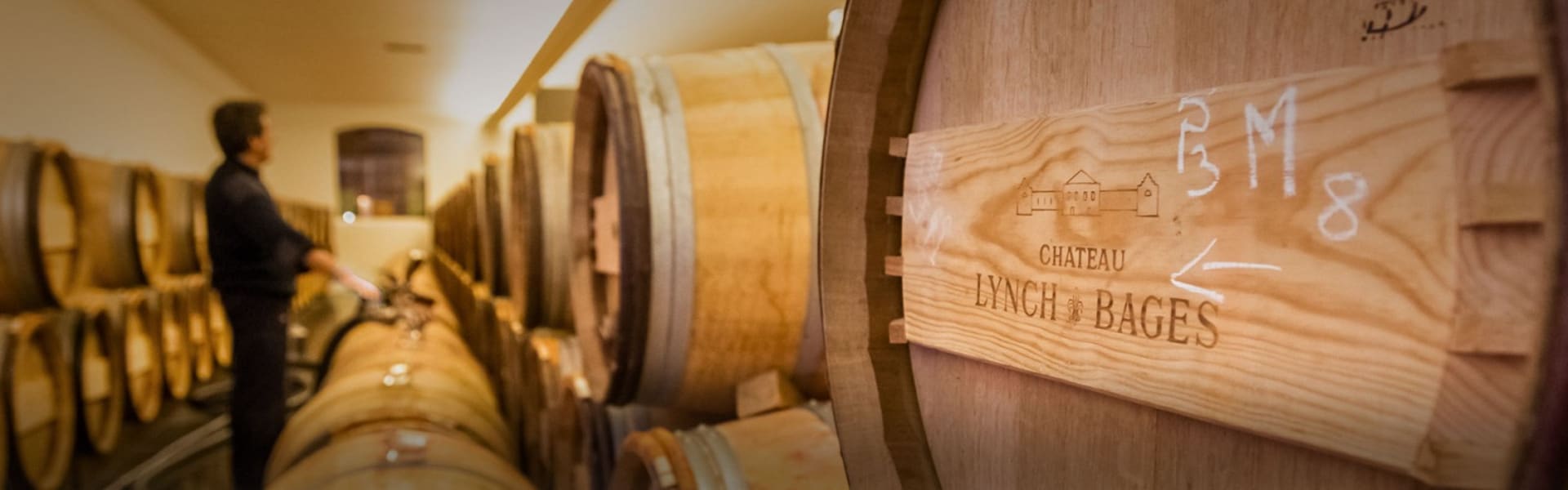


The grapes are all hand picked and then carefully sorted before crushing. A very strict selection is made prior to blending and the wine is traditionally aged in oak barrels before bottling.

One of the world’s most classic and popular styles of red wine, Bordeaux-inspired blends have spread from their homeland in France to nearly every corner of the New World. Typically based on either Cabernet Sauvignon or Merlot and supported by Cabernet Franc, Malbec and Petit Verdot, the best of these are densely hued, fragrant, full of fruit and boast a structure that begs for cellar time. Somm Secret—Blends from Bordeaux are generally earthier compared to those from the New World, which tend to be fruit-dominant.

The leader on the Left Bank in number of first growth classified producers within its boundaries, Pauillac has more than any of the other appellations, at three of the five. Chateau Lafite Rothschild and Mouton Rothschild border St. Estephe on its northern end and Chateau Latour is at Pauillac’s southern end, bordering St. Julien.
While the first growths are certainly some of the better producers of the Left Bank, today they often compete with some of the “lower ranked” producers (second, third, fourth, fifth growth) in quality and value. The Left Bank of Bordeaux subscribes to an arguably outdated method of classification that goes back to 1855. The finest chateaux in that year were judged on the basis of reputation and trading price; changes in rank since then have been miniscule at best. Today producers such as Chateau Pontet-Canet, Chateau Grand Puy-Lacoste, Chateau Lynch-Bages, among others (all fifth growth) offer some of the most outstanding wines in all of Bordeaux.
Defining characteristics of fine wines from Pauillac (i.e. Cabernet-based Bordeaux Blends) include inky and juicy blackcurrant, cedar or cigar box and plush or chalky tannins.
Layers of gravel in the Pauillac region are key to its wines’ character and quality. The layers offer excellent drainage in the relatively flat topography of the region allowing water to run off into “jalles” or streams, which subsequently flow off into the Gironde.