


Winemaker Notes
#3 Wine Enthusiast Top 100 of 2008
The potential of the vintage was already clear, even before the first fermentations were finished. Lynch-Bages 2005 was aged in 80% new oak which is the most they had ever used, feeling it necessary to cloak the exceptional fruit and powerful tannins.
Blend: 72% Cabernet Sauvignon, 15% Merlot, 12% Cabernet Franc, 1% Petit Verdot
Professional Ratings
-
James Suckling
A meaty and decadent Lynch with very ripe currant aromas on the nose. Full body, velvety-textured tannins and a powerful finish. It shows so much structure and fruit yet remains polished and focused.
-
Wine Enthusiast
Classic Lynch-Bages with just a bit of extra power and richness. While the tannins are structured, it is the velvety fruit that rolls around the mouth that is the most dominant character. It is coming together into a wine that will be big and dense, but never over the top.
-
Wine & Spirits
There's a relaxed feel to this wine. Cazes's team can dress Lynch-Bages in the black-tie formality of a first growth, but the wine is still lovely-a touch of gaminess makes it friendly rather than ponderous. There's something ethereal about its tannins, like a chocolate truffle melting in the mouth. (Daniel Llose used 80 percent new oak for this vintage; the yields were short so there were more new barrels to go around, and at a tannic index of 82, the wine could handle it). Pure black cherry flavor saturates the wine with freshness; the complexity is intriguing and silken rather than aggressive. This should be readily accessible at ten to 20 years of age and should thrive for years after.
-
Wine Spectator
Textbook, with mouthfilling and slightly gutsy black currant, fig and blackberry fruit flavors bound together by singed cedar, iron and tobacco notes. Features a tug of loam followed by a second wave of fruit through the finish. This is just starting to stretch out. -- Blind '01/'03/'05 Bordeaux retrospective (December 2017). Best from 2020 through 2040.
-
Decanter
Almost forward but still young; spicy cassis lifts and lengthens its rich dark berry flavours. One of the best Lynch-Bages ever.
-
Jeb Dunnuck
The 2005 Château Lynch-Bages is terrific, with a ripe, yet also surprisingly elegant profile in its medium to full-bodied aromas and flavors of blackcurrants, smoked tobacco, graphite, and leather. A blend of 72% Cabernet Sauvignon, 15% Merlot, 12% Cabernet Franc, and the rest Petit Verdot, it has ripe, nicely integrated tannins, good balance, and is already surprisingly accessible.
-
Vinous
(72% cabernet sauvignon, 15% merlot, 12% cabernet franc and 1% petit verdot; 3.67 pH; 70 IPT; 13.4% alcohol): Deep ruby. Delicate aromas of blackcurrant, mocha and graphite are lifted by minerals and violet. Enters pure, dense and round, then shows lively, precise flavors of black fruits, dried nuts, ink and minerals. This has greater volume and flesh than the 2006, along with a brooding, sneaky concentration and a very long, supple finish. The best Lynch-Bages in years, this should prove to be a great wine in time, and a huge success for this estate.
Rating: 93+ -
Robert Parker's Wine Advocate
As for the 2005 Lynch-Bages, it is a sexy, surprisingly soft and accessible style of wine, with a deep ruby/purple color, loads of crème de cassis, cedar wood and forest floor notes, medium to full body, ripe tannin and a long, fleshy finish. Drink it over the next 15+ years.
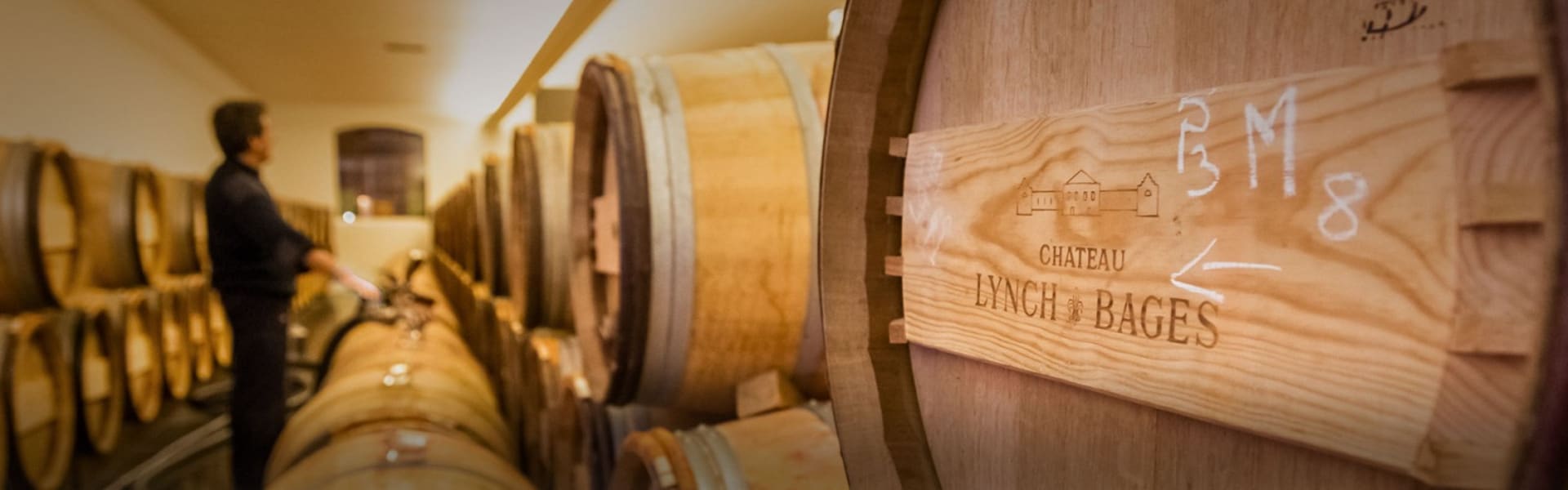


The grapes are all hand picked and then carefully sorted before crushing. A very strict selection is made prior to blending and the wine is traditionally aged in oak barrels before bottling.

One of the world’s most classic and popular styles of red wine, Bordeaux-inspired blends have spread from their homeland in France to nearly every corner of the New World. Typically based on either Cabernet Sauvignon or Merlot and supported by Cabernet Franc, Malbec and Petit Verdot, the best of these are densely hued, fragrant, full of fruit and boast a structure that begs for cellar time. Somm Secret—Blends from Bordeaux are generally earthier compared to those from the New World, which tend to be fruit-dominant.

The leader on the Left Bank in number of first growth classified producers within its boundaries, Pauillac has more than any of the other appellations, at three of the five. Chateau Lafite Rothschild and Mouton Rothschild border St. Estephe on its northern end and Chateau Latour is at Pauillac’s southern end, bordering St. Julien.
While the first growths are certainly some of the better producers of the Left Bank, today they often compete with some of the “lower ranked” producers (second, third, fourth, fifth growth) in quality and value. The Left Bank of Bordeaux subscribes to an arguably outdated method of classification that goes back to 1855. The finest chateaux in that year were judged on the basis of reputation and trading price; changes in rank since then have been miniscule at best. Today producers such as Chateau Pontet-Canet, Chateau Grand Puy-Lacoste, Chateau Lynch-Bages, among others (all fifth growth) offer some of the most outstanding wines in all of Bordeaux.
Defining characteristics of fine wines from Pauillac (i.e. Cabernet-based Bordeaux Blends) include inky and juicy blackcurrant, cedar or cigar box and plush or chalky tannins.
Layers of gravel in the Pauillac region are key to its wines’ character and quality. The layers offer excellent drainage in the relatively flat topography of the region allowing water to run off into “jalles” or streams, which subsequently flow off into the Gironde.