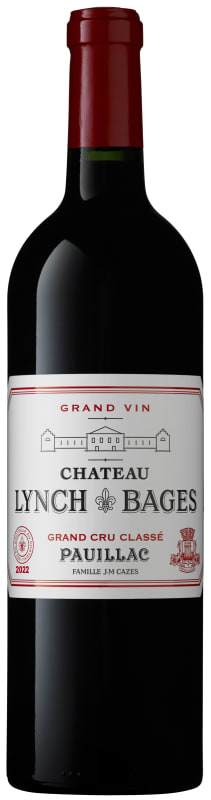


Winemaker Notes
#94 James Suckling Top 100 Wines of the World 2025
Blend: 66% Cabernet sauvignon, 28% Merlot, 3% Cabernet Franc, 3% Petit Verdot
Professional Ratings
-
Jeb Dunnuck
The 2022 Château Lynch-Bages is based on 66% Cabernet Sauvignon, 28% Merlot, and 3% each of Cabernet Franc and Petit Verdot. Its inky purple hue is followed by a sensational Pauillac that has a blockbuster (and classic Lynch-Bages) style in its darker currants, smoke tobacco, lead pencil, and crushed stone-driven aromatics. These carry to a full-bodied, powerful, massively concentrated 2022 that has a dense, layered mid-palate, velvety tannins, flawless balance, and a rare mix of power and elegance. This is a château that’s clearly firing on all cylinders,
-
Wilfred Wong of Wine.com
For decades, Lynch Bages has been one of my favorite wines from the Médoc. The 2022 vintage is one of the most satisfying wines I have tasted in many years. This wine showcases aromas and flavors of alluring ripe berries, aroma spices, and the perfect amount of oak. Imagine a generous 6-ounce serving with a rosemary and garlic-infused roast leg of lamb. (Tasted: January 23, 2025, San Francisco, CA)
-
James Suckling
A terrific Lynch from a hot vintage with blackcurrants, mint, dried lavender, graphite and thyme on the nose and palate. Medium- to full-bodied, it shows fantastic tannins with a lovely texture that reminds me of cashmere, becoming slightly chewy in the finish. Give this four to five years of bottle age. Try after 2028. anc.
-
Decanter
Blackcurrant and bramble fruit with savoury herbal nuances on the nose, this smells rich and potent. Tense and focussed, compact from the get go, present tannins give grip and hold. This is definitely not out to charm, more serious, stern and focussed but there's such overall precision. This is in high definition, supremely controlled and well worked with mouthfilling ripe tannins. I like the chewy aspect and there’s balancing acidity, hidden now by the density, that will sustain the wine for decades to come. Floral notes and some minerality come through giving the nuance so it’s not all heft, but there’s clear muscle on show. A long finish gives the sense of structure and style. An impressive wine.
Barrel Sample: 97 -
Wine Spectator
There's an iron spine buried in this red, providing a sleek grounding wire for the core of succulent blackberry and black currant preserves. Singed alder, chestnut leaf and ink notes fill in along the way. Ends with authority thanks to the precise, fine-grained finish, which sports a regal mouthfeel. Offers exactly what this vintage is all about -- ripeness and freshness. Cabernet Sauvignon, Merlot, Petit Verdot and Cabernet Franc.
-
Robert Parker's Wine Advocate
The 2022 Lynch-Bages is one of the most muscular, chunky wines of the vintage in the Médoc, offering up aromas of dark berries, cherry preserve, pencil shavings and creamy new oak, followed by a full-bodied, rich and extracted palate that's dense and blocky. While Lynch-Bages always seems to come together with time, the 2022 is certainly going to require some patience. Rating:-94+
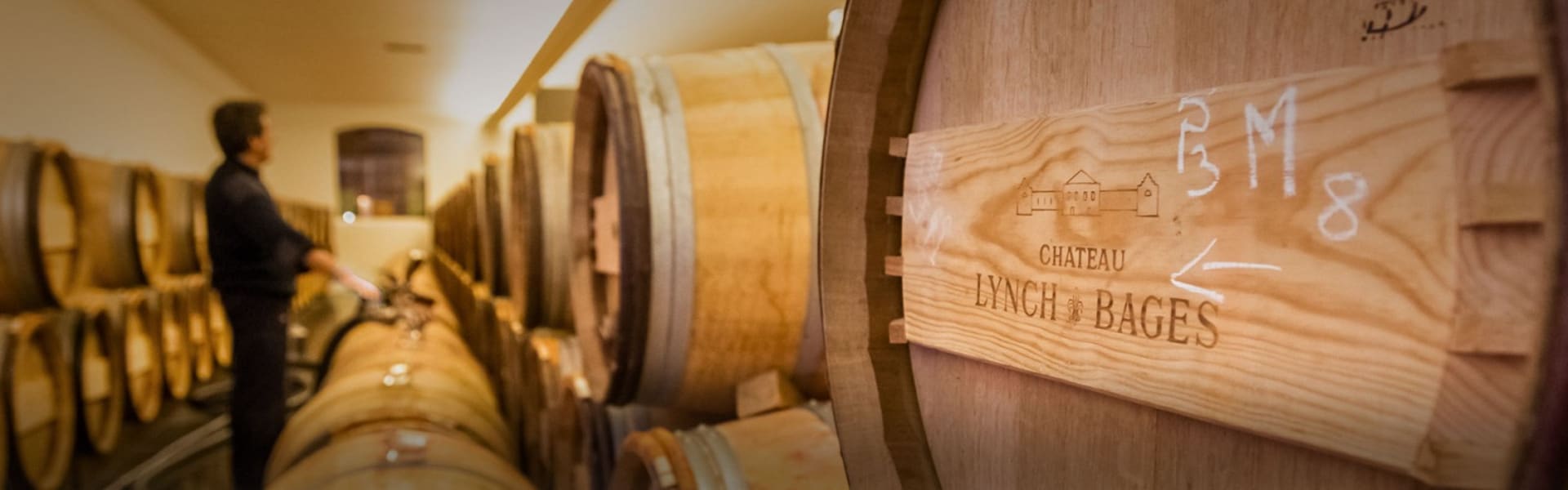


The grapes are all hand picked and then carefully sorted before crushing. A very strict selection is made prior to blending and the wine is traditionally aged in oak barrels before bottling.

One of the world’s most classic and popular styles of red wine, Bordeaux-inspired blends have spread from their homeland in France to nearly every corner of the New World. Typically based on either Cabernet Sauvignon or Merlot and supported by Cabernet Franc, Malbec and Petit Verdot, the best of these are densely hued, fragrant, full of fruit and boast a structure that begs for cellar time. Somm Secret—Blends from Bordeaux are generally earthier compared to those from the New World, which tend to be fruit-dominant.

The leader on the Left Bank in number of first growth classified producers within its boundaries, Pauillac has more than any of the other appellations, at three of the five. Chateau Lafite Rothschild and Mouton Rothschild border St. Estephe on its northern end and Chateau Latour is at Pauillac’s southern end, bordering St. Julien.
While the first growths are certainly some of the better producers of the Left Bank, today they often compete with some of the “lower ranked” producers (second, third, fourth, fifth growth) in quality and value. The Left Bank of Bordeaux subscribes to an arguably outdated method of classification that goes back to 1855. The finest chateaux in that year were judged on the basis of reputation and trading price; changes in rank since then have been miniscule at best. Today producers such as Chateau Pontet-Canet, Chateau Grand Puy-Lacoste, Chateau Lynch-Bages, among others (all fifth growth) offer some of the most outstanding wines in all of Bordeaux.
Defining characteristics of fine wines from Pauillac (i.e. Cabernet-based Bordeaux Blends) include inky and juicy blackcurrant, cedar or cigar box and plush or chalky tannins.
Layers of gravel in the Pauillac region are key to its wines’ character and quality. The layers offer excellent drainage in the relatively flat topography of the region allowing water to run off into “jalles” or streams, which subsequently flow off into the Gironde.