


Winemaker Notes
Lynch-Bages 2015 has a brilliant, deep color with purple hues. Its nose clearly expresses aromas of cassis and dark fruit, mixed with the empyreumatic notes that come with ageing. It has a straightforward attack and a voluminous yet supple mid palate. The wine has a marked but silky tannic structure, and a persistent finish illustrative of a particularly ripe vintage.
Blend: 70% Cabernet Sauvignon, 24% Merlot, 6% Cabernet Franc & Petit Verdot
Professional Ratings
-
Vinous
One of the finest Pauillacs of 2015, Lynch-Bages is rich, racy and voluptuous. A rush of dark red and purplish stone fruit, mint, new leather, spice and blood orange give the 2015 a very decidedly exotic character that is impossible to miss. Raspberry jam, mocha, new leather and expressive floral notes appear with time in the glass, rounding things out nicely. Even though the 2015 is quite forward and open at this stage, the wine has plenty of stuffing as well as the underlying structure to support many years of exceptional drinking. This is a stellar showing for Lynch-Bages. - Antonio Galloni
-
Wine Enthusiast
This vintage was ideal for the rich style that this estate has made its own. This wine is full bodied and ripe with black-currant and dark berry fruits. The tannins fall into the cushioned wine with ease and richness. Of course, the wine should be aged, so wait until 2026.
Cellar Selection -
James Suckling
Brambly and attractive ripe blackberries and red-plum aromas with some floral accents, too. The palate has a very plush, polished and regal shape as tannins frame up a core of ripe black fruit. Succulent, impressive finish.
-
Decanter
Beguiling fragrance of cherries and blackcurrants on the nose. Some 2015s are starting to open up but this is still on the slightly shy side, it's supple and sleek, direct and still quite lean and focussed - yet showing supreme elegance. I love the purity and the clear minerality on show with a juicy acidity, it just feels as if it hasn't yet hit its stride and I get the sense that the best is still to come. One to watch.
-
Jeb Dunnuck
The inky colored 2015 Château Lynch-Bages is a seriously impressive Pauillac that’s up with the crème de la crème of the appellation in 2015. Notes of ripe blackcurrants, caramelized cherries, tobacco leaf and a kiss of lead pencil all emerge from this textbook Pauillac that has medium to full-bodied richness, notable concentration, and building structure. Made from 70% Cabernet Sauvignon, 24% Merlot and the rest Cabernet Franc and Petit Verdot that saw 75% new barrels, it needs 5-7 years of cellaring and will be one of the longer-lived wines from the Médoc.
Rating: 94+ -
Wine Spectator
This has an ample core of plum, fig and blackberry compote flavors, underlined liberally with graphite and smoldering tobacco notes. Fleshy and focused, with ample grip through the juniper- and tar-accented finish. Well-built. Best from 2023 through 2038.
-
Wilfred Wong of Wine.com
Always on my radar screen as wines to buy, I have always found this 5th Growth to be under-classified. While many in the wine trade place this wine in the 2nd Growth, I see it comfortably in the 3rd Growth arena, and indeed this wine has sometimes overtaken some of the highly vaunted 1st Growths. The 2015 Château Lynch Bages is handsome in so many ways. This wine exhibits beautifully attired black currants and a shading of oak. Enjoy its perfectly claret disposition with a juicy ribeye. (Tasted: January 25, 2018, San Francisco, CA)
-
Robert Parker's Wine Advocate
Medium to deep garnet-purple in color, the 2015 Lynch Bages offers up crushed black berries, black cherries and dried herbs with an earthy undercurrent. The medium-bodied palate is firm and taut with lively fruit and a chewy finish.
Rating: 92+
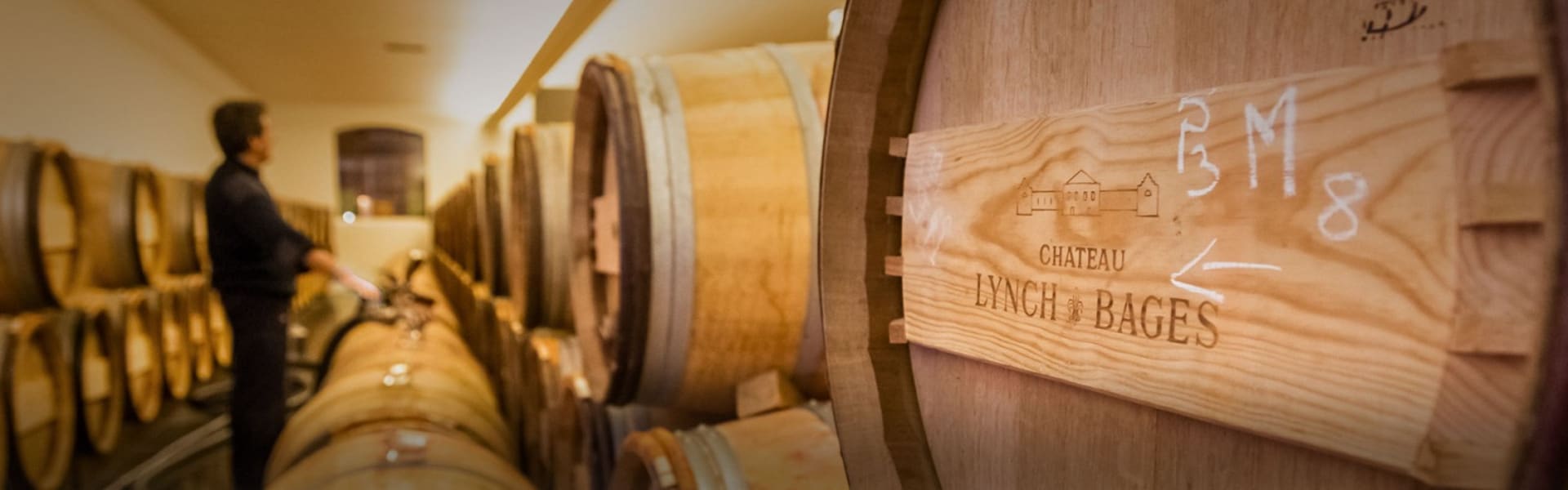


The grapes are all hand picked and then carefully sorted before crushing. A very strict selection is made prior to blending and the wine is traditionally aged in oak barrels before bottling.

One of the world’s most classic and popular styles of red wine, Bordeaux-inspired blends have spread from their homeland in France to nearly every corner of the New World. Typically based on either Cabernet Sauvignon or Merlot and supported by Cabernet Franc, Malbec and Petit Verdot, the best of these are densely hued, fragrant, full of fruit and boast a structure that begs for cellar time. Somm Secret—Blends from Bordeaux are generally earthier compared to those from the New World, which tend to be fruit-dominant.

The leader on the Left Bank in number of first growth classified producers within its boundaries, Pauillac has more than any of the other appellations, at three of the five. Chateau Lafite Rothschild and Mouton Rothschild border St. Estephe on its northern end and Chateau Latour is at Pauillac’s southern end, bordering St. Julien.
While the first growths are certainly some of the better producers of the Left Bank, today they often compete with some of the “lower ranked” producers (second, third, fourth, fifth growth) in quality and value. The Left Bank of Bordeaux subscribes to an arguably outdated method of classification that goes back to 1855. The finest chateaux in that year were judged on the basis of reputation and trading price; changes in rank since then have been miniscule at best. Today producers such as Chateau Pontet-Canet, Chateau Grand Puy-Lacoste, Chateau Lynch-Bages, among others (all fifth growth) offer some of the most outstanding wines in all of Bordeaux.
Defining characteristics of fine wines from Pauillac (i.e. Cabernet-based Bordeaux Blends) include inky and juicy blackcurrant, cedar or cigar box and plush or chalky tannins.
Layers of gravel in the Pauillac region are key to its wines’ character and quality. The layers offer excellent drainage in the relatively flat topography of the region allowing water to run off into “jalles” or streams, which subsequently flow off into the Gironde.