
Winemaker Notes
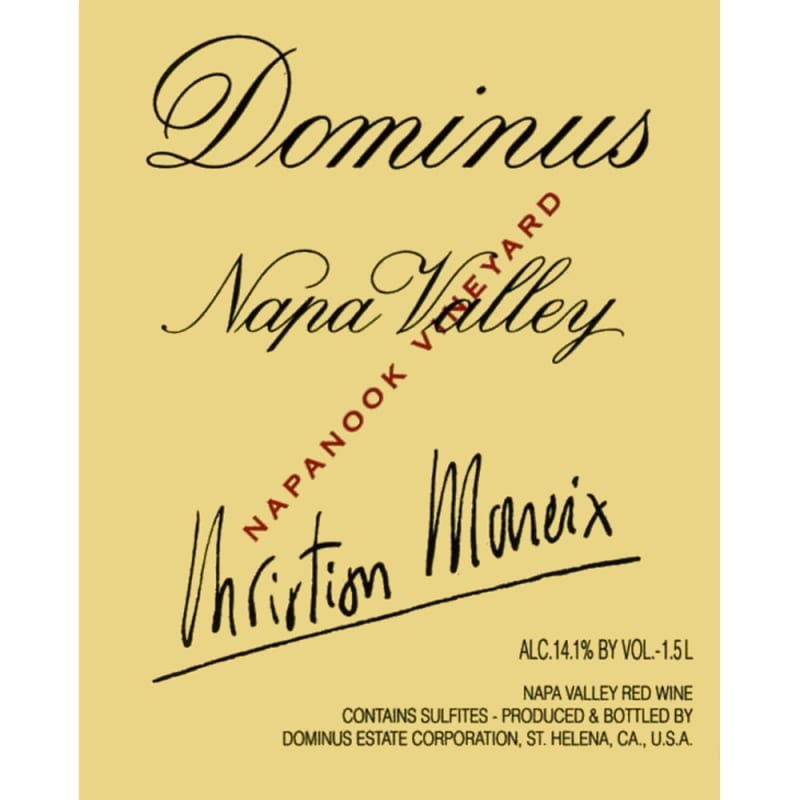
The blend includes 82% Cabernet Sauvignon, 10% Cabernet Franc, 4% Petite Verdot and 4% Merlot.
Professional Ratings
-
Robert Parker's Wine Advocate
The 1996 Dominus, a blend of 82% Cabernet Sauvignon, 10% Cabernet Franc, 4% Merlot, and 4% Petit Verdot, tips the scales at 14.2% alcohol. Although this offering lacks the power, intensity, and compelling characteristics of the 1991 and 1994, it is not far off the pace of those two monumental wines. A super nose of roasted coffee, chocolate, dried herbs, black fruits and kirsch is both intense and persuasive. The wine displays terrific richness, medium to full body, low acidity, a succulent, opulent texture, and superb purity. This beautifully made 1996 is one of the few wines that has successfully tamed the vintage's elevated tannin level. It should be relatively drinkable upon its release, yet evolve nicely for two decades. Impressive!



In the late 1960s, while attending the University of California at Davis, Christian Moueix fell in love with the Napa Valley and its wines. Son of Jean-Pierre Moueix, the famed wine merchant and producer from Libourne, France, Moueix returned home in 1970 to manage the family vineyards, including Chateaux Petrus, La Fleur-Petrus, Trotanoy in Pomerol and Magdelaine in Saint Emilion.
His love of Napa Valley lingered and in 1981, he discovered the historic Napanook vineyard, a 124-acre site west of Yountville that had been the source of fruit for some of the finest Napa Valley wines of the 1940s and 1950s. In 1982, Moueix entered into a partnership to develop the vineyard and, in 1995, became its sole owner. He chose the name 'Dominus' or 'Lord of the Estate' in Latin to underscore his longstanding commitment to stewardship of the land.

Undoubtedly proving its merit over and over, Napa Valley is a now a leading force in the world of prestigious red wine regions. Though Cabernet Sauvignon dominates Napa Valley, other red varieties certainly thrive here. Important but often overlooked include Merlot and other Bordeaux varieties well-regarded on their own as well as for their blending capacities. Very old vine Zinfandel represents an important historical stronghold for the region and Pinot noir is produced in the cooler southern parts, close to the San Pablo Bay.
Perfectly situated running north to south, the valley acts as a corridor, pulling cool, moist air up from the San Pablo Bay in the evenings during the hot days of the growing season, which leads to even and slow grape ripening. Furthermore the valley claims over 100 soil variations including layers of volcanic, gravel, sand and silt—a combination excellent for world-class red wine production.