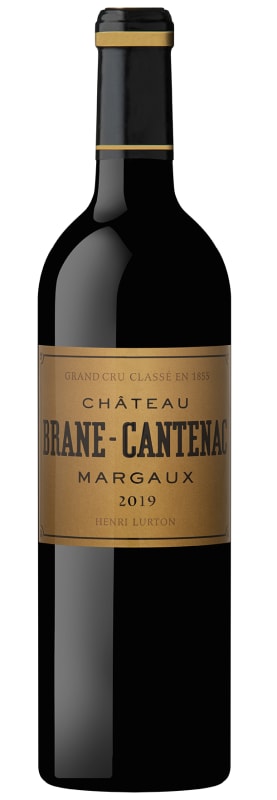


Winemaker Notes
Blend: 70% Cabernet Sauvignon, 26% Merlot, 2% Cabernet Franc, 1% Petit Verdot, 1% Carmenere
The Barrel Sample for this wine is above 14% ABV.
Professional Ratings
-
Decanter
A thoroughly moreish and high-quality Brane Cantenac, this is silky and seductive with impressive extraction of the tannins giving backbone and support to brambled and cassis fruits. Plenty of crushed stone and spice to add a gourmet edge alongside the just-smoked oak. Extremely high quality and one of the best Branes I've tasted at this stage. 3% of Petit Verdot and Cabernet Franc complete the blend. For the first time, all of the plots for this wine come from the plateau de Brane just in front of the château, a reflection of how well this terroir withstood the heat of the summer.
Barrel Sample: 96 -
Jeb Dunnuck
Red and black fruits, spicy wood, graphite, leafy tobacco, and underbrush all emerge from the 2019 Château Brane-Cantenac, a beautiful, charming, and complete effort from this estate. Based on 70% Cabernet Sauvignon, 26% Merlot, 2% Cabernet Franc, and the rest Carménère and Petit Verdot, it was brought up 18 months in 100% new French oak and hit 14% alcohol with a pH of 3.72. Medium to full-bodied, it has a rounded, layered mouthfeel, ripe tannins, and outstanding length. It has the charming, supple, finesse-driven style this château is known for and is impossible to resist. I'd gladly drink a bottle today, yet it won't hit maturity for another 7-8 years and will have a 30-year prime drinking plateau.
-
James Suckling
Dense and compact, with rich blackberries, cassis, paprika, black olives, licorice, graphite and a touch of cocoa powder on the nose. A rich, concentrated Brane-Cantenac, with lovely fine-grained tannins and an ample, lengthy finish. A big wine that’s well balanced. 70% cabernet sauvignon, 26% merlot, 2% cabernet franc, 1% carmenere and 1% petit verdot.


One of the world’s most classic and popular styles of red wine, Bordeaux-inspired blends have spread from their homeland in France to nearly every corner of the New World. Typically based on either Cabernet Sauvignon or Merlot and supported by Cabernet Franc, Malbec and Petit Verdot, the best of these are densely hued, fragrant, full of fruit and boast a structure that begs for cellar time. Somm Secret—Blends from Bordeaux are generally earthier compared to those from the New World, which tend to be fruit-dominant.

Silky, seductive and polished are the words that characterize the best wines from Margaux, the most inland appellation of the Médoc on the Left Bank of Bordeaux.
Margaux’s gravel soils are the thinnest of the Médoc, making them most penetrable by vine roots—some reaching down over 23 feet for water. The best sites are said to be on gentle outcrops, or croupes, where more gravel facilitates good drainage.
The Left Bank of Bordeaux subscribes to an arguably outdated method of classification but it is nonetheless important in regards to history of the area. In 1855 the finest chateaux were deemed on the basis of reputation and trading price—at that time. In 1855, Chateau Margaux achieved first growth status, yet it has been Chateau Palmer (officially third growth from the 1855 classification) that has consistently outperformed others throughout the 20th century.
Chateau Margaux in top vintages is capable of producing red Cabernet Sauvignon based wines described as pure, intense, spell-binding, refined and profound with flavors and aromas of black currant, violets, roses, orange peel, black tea and incense.
Other top producers worthy of noting include Chateau Rauzan-Ségla, Lascombes, Brane-Cantenac, and d’Issan, among others.
The best wines of Margaux combine a deep ruby color with a polished structure, concentration and an unrivaled elegance.