


Winemaker Notes
Professional Ratings
-
Robert Parker's Wine Advocate
The 2018 Monte Bello is as classic a release from this storied site as ever. It contains 17% Merlot, 7% Petit Verdot and 2% Cabernet Franc. A ravishing, multidimensional nose of wet clay, cocoa powder, peperoncini, cured meat and eucalyptus endlessly expands and congeals with further aeration. The palate precisely stitches together supple concentration and firm, coarse tannins that give sturdiness and intensity to its otherwise medium-bodied frame.
-
Wine & Spirits
The youthful energy of this wine is breathtaking, as if channeling its proximity to the sky and the ocean in a combination of brightness and freshness, their power subsumed into supple fruit. It’s cabernet with a sense of freedom, its flavor extending skyward, not bound by the American oak in which it aged, or the black-plum flavor of the grapes grown on a high ridge of limestone in the Cupertino hills. Harvested from 23 parcels starting on September 28 and ending on October 18, this fermented as whole berries without added yeasts, then aged in new barrels, mostly American oak. If there’s an impression of delicacy, it might have more to do with the context of contemporary American cabernets: This is clean and elegant with no excess weight to stand in the way of the Monte Bello ridge, a formidable site with the power to grow long-lived and beautiful cabernet.
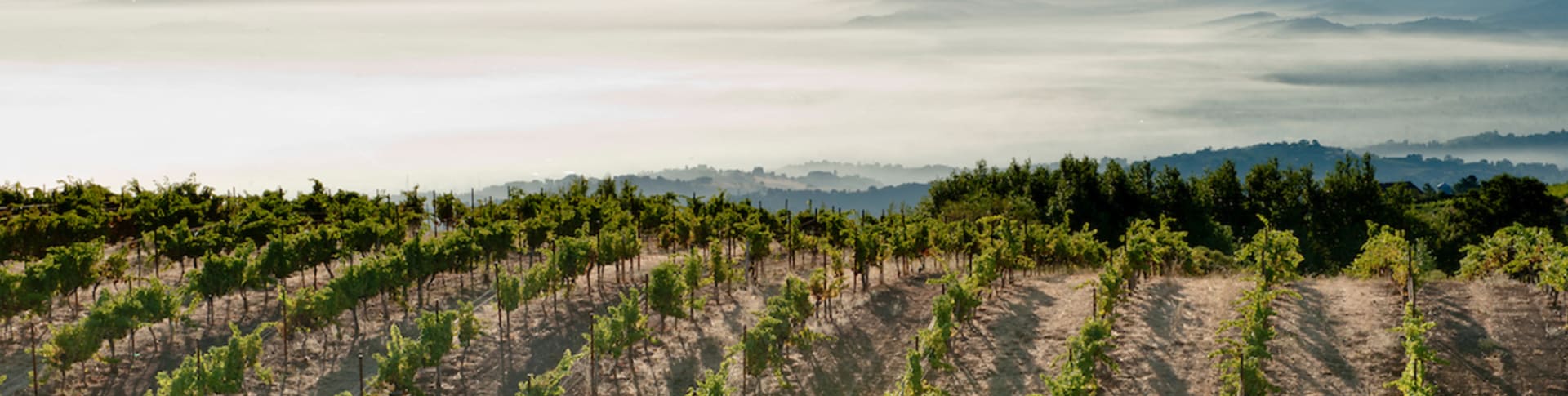




RIDGE's history begins in 1885, when Osea Perrone, a doctor and prominent member of San Francisco's Italian community, bought 180 acres near the top of Monte Bello Ridge in the Santa Cruz Mountains. He planted vineyards and constructed a winery of redwood and native limestone in time to produce the first vintage of Monte Bello in 1892. The historic building now serves as the RIDGE production facility.
In 1962, Ridge Vineyards made its first Monte Bello, and two years later its first zinfandel. The RIDGE approach is straightforward: find the most intense and flavorful grapes, guide the natural process, draw all the fruit's richness into the wine. Decisions on when to pick, when to press, when to rack, what varietals and what parcels to include and when to bottle, are based on taste. To retain the nuances that increase complexity, Ridge winemakers handle the grapes and wine as gently as possible. There are no recipes, only attention and sensitivity.
In August 2021, Ridge Vineyards joined International Wineries for Climate Action (IWCA), a group of like-minded wineries that are dedicated to decarbonizing the global wine industry. RIDGE is committed to achieving Net Zero by 2050 and completes a biannual greenhouse gas audit utilizing the World Resources Institute Greenhouse Gas (GHG) Protocol methodology and be verified by an internationally accredited, third-party auditor.

One of the world’s most classic and popular styles of red wine, Bordeaux-inspired blends have spread from their homeland in France to nearly every corner of the New World. Typically based on either Cabernet Sauvignon or Merlot and supported by Cabernet Franc, Malbec and Petit Verdot, the best of these are densely hued, fragrant, full of fruit and boast a structure that begs for cellar time. Somm Secret—Blends from Bordeaux are generally earthier compared to those from the New World, which tend to be fruit-dominant.

A rugged and topographically diverse cool-climate appellation with a rich history, the Santa Cruz Mountains AVA stretches from Half Moon Bay, just south of San Francisco, to the northern border of Monterey County. Elevations range from 800 feet to upwards of 3,000 and microclimates vary substantially depending on which side of the mountains the vineyards lie; cool ocean winds and fog play an important role here. This can be a challenging region in which to grow grapes, but it is well worth the effort. Santa Cruz Mountains wines are noted for balanced acidity levels, often showing great aging potential. Wine has been made here since the 1800s, most notably from the legendary Ridge Vineyards, whose Monte Bello vineyard garners international admiration.
Pinot Noir, Chardonnay and Cabernet Sauvignon are the stars of this region, while Merlot and Zinfandel also perform quite well. Organic and sustainable vineyard practices are becoming increasingly common.