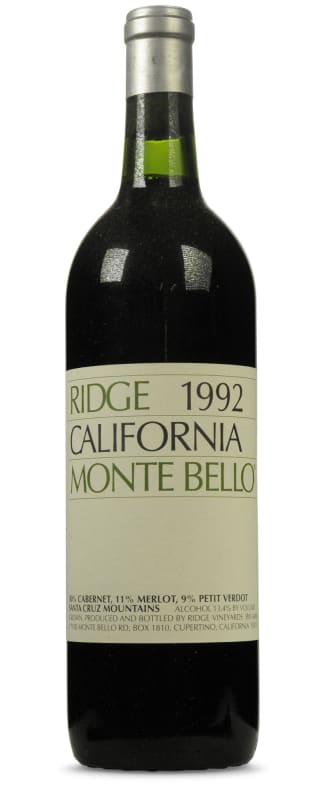


Winemaker Notes
Blend: 80% Cabernet Sauvignon, 11% Merlot, 9% Petit Verdot
Professional Ratings
-
Robert Parker's Wine Advocate
The 1992 Monte Bello was the product of a superb harvest, with temperate summer and autumn weather and ample yields. The particular magnum I tasted was quite a moving target in the glass, and its performance was surely hindered by the substantial sediment in the pour I happened to receive. The wine opens with beautiful floral and minty notes that gradually fuse with classic pipe tobacco, loamy soil and truffle accents, though increasingly medicinal overtones came forward with aeration, marring the clarity first glimpsed at the first pour. The mouthfeel is suave, dense and richly concentrated, then concludes with an earth-inflected finish that feels relatively lackluster and a touch blurry, especially given the generosity and power that precedes it. I hope to have the chance to reevaluate this wine in the future. The blend is 80% Cabernet Sauvignon, 11% Merlot and 9% Petit Verdot with a natural alcohol content of 13.5%.
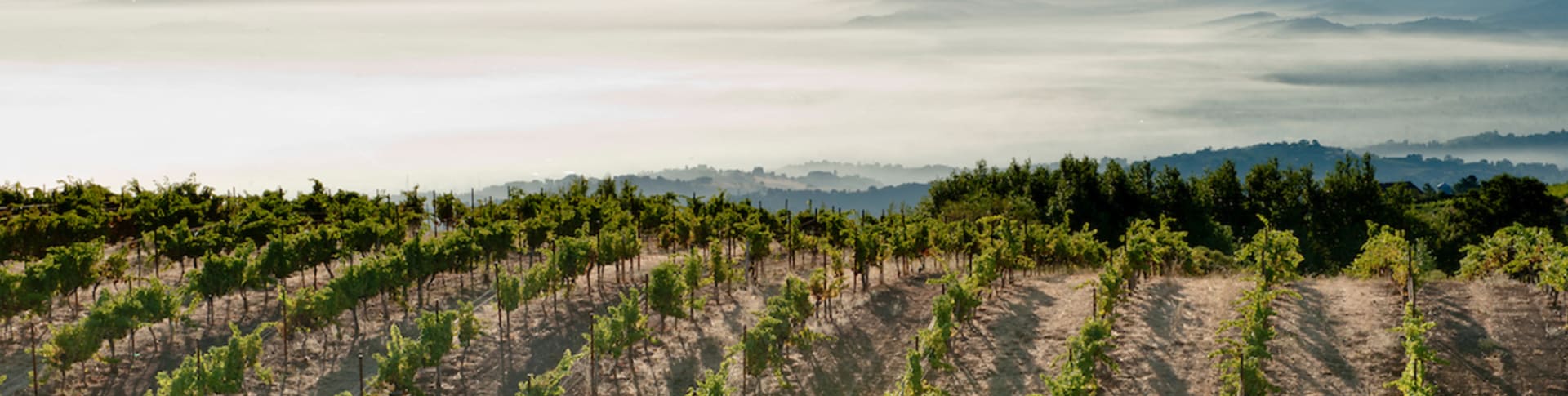




RIDGE's history begins in 1885, when Osea Perrone, a doctor and prominent member of San Francisco's Italian community, bought 180 acres near the top of Monte Bello Ridge in the Santa Cruz Mountains. He planted vineyards and constructed a winery of redwood and native limestone in time to produce the first vintage of Monte Bello in 1892. The historic building now serves as the RIDGE production facility.
In 1962, Ridge Vineyards made its first Monte Bello, and two years later its first zinfandel. The RIDGE approach is straightforward: find the most intense and flavorful grapes, guide the natural process, draw all the fruit's richness into the wine. Decisions on when to pick, when to press, when to rack, what varietals and what parcels to include and when to bottle, are based on taste. To retain the nuances that increase complexity, Ridge winemakers handle the grapes and wine as gently as possible. There are no recipes, only attention and sensitivity.
In August 2021, Ridge Vineyards joined International Wineries for Climate Action (IWCA), a group of like-minded wineries that are dedicated to decarbonizing the global wine industry. RIDGE is committed to achieving Net Zero by 2050 and completes a biannual greenhouse gas audit utilizing the World Resources Institute Greenhouse Gas (GHG) Protocol methodology and be verified by an internationally accredited, third-party auditor.

California is a winemaking colossus; by itself it is the fourth largest producer in the world. Red wine accounts for 56% of the total by volume, and red grapes 63% of total acres planted. In addition, a number of California red wines are heralded as being among the most prestigious and sought-after wines in the world.
While the state’s incredibly diverse geography, soils and microclimates allow for a wide array of styles, the key factor unifying California red wine is the abundance of sunshine and a long, consistent growing season. This leads to well-developed fruit marked both by impressive ripeness and balancing acidity.
The state’s most famous red wine region, of course, is Napa Valley, where Cabernet Sauvignon reigns as king. But California boasts a wealth of other impressive appellations. The much larger and climatically varied Sonoma County also produces world class California Cabernet, along with wonderful examples of California Pinot Noir and Zinfandel.
Fine versions of Cabernet and Zinfandel hail from Paso Robles as well, which is also gaining fame with Rhone varietals like Syrah and Grenache. As for Pinot Noir, terrific examples can be found from AVA’s such as Anderson Valley, Carneros, Santa Lucia Highlands and Sta. Rita Hills. Wineries in Santa Barbara and San Luis Obispo Counties are making wonderful Syrahs, and the Sierra Foothill appellations are proving to be an experimental hotbed, with Italian and Spanish varietals employed to great effect.
This of course is a mere sketch. The subject of California red wine is as deep and broad as an ocean, and absolutely a joy to explore!