


Winemaker Notes
In 2002, moderate to cool summer conditions gave way to a heat spell in mid-September that accelerated ripening. Fortunately, the first two weeks of October saw a return to lovely fall days, and the grapes achieved near-perfect maturity, with excellent balance and bright, ripe fruit flavors.
Professional Ratings
-
Robert Parker's Wine Advocate
The 2002 Cabernet Sauvignon Georges de Latour Private Reserve performed significantly better than it did seven years ago. Spicy oak and new saddle leather characteristics lead to dusty, loamy soil, cherry and cassis notes. The wine reveals terrific balance as well as a hint of French oak (BV is no longer using American oak as it did in the 1970's, 1960's and 1950's). This is intense, with some minerality as well as sweet tannins and abundant fruit, glycerin and richness. I was stunned by how well this cuvee is currently showing. It is capable of lasting another two decades.
-
Connoisseurs' Guide
This much esteemed label has seen its share of ups and downs over the years, but the stuff in the bottle in 2002 is the best we have seen in a good many. Its close-to-classic nose of currants and dust and pencil-lead spice gives way to complex and wonderfully deep varietal flavors that marry generous fruit with lovely oak and flashes of minerals and loam. It is firmed by ample tannins to finish, but its fruit refuses to quit, and, what is a most impressive wine even now, will only get better over the next eight to ten years.
-
Wine Enthusiast
It's young, dry, tight and tannic, although there's obviously a core of ripe black currant and cherry fruit. To evaluate this wine properly, you have to know its history as one of Napa's most ageable Cabernets. Still, it's not a great Georges. Hold until 2008 through 2010, but it could surprise.
Cellar Selection
-
Wine & Spirits
The dark scents of blackberry and the saturated, super-ripe black cherry flavors are challenged by all the tough, earthy tannin in this wine. The tannin and alcohol need some time to meld with that fruit, and this feels built to last.
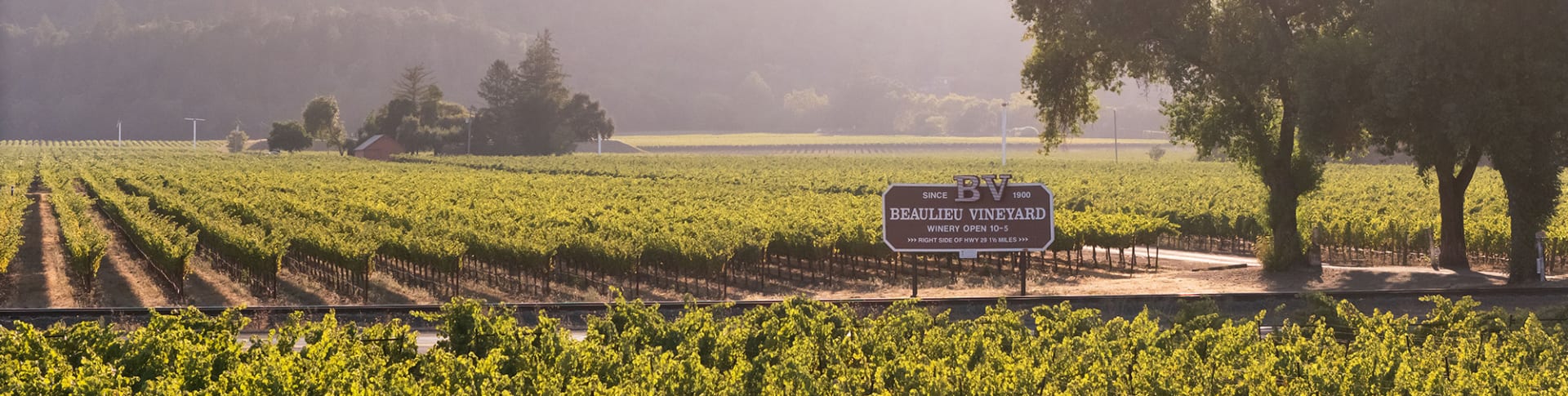



One of the most prestigious wines of the world capable of great power and grace, Napa Valley Cabernet is a leading force in the world of fine, famous, collectible red wine. Today the Napa Valley and Cabernet Sauvignon are so intrinsically linked that it is difficult to discuss one without the other. But it wasn’t until the 1970s that this marriage came to light; sudden international recognition rained upon Napa with the victory of the Stag’s Leap Wine Cellars 1973 Cabernet Sauvignon in the 1976 Judgement of Paris.
Cabernet Sauvignon undoubtedly dominates Napa Valley today, covering half of the land under vine, commanding the highest prices per ton and earning the most critical acclaim. Cabernet Sauvignon’s structure, acidity, capacity to thrive in multiple environs and ability to express nuances of vintage make it perfect for Napa Valley where incredible soil and geographical diversity are found and the climate is perfect for grape growing. Within the Napa Valley lie many smaller sub-AVAs that express specific characteristics based on situation, slope and soil—as a perfect example, Rutherford’s famous dust or Stags Leap District's tart cherry flavors.