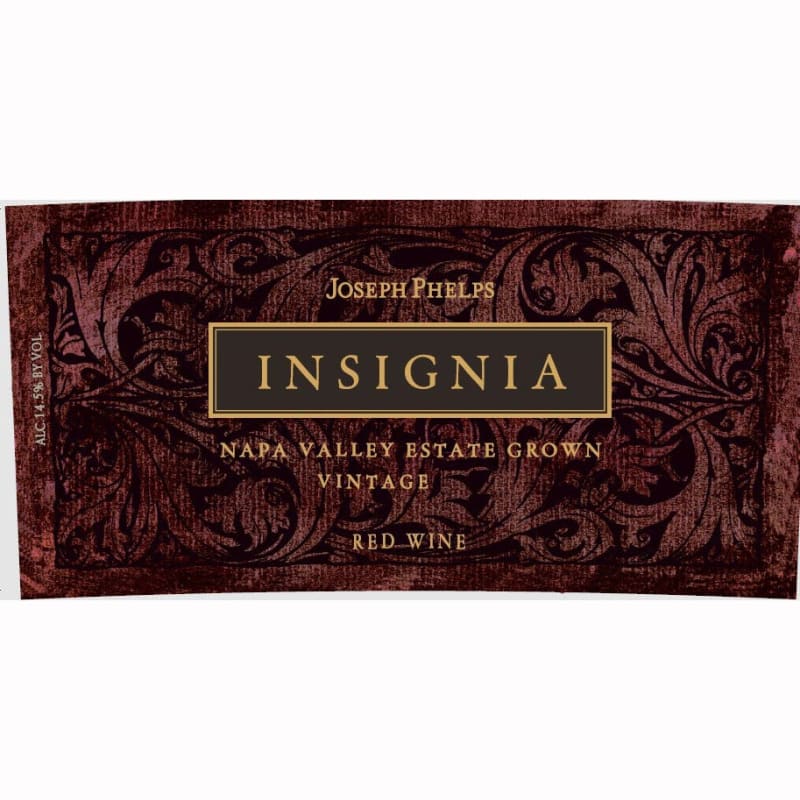

Winemaker Notes
Professional Ratings
-
Robert Parker's Wine Advocate
The 2002 Insignia (a blend of 78% Cabernet Sauvignon, 14% Merlot, 7% Petit Verdot and 1% Malbec) is performing even better than it did post-bottling. A cross Napa County blend of some of their finest vineyard sources, it offers a super-sweet nose of creme de cassis, charcoal, incense, cedar and forest floor, full body and silky tannins. It is one of the few Napa Cabernet Sauvignon blends that is world-class, capable of 30+ years of cellaring, and made in abundant quantities (between 8,000-15,000 cases). I remember tasting the 1974 Insignia in the late 1970's and stating that it would need to be drunk in its first 5-6 years of life. Wrong. That wine, which is now 38 years of age, is still a beauty!
-
Wine Spectator
A rich, polished, seductive style with layers of complexity built around a dense, concentrated mix of currant, blackberry, plum and exotic mocha- and cedar-scented oak. This mouthcoating young wine is powerful yet elegant and deftly balanced, finishing with a long, succulent aftertaste. Cabernet Sauvignon, Merlot, Petit Verdot and Malbec.
-
Wine & Spirits
A luscious vintage of Insignia, this '02 has the sleek feel of fine Napa Valley cabernet. There's fragrant red berry and forest-floor character at the center of the wine, then blacker currant flavors and tannin softened by luxurious oak in the end. Touches of super-ripeness add to the richness without diminishing the wine's freshness.
-
Wine Enthusiast
This celebrated wine is not mind-blowing right now. It’s dry, oaky, tannic and soft. There’s a wealth of cassis and moo shu pork flavors, and huge new oak. Yet it holds itself back, teasing but withdrawing into its tannic cloak. Collectors, be reassured it’s worth stashing. Drink now through 2010, but after that, it’s a gamble.





Joseph Phelps Vineyards is a family-owned winery committed to crafting world class, estate-grown wines. Founded in 1973 when Joe Phelps purchased a former cattle ranch near St. Helena in the Napa Valley, the winery now controls and farms nearly 375 acres of vines on eight estate vineyards in St. Helena, the Stags Leap District, Oakville, Rutherford, Oak Knoll District, Carneros and South Napa Valley. In 1999, the Phelps family added 100 acres of vineyard property near the town of Freestone on the Sonoma Coast, where Phelps now grows Pinot Noir and Chardonnay.
Phelps is best known for its flagship Napa Valley blend of red Bordeaux varietals, Insignia, first produced in 1974. Awarded Wine Spectator's "Wine of the Year" in 2005, Insignia is widely regarded as a qualitative benchmark for California winemaking.

Undoubtedly proving its merit over and over, Napa Valley is a now a leading force in the world of prestigious red wine regions. Though Cabernet Sauvignon dominates Napa Valley, other red varieties certainly thrive here. Important but often overlooked include Merlot and other Bordeaux varieties well-regarded on their own as well as for their blending capacities. Very old vine Zinfandel represents an important historical stronghold for the region and Pinot noir is produced in the cooler southern parts, close to the San Pablo Bay.
Perfectly situated running north to south, the valley acts as a corridor, pulling cool, moist air up from the San Pablo Bay in the evenings during the hot days of the growing season, which leads to even and slow grape ripening. Furthermore the valley claims over 100 soil variations including layers of volcanic, gravel, sand and silt—a combination excellent for world-class red wine production.