

Winemaker Notes
Professional Ratings
-
Robert Parker's Wine Advocate
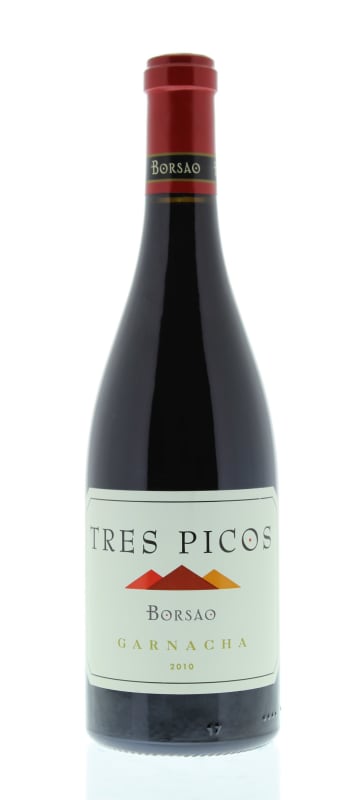
One of my favorite offerings from the Bodegas Borsao is the 6,000-case cuvee of the 2010 Tres Picos. Made from 100% Garnacha aged in equal parts stainless steel and French oak, this is the Bodegas Borsao's interpretation of Chateauneuf du Pape. (But when's the last time you saw a bottle of Chateauneuf du Pape priced at $17 – about 30 years ago?) Deep notes of roasted herbs, sweet black cherries and raspberries, peppers and spice soar from the glass of this dark ruby/purple-tinged wine. Full-bodied, rich, ripe, silky textured, pure and long, this is an unbelievable value.
-
Wine Spectator
This rich red is brimming with raspberry jam, chocolate, licorice and wild herb flavors. Firm tannins are well-integrated and buoyed by orange peel acidity. A lively modern style. Drink now through 2015. 5,000 cases imported.


Spanish red wine is known for being bold, heady, rustic and age-worthy, Spain is truly a one-of-a-kind wine-producing nation. A great majority of the country is hot, arid and drought-ridden, and since irrigation has only been recently introduced and (controversially) accepted, viticulture has sustained—and flourished—only through a great understanding of Spain’s particular conditions. Large spacing between vines allows each enough resources to survive and as a result, the country has the most acreage under vine compared to any other country, but is usually third in production.
Of the Spanish red wines, the most planted and respected grape variety is Tempranillo, the star of Spain’s Rioja and Ribera del Duero regions. Priorat specializes in bold red blends, Jumilla has gained global recognition for its single varietal Monastrell and Utiel-Requena has garnered recent attention for its reds made of Bobal.