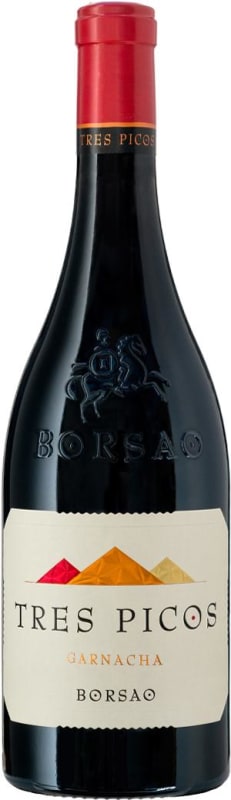


Winemaker Notes
Very intense cherry color with purple tones. The nose shows a great concentration of aromas of ripe red fruits with floral nuances. On the palate it is a rich and well-structured wine that evokes flavors of blackberry, plum and tones of leather and vanilla, with sweet tannin.
Borsao Tres Picos pairs very well with rice, pasta and barbecue meats.
Professional Ratings
-
James Suckling
Roasted meat, herbs, oranges and roasted plums on the nose of this rich and juicy red. It’s full-bodied, fleshy and meaty, with ripe tannins.


Grenache thrives in any warm, Mediterranean climate where ample sunlight allows its clusters to achieve full phenolic ripeness. While Grenache's birthplace is Spain (there called Garnacha), today it is more recognized as the key player in the red blends of the Southern Rhône, namely Châteauneuf-du-Pape, Côtes du Rhône and its villages. Somm Secret—The Italian island of Sardinia produces bold, rustic, single varietal Grenache (there called Cannonau). California, Washington and Australia have achieved found success with Grenache, both flying solo and in blends.

Campo de Borja DO sits in the northwest province of Zaragoza (Aragon, Spain) south of Rioja and north of Cariñena. Since this area acquired DO status in the 1980s, it has gradually shown its own unique identity. Campo de Borja’s winegrowing history and heritage is rich in relation to Garnacha; the oldest vineyards in the DO date back to 1890. Furthermore, of the almost 4,000 hectares of this variety, more than 2,000 are between 30 and 50 years old.
Most production continues to be reds, and the number of crianzas and reservas is growing. Though less common, they produce white wines as well. Today, both red and rosé wines have won the respect of experts, and the intensely fruity, young red wines enjoy significant commercial success. The principal white grape varieties are Macabeo, Moscatel, Chardonnay, Garnacha Blanca, Sauvignon Blanc and Verdejo. The principal red grape varieties include Garnacha Tinta, Tempranillo, Syrah, Mazuela, Cabernet Sauvignon and Merlot.