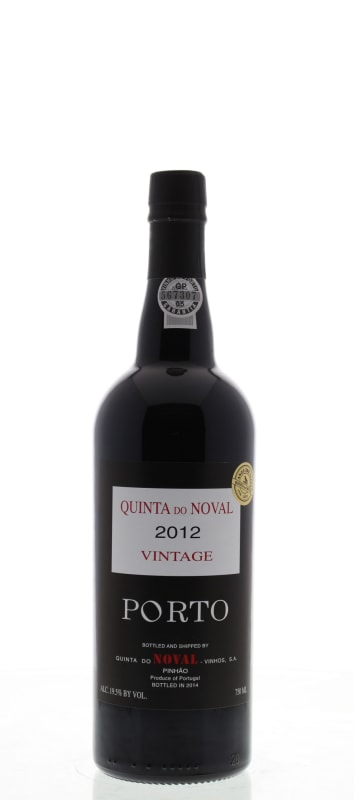


Winemaker Notes
Professional Ratings
-
Wine Enthusiast
The dark, almost black color and the wonderful violet aromas set the scene for this complex, dense and textured wine. It has a touch of spice, along with the rich plum and dark berry fruits. While it is rich, it is also a dry style of Vintage, bringing out structure as much as opulence. Drink from 2030.
-
James Suckling
This is one of the few vintage Ports declared in 2012 and it's wonderfully structured with finesse. It's black-colored and shows intense aromas of crushed grapes, granite stones, flowers, light raisins, tar and licorice. Full body, lightly sweet and incredible integrity plus firm and ultra-refined tannins. Beautiful grip and length. Reminds me of the 1964, which is a classic now. Try in 2028.
-
Robert Parker's Wine Advocate
The 2012 Vintage Port is revisited for a checkup. This is a blend of Touriga Nacional 70%, Touriga Franca 25 % and Tinto Cão 5%, which was aged for 18 months in wood and comes in with just 89 grams per liter of residual sugar. This has become more intense and more impressive, closing down a bit since I first saw it. It may not have quite the underlying concentration and focus of the 2011 (also reviewed), but it is a much fresher and more lifted Port, with fine fruit front-and-center. It simply seems more invigorating, more gloriously alive. I wouldn't be surprised if many like it better right now than the 2011--although that won't likely be the answer 25 years from now. It otherwise retains the style of all of Noval's wines here--elegant in the mid-palate, more focused on aging than lushness and sweetness. It certainly seems quite brilliant for the year. Originally, I was afraid I might have overrated it as it was so exuberant and showed so well nearer to release. Now, I'd be more likely to question whether I'm underrating it. It's never as obvious as some Big Boys and it probably is the third of the 2011-2012-2013 trilogy from Noval this issue (only by a hair), but it has its own virtues and plenty of them.
-
Wine & Spirits
Christian Seely at Noval was impressed enough by the quality of some blocks in 2012 that he determined to declare the vintage after 2011, albeit in small quantities. This is a massive wine, smelling of schist and tasting of smashed berries and bittersweet chocolate. The waxy texture carries a lot of fruit richness. A juicy and powerful young Porto, this is a wine to check in on at ten years; it may well be going strong at 20.
-
Wine Spectator
Redolent of Christmas pudding and dark plum flavors, with plenty of dark chocolate elements, this features modest length on the finish, which is filled with cherry notes. Best from 2018 through 2035.


Port is a sweet, fortified wine with numerous styles: Ruby, Tawny, Vintage, Late Bottled Vintage (LBV), White, Colheita, and a few unusual others. It is blended from from the most important red grapes of the Douro Valley, based primarily on Touriga Nacional with over 80 other varieties approved for use. Most Ports are best served slightly chilled at around 55-65°F. To learn more, see our full Port Wine Guide

The home of Port—perhaps the most internationally acclaimed beverage—the Douro region of Portugal is one of the world’s oldest delimited wine regions, established in 1756. The vineyards of the Douro, set on the slopes surrounding the Douro River (known as the Duero in Spain), are incredibly steep, necessitating the use of terracing and thus, manual vineyard management as well as harvesting. The Douro's best sites, rare outcroppings of Cambrian schist, are reserved for vineyards that yield high quality Port.
While more than 100 indigenous varieties are approved for wine production in the Douro, there are five primary grapes that make up most Port and the region's excellent, though less known, red table wines. Touriga Nacional is the finest of these, prized for its deep color, tannins and floral aromatics. Tinta Roriz (Spain's Tempranillo) adds bright acidity and red fruit flavors. Touriga Franca shows great persistence of fruit and Tinta Barroca helps round out the blend with its supple texture. Tinta Cão, a fine but low-yielding variety, is now rarely planted but still highly valued for its ability to produce excellent, complex wines.
White wines, generally crisp, mineral-driven blends of Arinto, Viosinho, Gouveio, Malvasia Fina and an assortment of other rare but local varieties, are produced in small quantities but worth noting.
With hot summers and cool, wet winters, the Duoro has a maritime climate.