


Winemaker Notes
This vintage shines with golden hues and inviting aromas of honeysuckle, white nectarine, and Meyer lemon. Accents of toasted almonds emerges on the palate wrapped around a core of ripe Asian pear, Gravenstein apple, and allspice that lead to a vibrant acidity and a cool saline finish.
Professional Ratings
-
Jeb Dunnuck
Loads of caramelized peach, toasted spices, brioche, and honeyed citrus emerge from the 2018 Chardonnay Ross Station Estate, one of the richer, more powerful Chardonnay in the lineup. Nevertheless, it has beautiful acidity, flawless balanced, and a great finish. Brought up in 50% new French oak, it's drinking spot on today and shows the vintage nicely. It will also age well for 4-6 years, probably longer, but there's no need to delay gratification.
-
James Suckling
Lovely layered white with sliced dried apples and pears and some apricots. Plenty of vanilla and cream character, too. Custard. Full-bodied and rich, yet fresh at the same time.
-
Robert Parker's Wine Advocate
The 2018 Chardonnay Ross Station Estate opens with toast and flint, segueing to golden apple, white flowers and salted almonds. The medium-bodied, satiny palate is singing, bursting with juicy, savory flavors and finishing very long.
-
Wine Spectator
Rich and textured, with concentrated pear tart and apple pastry flavors that feature notes of dried mango. Toasty accents emerge midpalate, with a finish of allspice and nutmeg.






One of the most popular and versatile white wine grapes, Chardonnay offers a wide range of flavors and styles depending on where it is grown and how it is made. While it tends to flourish in most environments, Chardonnay from its Burgundian homeland produces some of the most remarkable and longest lived examples. California produces both oaky, buttery styles and leaner, European-inspired wines. Somm Secret—The Burgundian subregion of Chablis, while typically using older oak barrels, produces a bright style similar to the unoaked style. Anyone who doesn't like oaky Chardonnay would likely enjoy Chablis.

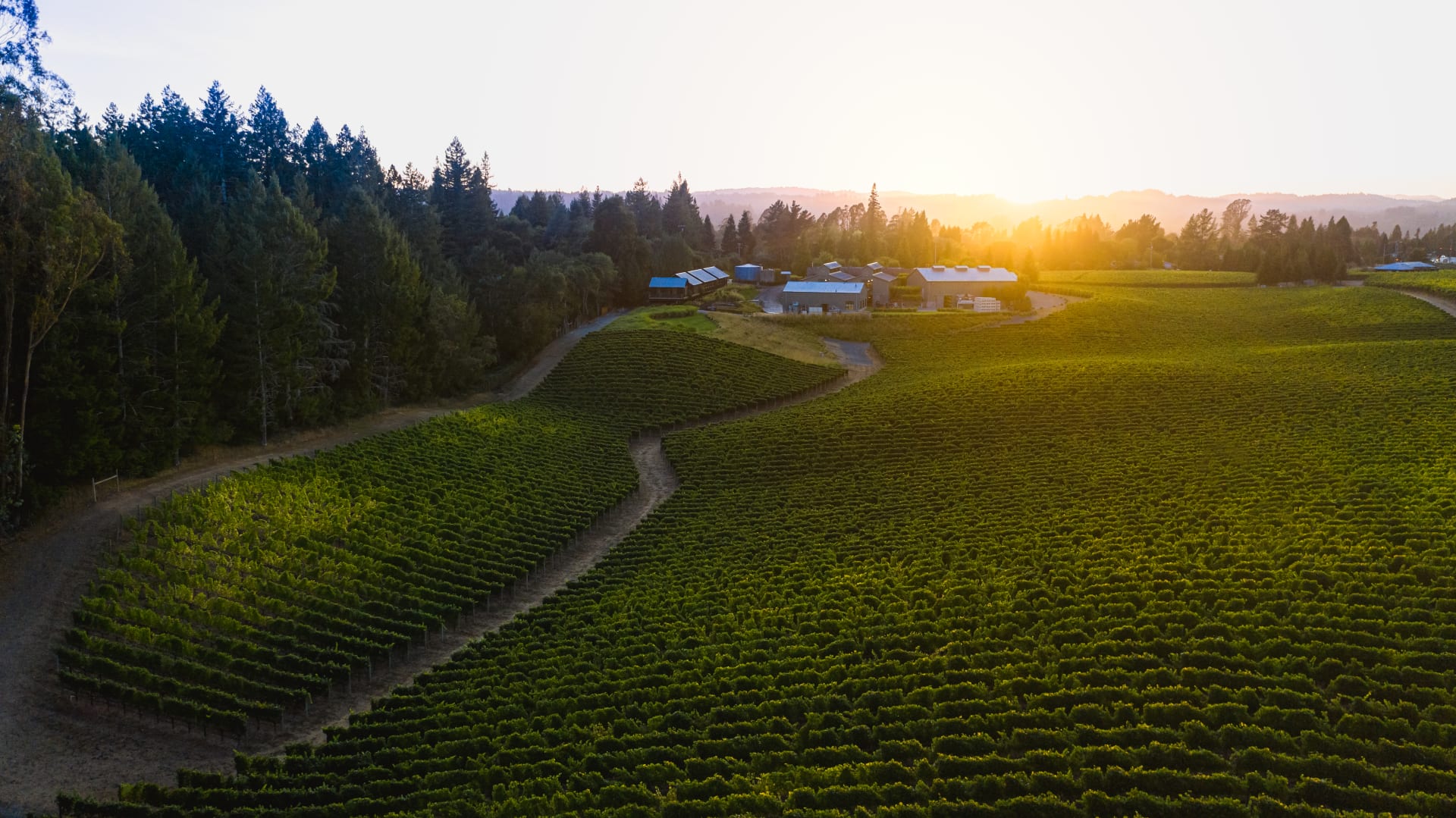
A standout region for its decidedly Californian take on Burgundian varieties, the Russian River Valley is named for the eponymous river that flows through it. While there are warm pockets of the AVA, it is mostly a cool-climate growing region thanks to breezes and fog from the nearby Pacific Ocean.
Chardonnay and Pinot Noir reign supreme in Russian River, with the best examples demonstrating a unique combination of richness and restraint. The cool weather makes Russian River an ideal AVA for sparkling wine production, utilizing the aforementioned varieties. Zinfandel also performs exceptionally well here. Within the Russian River Valley lie the smaller appellations of Chalk Hill and Green Valley. The former, farther from the ocean, is relatively warm, with a focus on red and white Bordeaux varieties. The latter is the coolest, foggiest parcel of the Russian River Valley and is responsible for outstanding Pinot Noir and Chardonnay.