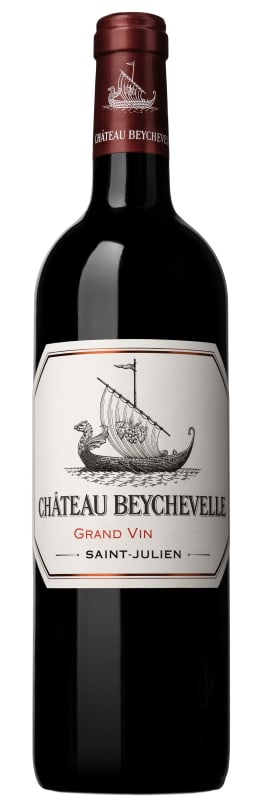


Winemaker Notes
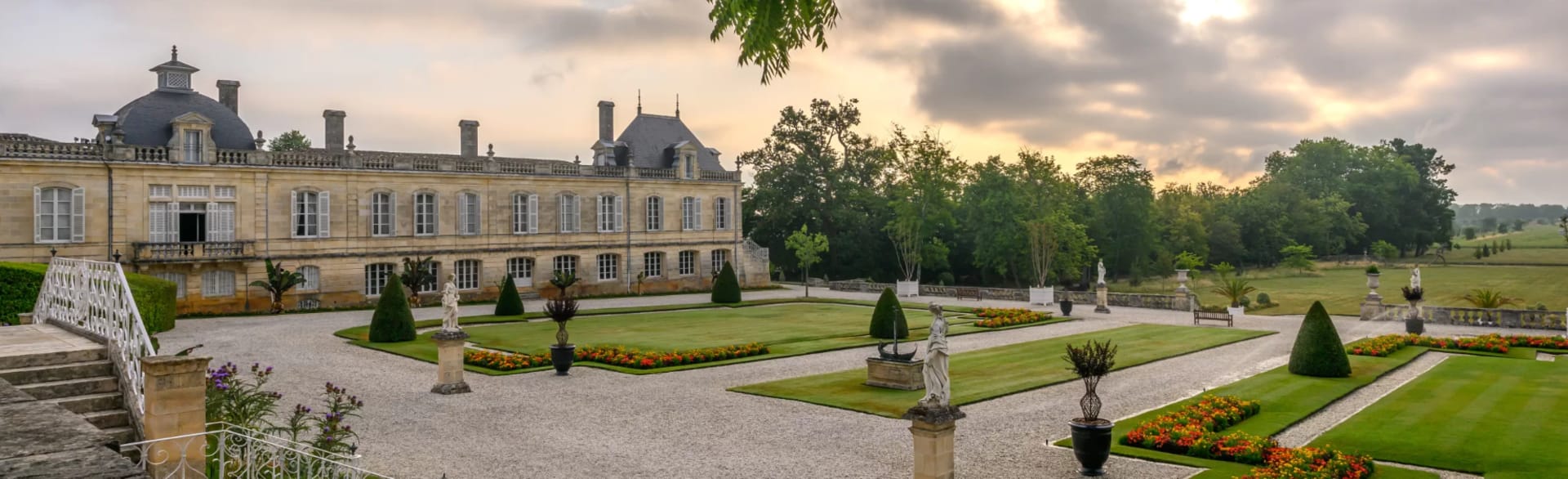
Much like the finest wines, legends have the power to transport us into the realms of dreams, stirring a myriad of emotions within us. At Beychevelle, legends weave a rich tapestry that lies at the very heart of the identity of this 4th Grand Cru Classé of 1855. One cannot help but be captivated by the origin of its name and emblem, conceived in tribute to its 17th-century owner, the first Duke of Epernon and Grand Admiral of France. Then, there's the majestic bicentennial cedar tree that stands sentinel at the property's entrance, a silent guardian over the vineyards. Not to forget the historical presence of Jean-Baptiste Poquelin, known as Molière...For centuries, the vast expanse of Beychevelle's lands, spanning 250 hectares, including an impressive 90 hectares of vineyards, has served as an endless wellspring of inspiration for the crafting of their Grand Vin.
Blend: 52% Cabernet Sauvignon, 43% Merlot, 5% Petit Verdot
Professional Ratings
-
Jeb Dunnuck
A brilliant, deeply hued wine, the 2025 Château Beychevelle is based on 52% Cabernet Sauvignon, 43% Merlot, and 5% Petit Verdot, and is still resting in 70% new oak. One of the earliest harvests ever recorded at this château, with very tiny yields, it has a ripe, sexy, gorgeously textured style with ripe black cherries, graphite, spicy wood, and dried flowers on the nose. On the palate, it's medium to full-bodied, with a round, layered mouthfeel, velvety tannins, and a blockbuster finish. Hitting 13.5% alcohol with a pH of 3.6, this is a ripe, expressive Beychevelle that will evolve gracefully for 30 years or more. Tasted twice with consistent notes.
Barrel Sample: 96-98 -
Vinous
The 2025 Beychevelle is a very sexy wine. Plush and exuberant, the 2025 is seriously impressive right out of the gate. Blackberry, lavender, mocha, crème de cassis and a kick of French oak are all beautifully amplified in the glass. The blend is 52% Cabernet Sauvignon, 43% Merlot and 5% Petit Verdot, with the plush richness of the Merlot very much in evidence. There's a lot of wine here. The 2025 spent three weeks on the skins, more or less the norm here, but it also includes 13% press wine, a bit higher than most years. More than anything else, the 2025 is a wine of extreme pleasure. It is an exceptional Beychevelle, one of the finest in recent memory. –Antonio Galloni
Barrel Sample: 95-97 -
James Suckling
Spicy, with dark fruit aromas. Angular in style, with a linear profile and precise, focused tannins. It shows clarity, fresh dark fruit and balance that stands out.
Barrel Sample: 95-96 -
Decanter
Such a gorgeous fragrance on the nose, so alive, so floral and expressive with milk chocolate, cherries and violets. Grippy and alive in the mouth, fun, bright, certainly full of tannins and grip with a lovely core of black bramble fruit with straight acidity. I like the very hands-off nature, it’s refined and finessed, still young and a little shy but lots of tannins are so well handled by the fruit purity and acidity. It’s a big, powerful, muscular wine but so poised, mouthwatering and charming. It has a spiced kick on the finish which adds to the complexity. 3.6pH. 80 IPT. 13% press wine. 60% of production. Reduced maceration by 5-7 days. Ageing 70% new oak.
Barrel Sample: 94 -
Robert Parker's Wine Advocate
The 2025 Beychevelle reveals a toasty, oak-marked bouquet of dark wild berries, licorice and spice. Medium- to full-bodied, structured and concentrated, it’s built around an assertive tannic frame, concluding with a long, spicy, licorice-inflected finish. While the wine is marked by both concentration and oak at this stage, élevage may bring greater finesse and a more integrated, enveloping tannic profile.
Barrel Sample: 92-93


One of the world’s most classic and popular styles of red wine, Bordeaux-inspired blends have spread from their homeland in France to nearly every corner of the New World. Typically based on either Cabernet Sauvignon or Merlot and supported by Cabernet Franc, Malbec and Petit Verdot, the best of these are densely hued, fragrant, full of fruit and boast a structure that begs for cellar time. Somm Secret—Blends from Bordeaux are generally earthier compared to those from the New World, which tend to be fruit-dominant.

An icon of balance and tradition, St. Julien boasts the highest proportion of classed growths in the Médoc. What it lacks in any first growths, it makes up in the rest: five amazing second growth chateaux, two superb third growths and four well-reputed fourth growths. While the actual class rankings set in 1855 (first, second, and so on the fifth) today do not necessarily indicate a score of quality, the classification system is important to understand in the context of Bordeaux history. Today rivalry among the classed chateaux only serves to elevate the appellation overall.
One of its best historically, the estate of Leoville, was the largest in the Médoc in the 18th century, before it was divided into the three second growths known today as Chateau Léoville-Las-Cases, Léoville-Poyferré and Léoville-Barton. Located in the north section, these are stone’s throw from Chateau Latour in Pauillac and share much in common with that well-esteemed estate.
The relatively homogeneous gravelly and rocky top soil on top of clay-limestone subsoil is broken only by a narrow strip of bank on either side of the “jalle,” or stream, that bisects the zone and flows into the Gironde.
St. Julien wines are for those wanting subtlety, balance and consistency in their Bordeaux. Rewarding and persistent, the best among these Bordeaux Blends are full of blueberry, blackberry, cassis, plum, tobacco and licorice. They are intense and complex and finish with fine, velvety tannins.