

Winemaker Notes
Professional Ratings
-
Robert Parker's Wine Advocate
Raised for 16 months in French oak and inspired by the family’s respect for Bordeaux, the 2009 Torre Muga has a very primal bouquet with creme de cassis, black currant and vanilla with fine delineation, although it is very tight at the moment. The palate is full-bodied with grippy, bold, assertive tannins and layers of dense black, mocha-tinged fruit with hints of white pepper. It has great power and volume without compromising balance, although it requires several years in bottle. Drink 2018-2035.
-
Wine Spectator
This muscular red delivers savory flavors of dried herb, anise and loamy earth, with ripe cherry and blackberry fruit, backed by firm tannins that give way to a smoky finish. Nicely focused. Drink now through 2022. 400 cases made.
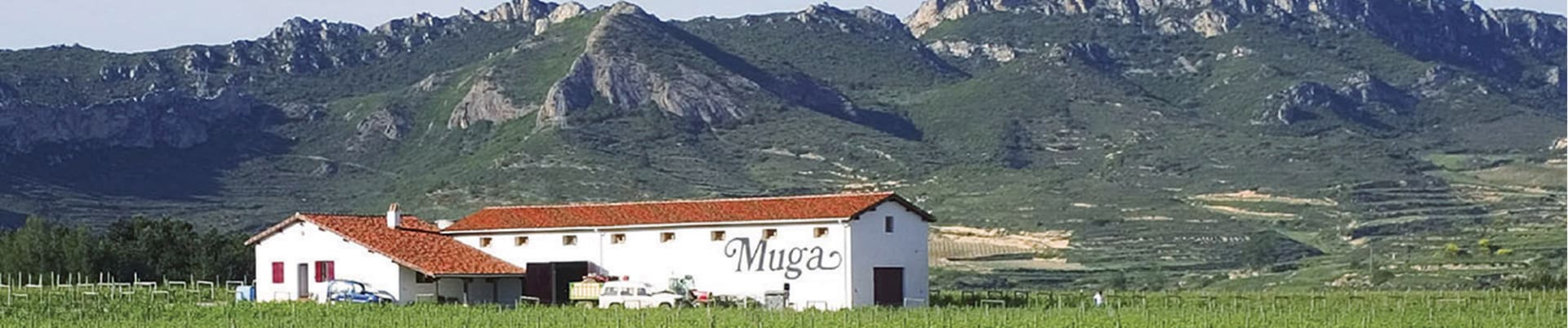





Bodegas Muga is a family firm founded in 1932 by Isaac Muga and Aurora Caño. The first wines were made in an underground cellar, until in 1968 they decided to set up their own winery in a beautiful old 19th-century town-house situated in the city of Haro. The Bodegas Muga outstanding feature is that it always uses the finest materials, combining tradition with the latest advances in winemaking so as always to give its wines the very best quality without losing authenticity. Indeed, it is the only wine cellar in Spain which employs its own master cooper and coopers, who make all the vats for the cellar as well as the oak casks. The winery remains true to traditional winemaking methods such as racking the casks by gravity and fining the wine with fresh egg whites. Bodegas Muga has succeeded in combining the purest family tradition with an updated vision of the future which has allowed them to preserve their own personality and character.

Hailed as the star red variety in Spain’s most celebrated wine region, Tempranillo from Rioja, or simply labeled, “Rioja,” produces elegant wines with complex notes of red and black fruit, crushed rock, leather, toast and tobacco, whose best examples are fully capable of decades of improvement in the cellar.
Rioja wines are typically a blend of fruit from its three sub-regions: Rioja Alta, Rioja Alavesa and Rioja Oriental, although specific sub-region (zonas), village (municipios) and vineyard (viñedo singular) wines can now be labeled. Rioja Alta and Alavesa, at the highest elevations, are considered to be the source of the brightest, most elegant fruit, while grapes from the warmer and drier, Rioja Oriental, produce wines with deep color, great body and richness.