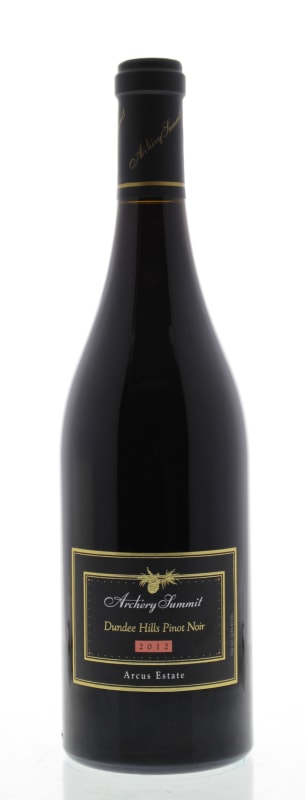


Winemaker Notes
Professional Ratings
-
Wine Enthusiast
Complex, classy winemaking is evident from the first sniff to the final sip. Savory notes of green tea and clean earth complement a terroir-driven wine. The notes and nuances pile on—flowers and fruits, cherry and cassis, with a whiff of barnyard and undergrowth. The lingering, expressive finish is already boggling, and seems sure to continue to evolve gracefully through 2025–2030.
-
Wine Spectator
Firm in texture, with focused cherry and spice flavors weaving between the tannins, finishing with a chile pepper bite. Aims for majesty, but will need time to achieve it. Best after 2016.
-
Robert Parker's Wine Advocate
The 2012 Arcus Estate Pinot Noir is the largest single-vineyard bottling from Archery Summit, planted in a bowl that holds the heat. This was picked October 8-18 and aged for 11 months in 38% new French oak. It has an exuberant bouquet with blackcurrant pastilles, orange rind and even a touch of marmalade, nicely focused and gaining vigor in the glass. The palate is medium-bodied with sappy black fruit, a light saline touch, hints of white pepper coming through toward the finish with just a touch of glycerine that is accentuated with aeration. It offers moderate complexity but also a very long, spicy finish that lingers long after the wine has departed. This is one of the better releases from Archery Summit, though it comes with that three-digit price tag.





In 1993, Archery Summit set its sights on creating wines of real purpose in the Willamette Valley. Since then, the Dundee Hills winery has helped establish the region as the cradle of cooler-climate American wine. Winemaker Kim Abrahams and her team achieve bar-raising wines through hard-won instincts—the familiarity gained from many shared vintages and from tending vineyard sites they know intimately.
As responsible stewards of the land, Archery Summit engages in minimal-impact agriculture. Sustainability is a dynamic and vital part of growing wine—a practice that ensures both the industry’s future and the overall health of the trade. They practice sustainability wherever possible, from responsible farming in the vineyard to energy-sensitive approaches in the cellar.
Many of the vineyard sites are LIVE (Low Input Viticulture & Enology) certified, meaning they adhere to an internationally-acclaimed set of sustainability standards. These guidelines are site-specific and focus on strengthening the well-being of the vineyard through minimal spraying, careful clone selection, heightened biodiversity, and more. Archery Summit is committed to ensuring that the soils and biodiversity of each site remain as healthy and vibrant as when they first began cultivating them.

Thin-skinned, finicky and temperamental, Pinot Noir is also one of the most rewarding grapes to grow and remains a labor of love for some of the greatest vignerons in Burgundy. Fairly adaptable but highly reflective of the environment in which it is grown, Pinot Noir prefers a cool climate and requires low yields to achieve high quality. Outside of France, outstanding examples come from in Oregon, California and throughout specific locations in wine-producing world. Somm Secret—André Tchelistcheff, California’s most influential post-Prohibition winemaker decidedly stayed away from the grape, claiming “God made Cabernet. The Devil made Pinot Noir.”

Home of the first Pinot noir vineyard of the Willamette Valley, planted by David Lett of Eyrie Vineyard in 1966, today the Dundee Hills AVA remains the most densely planted AVA in the valley (and state). To its north sits the Chehalem Valley and to its south, runs the Willamette River. Within the region’s 12,500 acres, about 1,700 are planted to vine on predominantly basalt-based, volcanic, Jory soil.