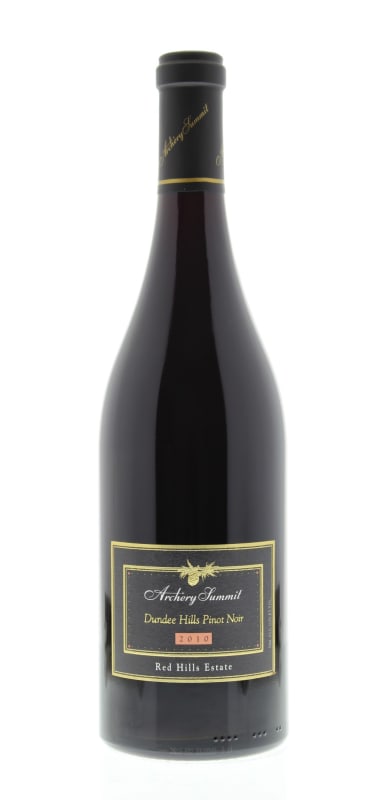


Winemaker Notes
Professional Ratings
-
Robert Parker's Wine Advocate
From a steep-sided, meagerly-soiled amphitheater with diverse selections and clones, one portion of which was planted already in 1973 (like other illustrious sites near Worden Hill Road, by the elder Jim Maresh), and representing around 40% of their total acreage, Archery Summit’s 2010 Pinot Noir Arcus Estate offers an aromatically striking, texturally tender, and mouthwateringly savory experience. Fresh cherry and strawberry shadowed by their distilled counterpart; bittersweet floral inhalations; carnation; smoky black tea; and nut oils, all joined in an umami-suffused finish by richly fatty carnal allusions. Billowing, greenhouse-like sensations of flowering and leafy things along with positively integrated bitter notes keep this broad, resonant Pinot persistently intriguing as well as sensually engaging.





In 1993, Archery Summit set its sights on creating wines of real purpose in the Willamette Valley. Since then, the Dundee Hills winery has helped establish the region as the cradle of cooler-climate American wine. Winemaker Kim Abrahams and her team achieve bar-raising wines through hard-won instincts—the familiarity gained from many shared vintages and from tending vineyard sites they know intimately.
As responsible stewards of the land, Archery Summit engages in minimal-impact agriculture. Sustainability is a dynamic and vital part of growing wine—a practice that ensures both the industry’s future and the overall health of the trade. They practice sustainability wherever possible, from responsible farming in the vineyard to energy-sensitive approaches in the cellar.
Many of the vineyard sites are LIVE (Low Input Viticulture & Enology) certified, meaning they adhere to an internationally-acclaimed set of sustainability standards. These guidelines are site-specific and focus on strengthening the well-being of the vineyard through minimal spraying, careful clone selection, heightened biodiversity, and more. Archery Summit is committed to ensuring that the soils and biodiversity of each site remain as healthy and vibrant as when they first began cultivating them.

Home of some of the planet’s most amazingly elegant and expressive Pinot noir, the Willamette Valley is a pastoral, mixed landscape of green, bucolic rolling hills, dramatic forestlands and small, independent, friendly wine growers. As a leader in environmental stewardship, the valley has some of the nation’s most protective land use policies, with two-thirds of its vineyards farmed sustainably and over half, organically. While the valley claims a cool, continental climate, and is heavily influenced by the cold, moist winds of the Pacific Ocean, its warm and dry summers allow for the steady, even ripening of Pinot noir.
The potential of Willamette Valley Pinot noir continues to attract the investment of serious growers and winemakers both locally and from abroad, as naturally the finished wines bring accolades from professionals and enthusiasts. With a range of styles from delicate dried cherry, raspberry and hibiscus to stronger notes of truffle, mocha, plum and spice, a fine Willamette Valley Pinot noir is a perfect expression of both character and grace.