


Winemaker Notes
Professional Ratings
-
James Suckling
All French oak (51% new, the balance 1yo) and plenty of perfume on offer here, raspberry, blackberry and red plum, really fragrant fruit that is accented by additional oak fragrance. The palate has tangy cut, slightly jumpy, quite taut - the vintage has this captive for now. Time will see it unwind and there's a bright wine that has plenty of Barossa power built in - give this time.
-
Robert Parker's Wine Advocate
Aged in 51% new oak, all of which is French, the deep purple-black colored 2011 RWT Barossa Valley Shiraz reveals a gorgeous, black fruit and warm blueberry nose enhanced by violets and pepper notes with hints of tree bark and earth. Medium to full-bodied with a great amount of expressive flavor framed by firm, grainy tannins, the oak pokes out a bit on the long finish. Drink 2015 to 2028+.
Rating: 93+ -
Wine Spectator
Ripe and supple, with a sense of transparency to raspberry, red plum, clove and espresso flavors, lingering on the expressive finish. Rich in flavor without being weighty.




Since 1844, Penfolds has been grounded in experimentation, curiosity and uncompromising quality. Their success has been driven by a lineage of visionary winemakers. It began with Dr. Christopher and Mary Penfold, the pioneers who dreamed big, inventing tonics, brandies, and fortified wines made from grapes and Australian sunshine. It continued with celebrated winemaking legends including Max Schubert, who pushed the development to extraordinary, bold new heights. It is this pioneering spirit and curiosity that still rings true after nearly two centuries, it is what has helped Penfolds become one of the most celebrated winemakers in the world today.

Marked by an unmistakable deep purple hue and savory aromatics, Syrah makes an intense, powerful and often age-worthy red. Native to the Northern Rhône, Syrah achieves its maximum potential in the steep village of Hermitage and plays an important component in the Red Rhône Blends of the south, adding color and structure to Grenache and Mourvèdre. Syrah is the most widely planted grape of Australia and is important in California and Washington. Sommelier Secret—Such a synergy these three create together, the Grenache, Syrah, Mourvedre trio often takes on the shorthand term, “GSM.”

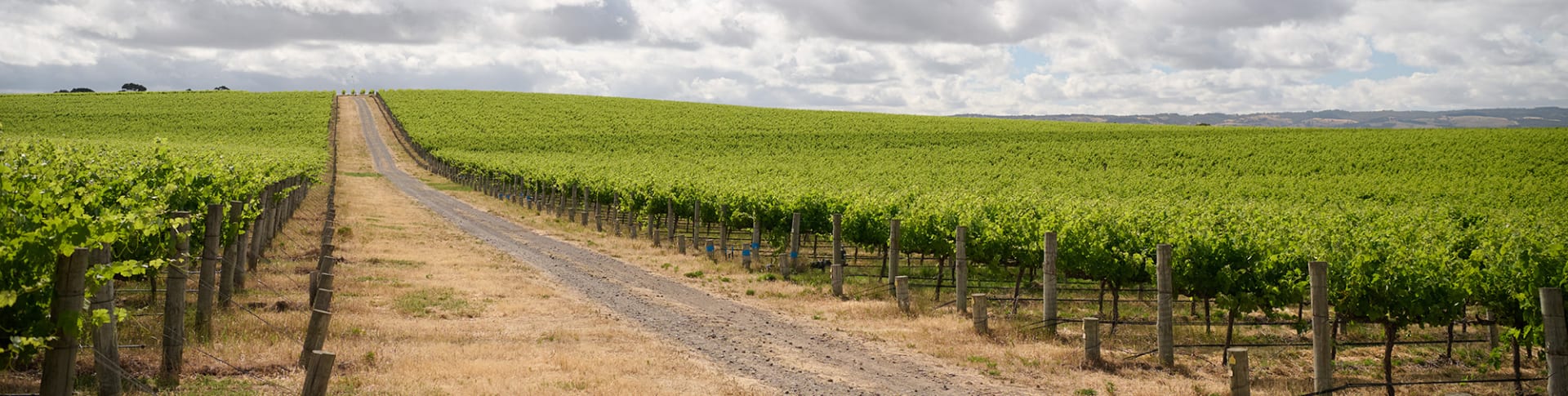
Historically and presently the most important wine-producing region of Australia, the Barossa Valley is set in the Barossa zone of South Australia, where more than half of the country’s wine is made. Because the climate is very hot and dry, vineyard managers work diligently to ensure grapes reach the perfect levels of phenolic ripeness.
The intense heat is ideal for plush, bold reds, particularly Shiraz on its own or Rhône Blends. Often Shiraz and Cabernet partner up for plump and powerful reds.
While much less prevalent, light-skinned varieties such as Riesling, Viognier or Semillon produce vibrant Barossa Valley whites.
Most of Australia’s largest wine producers are based here and Shiraz plantings date back as far as the 1850s or before. Many of them are dry farmed and bush trained, still offering less than one ton per acre of inky, intense, purple juice.