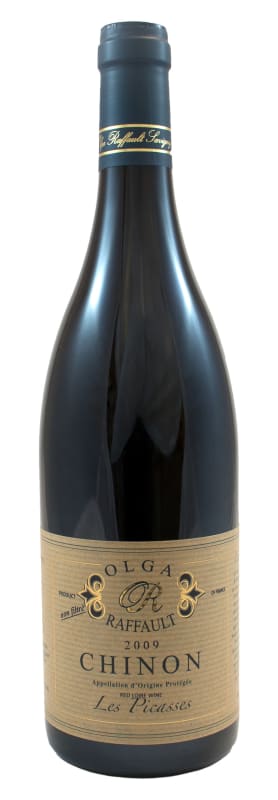


Winemaker Notes
Raffault's 'les Picasses' has a light garnet color belying the depth of fruit flavor and complexity. Its style is rustic, quite earthy, with hints of orange zest and deep, dark cherry flavor. The tannins are soft, but present, and the mineral complexity in the finish is superb.
Professional Ratings
-
Decanter
The nose here displays plum, liquorice, gentle spices and a light earthy touch reminiscent of damp forest floor. The palate is striking for its vivacity and an overall impression of crystalline harmony. Exemplary Loire freshness coming from a solar vintage.
-
Robert Parker's Wine Advocate
The 2009 Chinon Les Picasses is from a very warm vintage but was picked late on October 13th because Les Picasses is a late-ripening vineyard. Aged 12 years now, the wine opens with an intense and slightly matured bouquet of dark fruits, tar and nougat. Silky, refined and elegant on the first palate, this is a full-bodied, intense and complex Cab Franc with a ripe and sweet, well-concentrated and structured core framed by fine tannins and an iodine finesse and phenolic tension.
-
Wine & Spirits
A classic from Chinon, this is franc grown in limestone, settling in for a long life ahead. Foresty cherry scents drive straight through the wine, effortlessly ripe, elegantly fresh. It has the harmony of a great vintage of Vieux Chateau Certan, presented in an airier balance than you would find in Pomerol. Deep, supple and finely structured, this will reward patient cellaring.


Cabernet Franc, a proud parent of Cabernet Sauvignon, is the subtler and more delicate of the Cabernets. Today Cabernet Franc produces outstanding single varietal wines across the wine-producing world. Somm Secret—One of California's best-kept secrets is the Happy Canyon appellation of Santa Barbara. Here Cabernet Franc shines as a single varietal wine or in blends, expressing sumptuous fruit, savory aromas and polished tannins.

Praised for its stately Renaissance-era chateaux, the picturesque Loire valley produces pleasant wines of just about every style. Just south of Paris, the appellation lies along the river of the same name and stretches from the Atlantic coast to the center of France.
The Loire can be divided into three main growing areas, from west to east: the Lower Loire, Middle Loire, and Upper/Central Loire. The Pay Nantais region of the Lower Loire—farthest west and closest to the Atlantic—has a maritime climate and focuses on the Melon de Bourgogne variety, which makes refreshing, crisp, aromatic whites.
The Middle Loire contains Anjou, Saumur and Touraine. In Anjou, Chenin Blanc produces some of, if not the most, outstanding dry and sweet wines with a sleek, mineral edge and characteristics of crisp apple, pear and honeysuckle. Cabernet Franc dominates red and rosé production here, supported often by Grolleau and Cabernet Sauvignon. Sparkling Crémant de Loire is a specialty of Saumur. Chenin Blanc and Cabernet Franc are common in Touraine as well, along with Sauvignon Blanc, Gamay and Malbec (known locally as Côt).
The Upper Loire, with a warm, continental climate, is Sauvignon Blanc country, home to the world-renowned appellations of Sancerre and Pouilly-Fumé. Pinot Noir and Gamay produce bright, easy-drinking red wines here.