


Winemaker Notes
Vibrant and intense notes of herbs and spices such as thyme, cloves and black pepper. On the palate the wine is tense, loaded with energy that will need serious ageing to fully develop although extremely approachable in its youth. Impressive fruit concentration, with dark and ripe fruits – prunes and black cherries. Acidity and tannins lift this wine to its freshest expression.
Nebbiolo based wines have not only complexity and structure but also great elegance and finesse. The distinctive silky tannins of the Nebbiolo make it the right wine to drink with meat. Usually a young vintage goes very well with richer dishes because of the stronger tannins; mature Barolos are more suitable with delicate white meat courses or braised meat courses with sauces or concentrated red wines reductions.
Professional Ratings
-
Jeb Dunnuck
The 2015 Barolo Sperss is another smoking good 2015 that shows the sunny warmth of the vintage in its massive bouquet of blackcurrants, kirsch liqueur, red plums, Asian spices, violets, and flowery incense. It reminds me of the incredible 1997, and Barolo doesn't get any more sexy or opulent. This brilliant, full-bodied wine has ripe, velvety tannins, beautiful depth of fruit, and a great finish. It needs a solid hour in a decanter if drinking any time soon and will benefit from 5-7 years of bottle age. It should drink brilliantly over the following 25-30 years.
-
Wine & Spirits
In the 2015 vintage, Sperss is like a strong and supple thoroughbred, balancing Serralunga’s muscular tannins with taut, fluid red-fruit tones. Notes of thyme, fennel frond and orange peel bring it freshness, while the girding of cool iron and graphite tones promise that this will reward a decade or more of cellaring.
-
James Suckling
Very ripe strawberry and cherry aromas with undertones of flowers and cedar. Hints of fresh leather, too. Full body and round, soft tannins with lots of intensity at the finish. Round and fruity, yet always reserved. Needs time to come completely together.
-
Robert Parker's Wine Advocate
In the 2015 Barolo Sperss, you can taste the iron rust and minerality that is so specific to the soils of Serralunga d'Alba where this wine is born. It is very bold and represents the more powerful of these two wines from Barolo. Cerequio is always the more floral, while the Sperss has an immediate cherry and some lingering, bold, blackberry aromas that make a strong impact. However, this wine does not have the austerity of a classic Barolo. Instead it shows a richer texture and it casts a wider net of flavors. Serralunga d'Alba fruit is marked by stronger concentration and ripeness, with a very firm and unyielding quality of tannin that should hold the wine steady as it moves through its aging evolution. This is a truly beautiful albeit brawny Nebbiolo.
Rating: 97(+)
-
Wine Enthusiast
Aromas of chopped mint, rose and red berry mingle with whiffs of French oak and menthol. The firm, full-bodied palate offers dried cherry, pomegranate, licorice, espresso and tobacco alongside tightly wound, fine-grained tannins and fresh acidity.
-
Wine Spectator
A broad, powerful style, full of well-defined plum, cherry, licorice, leather, iron and tobacco flavors. The smooth texture adds refinement. Exhibits refinement despite the breadth. The fine, lingering aftertaste picks up elements of wild herbs and spices. Best from 2023 through 2045.
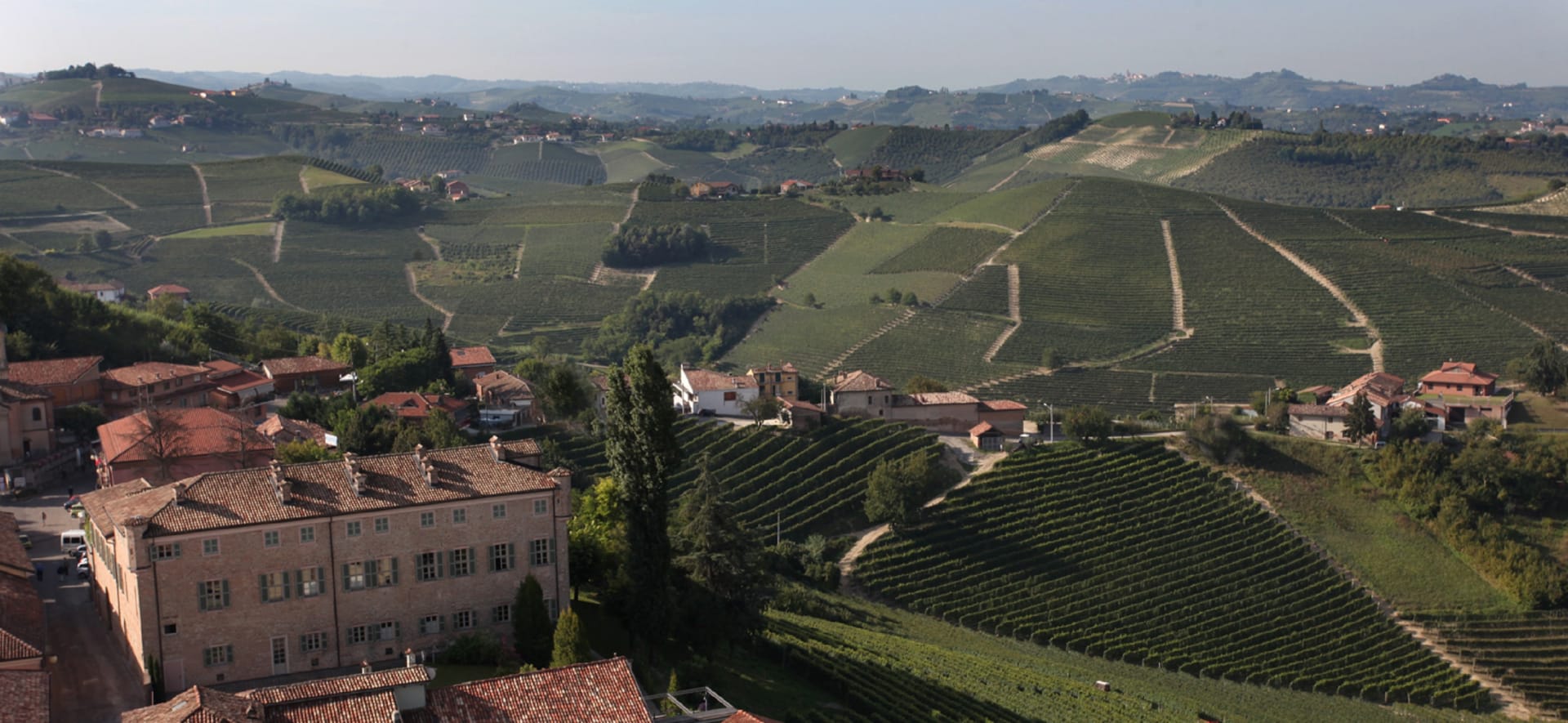


Perched atop a steep hill in the Langhe sits the small village of Barbaresco, home of the GAJA winery. The story of the GAJA Winery can be traced to a singular, founding purpose: to produce original wines with a sense of place which reflect the tradition and culture of those who made it. This philosophy has inspired five generations of impeccable winemaking. It started over 150 years ago when Giovanni Gaja opened a small restaurant in Barbaresco, making wine to complement the food he served. In 1859, he founded the Gaja Winery, producing some of the first wine from Piedmont to be bottled and sold outside the region. Since that time, the winery has been shaped by each generation’s hand, notably that of Clotilde Rey, Angelo Gaja’s grandmother. Her passion for uncompromising quality influenced and informed Angelo Gaja. Through Angelo, these values have become the cornerstone of the GAJA philosophy and are engrained in every aspect of wine production
In 1961, Angelo Gaja began his mission of bringing this great winery to an even higher level. He was the first to use barriques, 225-liter French oak barrels. Under his direction, GAJA pioneered the production of single-vineyard designated wines and was the first to plant Cabernet Sauvignon, Chardonnay and Sauvignon Blanc varietals in Piedmont. He was also instrumental in elevating the native Nebbiolo grape to world-class esteem.
Angelo Gaja is joined by the fifth generation of the GAJA family – his daughters Gaia and Rossana and his son Giovanni. Together they continue to advance the winery’s legacy. To fully realize their vision, all GAJA wines are produced exclusively from grapes grown in estate-owned vineyards, including 250 acres in Piedmont’s Barbaresco and Barolo districts as well as estates in Pieve Santa Restituta (Montalcino) and Ca’Marcanda (Bolgheri). It is from these storied vineyards, and their terroir – the combination of soil, weather and vines that grow upon them, that GAJA wines reveal their true heart and soul.

Responsible for some of the most elegant and age-worthy wines in the world, Nebbiolo, named for the ubiquitous autumnal fog (called nebbia in Italian), is the star variety of northern Italy’s Piedmont region. Grown throughout the area, as well as in the neighboring Valle d’Aosta and Valtellina, it reaches its highest potential in the Piedmontese villages of Barolo, Barbaresco and Roero. Outside of Italy, growers are still very much in the experimentation stage but some success has been achieved in parts of California. Somm Secret—If you’re new to Nebbiolo, start with a charming, wallet-friendly, early-drinking Langhe Nebbiolo or Nebbiolo d'Alba.

The center of the production of the world’s most exclusive and age-worthy red wines made from Nebbiolo, the Barolo wine region includes five core townships: La Morra, Monforte d’Alba, Serralunga d’Alba, Castiglione Falletto and the Barolo village itself, as well as a few outlying villages. The landscape of Barolo, characterized by prominent and castle-topped hills, is full of history and romance centered on the Nebbiolo grape. Its wines, with the signature “tar and roses” aromas, have a deceptively light garnet color but full presence on the palate and plenty of tannins and acidity. In a well-made Barolo wine, one can expect to find complexity and good evolution with notes of, for example, strawberry, cherry, plum, leather, truffle, anise, fresh and dried herbs, tobacco and violets.
There are two predominant soil types here, which distinguish Barolo from the lesser surrounding areas. Compact and fertile Tortonian sandy marls define the vineyards farthest west and at higher elevations. Typically the Barolo wines coming from this side, from La Morra and Barolo, can be approachable relatively early on in their evolution and represent the “feminine” side of Barolo, often closer in style to Barbaresco with elegant perfume and fresh fruit.
On the eastern side of the Barolo wine region, Helvetian soils of compressed sandstone and chalks are less fertile, producing wines with intense body, power and structured tannins. This more “masculine” style comes from Monforte d’Alba and Serralunga d’Alba. The township of Castiglione Falletto covers a spine with both soil types.
The best Barolo wines need 10-15 years before they are ready to drink, and can further age for several decades.