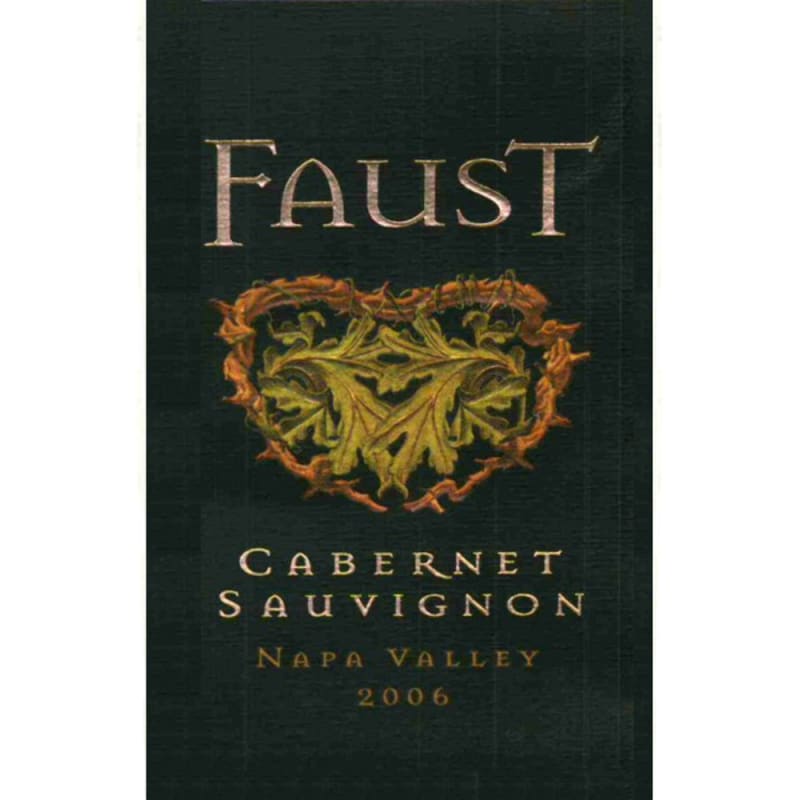

Winemaker Notes
Classic Napa Valley black and red fruit in the nose; also aromas of vanilla and cedar. Dense and rich on the palate with abundant, concentrated fruit and a rich, luxurious finish.
In 2006, a cool, wet spring gave us a late start to the growing season. Summer was mostly cool with some heat spikes, ideal for Napa Valley Cabernet Sauvignon. Harvest came a little late following some warm and cool spells in August and September, and moderate weather during harvestallowed for fully ripe, intensely flavored fruit. At harvest, the grapes are double sorted and crushed at Quintessa, then cold macerated and fermented in oak and stainless steel tanks. Faust is aged for 18 months in 25% new and 75% once-used French oak.




One of the most prestigious wines of the world capable of great power and grace, Napa Valley Cabernet is a leading force in the world of fine, famous, collectible red wine. Today the Napa Valley and Cabernet Sauvignon are so intrinsically linked that it is difficult to discuss one without the other. But it wasn’t until the 1970s that this marriage came to light; sudden international recognition rained upon Napa with the victory of the Stag’s Leap Wine Cellars 1973 Cabernet Sauvignon in the 1976 Judgement of Paris.
Cabernet Sauvignon undoubtedly dominates Napa Valley today, covering half of the land under vine, commanding the highest prices per ton and earning the most critical acclaim. Cabernet Sauvignon’s structure, acidity, capacity to thrive in multiple environs and ability to express nuances of vintage make it perfect for Napa Valley where incredible soil and geographical diversity are found and the climate is perfect for grape growing. Within the Napa Valley lie many smaller sub-AVAs that express specific characteristics based on situation, slope and soil—as a perfect example, Rutherford’s famous dust or Stags Leap District's tart cherry flavors.