

Winemaker Notes
Professional Ratings
-
James Suckling
Flamboyant and concentrated red in an old school way. Full-bodied and very velvety. Big and juicy. Needs time to soften and come together but some may like its full-throttle style now.
-
Wilfred Wong of Wine.com
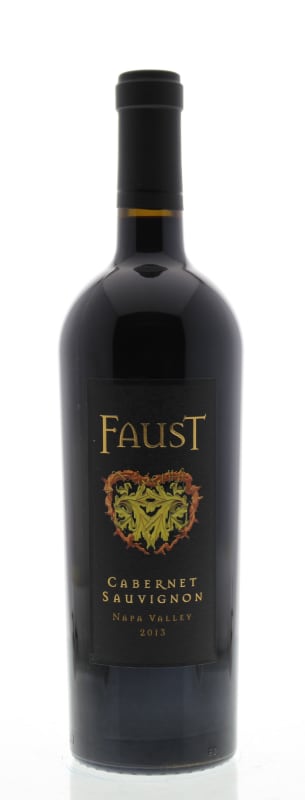
A truly royal Cabernet, made from a family and a history of doing things for the long term, the 2013 Faust Cabernet is as traditional a wine as one can find. Drinks so well and shows all the classic nuances of the Bordeaux varietals, the 2013 Faust Cabernet says right in the right place; not too light nor too big, this medium bodied wine converges flavors from both the New and Old Worlds. Deep to medium ruby in color; fine, demonstrative aromas of black fruit, with plenty of red and blueberry notes, sweet oak and savory leaves tie the overall wine together; long enticing finish, fairly smooth, with an nod to the cooler region fruit; excellent aftertaste. (Tasted: March 21, 2016, San Francisco, CA)
-
Robert Parker's Wine Advocate
The Faust 2013 Cabernet Sauvignon comes largely from vineyards in southern Napa Valley’s Coombsville and Atlas Peak, but also includes some cross-AVA material from areas such as Yountville, Mt. Veeder, St. Helena and Rutherford. It is a well-made, ripe, concentrated, deep ruby/purple-colored Cabernet Sauvignon with sweet tannin, an attractive, cedary, licorice-infused aromatic and flavor profile, medium to full body and supple tannins. It seems to be the most drinkable and up-front of the Faust wines.




One of the most prestigious wines of the world capable of great power and grace, Napa Valley Cabernet is a leading force in the world of fine, famous, collectible red wine. Today the Napa Valley and Cabernet Sauvignon are so intrinsically linked that it is difficult to discuss one without the other. But it wasn’t until the 1970s that this marriage came to light; sudden international recognition rained upon Napa with the victory of the Stag’s Leap Wine Cellars 1973 Cabernet Sauvignon in the 1976 Judgement of Paris.
Cabernet Sauvignon undoubtedly dominates Napa Valley today, covering half of the land under vine, commanding the highest prices per ton and earning the most critical acclaim. Cabernet Sauvignon’s structure, acidity, capacity to thrive in multiple environs and ability to express nuances of vintage make it perfect for Napa Valley where incredible soil and geographical diversity are found and the climate is perfect for grape growing. Within the Napa Valley lie many smaller sub-AVAs that express specific characteristics based on situation, slope and soil—as a perfect example, Rutherford’s famous dust or Stags Leap District's tart cherry flavors.