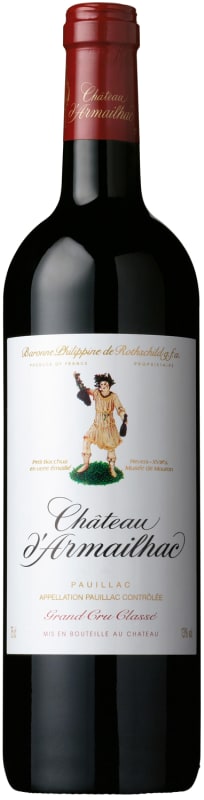


Winemaker Notes
Blend: 70% Cabernet Sauvignon, 15% Merlot, 13% Cabernet Franc, 2% Petit Verdot
Professional Ratings
-
James Suckling
Tobacco, black currants, subtle cassis and hints of asphalt and dried flowers on the nose. Medium- to full-bodied with savory dark fruit and precise tannins that are firm yet well integrated. Aged for 18 months in 50% new oak. 70% cabernet sauvignon, 15% merlot, 13% cabernet franc, and 2% petit verdot.
-
Decanter
Gorgeous fragrance, so floral and alive on the nose, minty and herbal as well as full of violet and cherry elements. Smells quite intense but fresh too. Bright and in focus, streamlined with a racy core - bright acidity and fine tannins, very harmonious if still strict and focussed. It’s full and balanced in its own way with good structure and persistence from start to finish. Sleek, tangy, taut, I like the soft power, the slightly grippy tannins and the freshness throughout. Leaves a bitter grapefruit orange skin tang on the finish. Highest percentage of Cabernet Sauvignon in the blend. 62 IPT. 2% Petit Verdot completes the blend.
Barrel Sample: 94 -
Jeb Dunnuck
Based on 70% Cabernet Sauvignon, 15% Merlot, 13% Cabernet Franc, and the rest Petit Verdot, the 2023 Château D'Armailhac is a rocking little Pauillac offering notes of ripe red and black currants, melted crayon, graphite, and spicy wood. It's medium-bodied and has a ripe, nicely concentrated, balanced, classy profile, with pure tannins and outstanding length. I love its purity, balance, and elegance, and it's going to shine with just a few years of bottle age yet should cruise over the following two decades.
-
Robert Parker's Wine Advocate
Aromas of sweet blackberries, raspberries, cedar and spices introduce the 2023 d'Armailhac, a medium- to full-bodied, fleshy and supple wine with an enveloping core of fruit, sweet structuring tannins and a gently oak-inflected finish. It's a blend of 70% Cabernet Sauvignon, 15% Merlot, 13% Cabernet Franc and 2% Petit Verdot—which, as readers may remember, is a rather high percentage of Cabernet Sauvignon for this address.
-
Vinous
The 2023 d'Armailhac was picked from September 7 to 30 and aged in 50% new oak. It contains the highest percentage of Cabernet Sauvignon to date. Its tightly wound bouquet demands encouragement from the glass, perhaps just missing the panache that elevated the previous vintage. You could argue that this seems more “serious.” The palate is medium-bodied with grainy tannins and a firm backbone. It’s a little pepperier than previous vintages, closing with a streamlined finish. Give this two or three years in bottle. –Neal Martin
Barrel Sample: 91-93
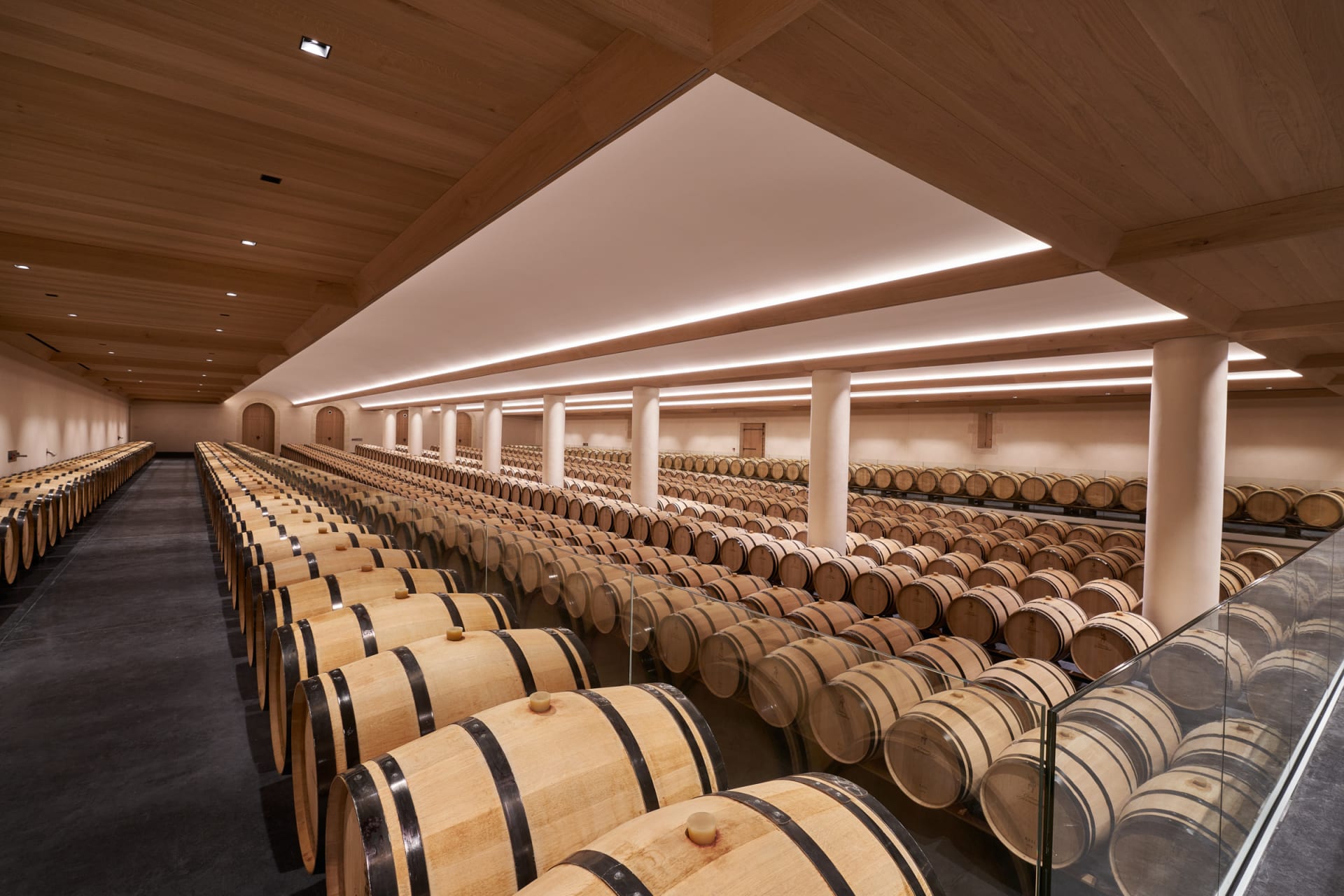


An 1855 Classified Growth, Château d’Armailhac is bordered to the north by Château Mouton Rothschild. It has 76 hectares (187 acres) of south-facing vines with an average age of 40 years, stretching over three gravel banks that embrace all the typical features of the Pauillac appellation.
The terroir, mostly comprising deep gravel, clay or clay-limestone and gravelly sand, is planted with classic Médoc grape varieties: Cabernet Sauvignon (55%), Merlot (35%), Cabernet Franc (8%) and Petit Verdot (2%).
The Cabernet Franc vines, which have an average age of 60 years, are mostly planted on the Plateau des Levantines, an ideal terroir in which they can put down deep roots. Derived from ancestral massal selections, these remarkable Cabernet Francs make up a relatively high proportion of the blend and are a hallmark of the wine.
Château d’Armailhac takes its name from the d’Armailhacq family who purchased the estate in 1660. Its history is bound up with that of pioneers of modern winegrowing such as Armand d’Armailhac.
The estate was acquired by Baron Philippe de Rothschild (1902-1988) in 1933, then inherited by his daughter Philippine de Rothschild (1933-2014). It now belongs to her three children, Camille and Philippe Sereys de Rothschild and Julien de Beaumarchais de Rothschild, who, with passion and the same attachment to the terroir, continue the family’s quest for excellence and innovation in the vineyard and winery.
Château d’Armailhac is a fine wine, typical of the Pauillac appellation, with an elegant classicism regardless of the vintage, and a robust and refined tannic structure.

One of the world’s most classic and popular styles of red wine, Bordeaux-inspired blends have spread from their homeland in France to nearly every corner of the New World. Typically based on either Cabernet Sauvignon or Merlot and supported by Cabernet Franc, Malbec and Petit Verdot, the best of these are densely hued, fragrant, full of fruit and boast a structure that begs for cellar time. Somm Secret—Blends from Bordeaux are generally earthier compared to those from the New World, which tend to be fruit-dominant.

The leader on the Left Bank in number of first growth classified producers within its boundaries, Pauillac has more than any of the other appellations, at three of the five. Chateau Lafite Rothschild and Mouton Rothschild border St. Estephe on its northern end and Chateau Latour is at Pauillac’s southern end, bordering St. Julien.
While the first growths are certainly some of the better producers of the Left Bank, today they often compete with some of the “lower ranked” producers (second, third, fourth, fifth growth) in quality and value. The Left Bank of Bordeaux subscribes to an arguably outdated method of classification that goes back to 1855. The finest chateaux in that year were judged on the basis of reputation and trading price; changes in rank since then have been miniscule at best. Today producers such as Chateau Pontet-Canet, Chateau Grand Puy-Lacoste, Chateau Lynch-Bages, among others (all fifth growth) offer some of the most outstanding wines in all of Bordeaux.
Defining characteristics of fine wines from Pauillac (i.e. Cabernet-based Bordeaux Blends) include inky and juicy blackcurrant, cedar or cigar box and plush or chalky tannins.
Layers of gravel in the Pauillac region are key to its wines’ character and quality. The layers offer excellent drainage in the relatively flat topography of the region allowing water to run off into “jalles” or streams, which subsequently flow off into the Gironde.