


Winemaker Notes
This wine would be a fantastic companion a variety of poultry dishes, dishes finished with a Nantua sauce, or to a rich seafood dish like shrimp and herb risotto.
Professional Ratings
-
James Suckling
A light gold hue here with a creaminess to the nose and palate. Dried lemon and a hint of brioche. A rounder, medium- to full-bodied chardonnay with excellent balance and poise. Some botrytis here with around 30% malolactic fermentation.
-
Vinous
The 2021 Chardonnay Catena Alta from Villa Bastías, Uco Valley was made with slightly botyric grapes aged for 12 months in a third new 500-liter barrels. Golden in color. The Sauterne-like aromas include ripe fruit, stewed apple and pleasant oaky notes. Sugary on the palate with freshness wrapped in a refined texture, the refined oaky flavors return at the back of the mouth.
-
Robert Parker's Wine Advocate
The 2021 Catena Alta Chardonnay is a textbook expression of a barrel-fermented Chardonnay. It fermented with indigenous yeasts in 500-liter barrels, where the wine matured for 14 months. It has good ripeness, 13.7% alcohol and full development of aromas and flavors, waxy apples, white flowers intermixed with smoke and spice, coming through as balanced, complete and seamless, fresh and with a low pH and notable acidity.
Rating:92+


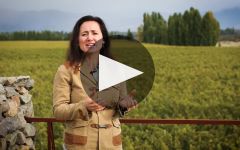



Bodega Catena Zapata is one of Argentina's high-altitude Malbec pioneers. The Catena family began making wine in Mendoza in 1902. Nicolas Catena, third generation family vintner, was one of the first to see the potential of Mendoza's mountain vineyards for producing high quality Malbec. In 1994, he became the first Argentine to export a world-class bottling of Malbec under the Catena label. Nicolas is joined by his daughter, Dr. Laura Catena, in their relentless pursuit of world-class quality from the family's high-altitude vineyards. Laura has done extensive work in introducing Malbec and other varietal plant selections, soil and climate analysis, and sustainable practices throughout Mendoza. Head winemaker, Alejandro Vigil, has been at Catena Zapata since 2002 and works with Laura and Nicolas to make wines that express the family's vineyards and palate.

One of the most popular and versatile white wine grapes, Chardonnay offers a wide range of flavors and styles depending on where it is grown and how it is made. While it tends to flourish in most environments, Chardonnay from its Burgundian homeland produces some of the most remarkable and longest lived examples. California produces both oaky, buttery styles and leaner, European-inspired wines. Somm Secret—The Burgundian subregion of Chablis, while typically using older oak barrels, produces a bright style similar to the unoaked style. Anyone who doesn't like oaky Chardonnay would likely enjoy Chablis.

By far the largest and best-known winemaking province in Argentina, Mendoza is responsible for over 70% of the country’s enological output. Set in the eastern foothills of the Andes Mountains, the climate is dry and continental, presenting relatively few challenges for viticulturists during the growing season. Mendoza, divided into several distinctive sub-regions, including Luján de Cuyo and the Uco Valley, is the source of some of the country’s finest wines.
For many wine lovers, Mendoza is practically synonymous with Malbec. Originally a Bordelaise variety brought to Argentina by the French in the mid-1800s, here it found success and renown that it never knew in its homeland where a finicky climate gives mixed results. Cabernet Sauvignon, Syrah, Merlot and Pinot Noir are all widely planted here as well (and sometimes even blended with each other or Malbec). Mendoza's main white varieties include Chardonnay, Torrontés, Sauvignon Blanc and Sémillon.