


Winemaker Notes
Bodegas Ordóñez works with exclusively ungrafted vineyards of Verdejo planted in the southeastern subzone of D.O. Rueda, the only part of the appellation that completely resisted phylloxera due to the sandy quality of the soils. The philosophy of the winery is to produce authentic Verdejo the old-fashioned way, by working with traditional vineyard sites and using old school winemaking techniques.
A wine with exuberant citrus and floral character, refreshing acidity, and complexity from sur lie and barrel ageing.
Professional Ratings
-
Jeb Dunnuck
From 17 different parcels across four towns in the province of Segovia, the 2024 Nisia Old Vine Verdejo is grown in sandy soils that are phylloxera-free, low-yielding, in the coolest, highest part of the area. Barrel-fermented, it has a creamy texture and the fruity sweetness of peach and apricot, aged on the lees in French oak puncheons and smaller barrels for five months. A refined texture lingers with a hint of acidity and long finish.
-
Vinous
The 2024 Nisia Old Vine Verdejo was made from bush-trained vines planted in 1950, fermented in old barrels and was aged on the lees. Yellow in color, it opens with delicate oak, butter, lees, pastry and green apple aromas. The palate is creamy and fresh, with good volume. It leaves behind white fruit flavors and a hint of concentration.
-
James Suckling
A nicely simple, typical verdejo displaying notes of fennel, kiwi and white almonds. It has a light to medium body with crisp acidity and a pithy, medium-length finish. The texture becomes slightly creamier towards the end.
-
Wine Spectator
Lightly honeyed and floral, with bright acidity and a lightly chalky texture supporting its ripe cantaloupe, lime peel, peach skin, ground cardamom and ginger notes. Minerally finish.



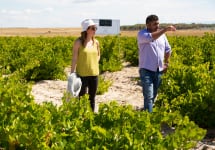
Verdejo is one of Spain’s most historic white grapes, as it has been in production since the Roman times, several thousand years ago. After over fifteen years as the lead producer of quality Verdejo in Spain, Ordóñez chose Puras, Valladolid, as the best appellation within Rueda for growing Verdejo. This isolated corner of the D.O. is home to sandy soils intermixed with river stones that were deposited tens of thousands of years ago when the Duero river was several hundred miles wide. Due to the sandy soils, this sub-appellation of Rueda, shaped like Italy’s boot, resisted the phylloxera. Bodegas Ordóñez takes advantage of this unique terroir to produce wine from its ungrafted vineyards, the oldest of which was planted in 1885. Jorge’s philosophy is to age all of their wines sur lie and barrel fermented in both stainless steel and large format, mostly used French oak.

Captivating and full of character, Verdejo grows with great success in Rueda, Spain and virtually nowhere else in Europe. It has become so trendy in Spain since the turn of the century that plantings have also increased tremendously. Somm Secret—Contrary to what some may think, it is actually not related to the Portugese variety with a very similar name, Verdelho. In fact, DNA profiling suggests it may be a sibling of Godello, another native of NW Spain.

Rueda is located along the banks of the Duero River in Spain’s Castilla y León region, just a 2-hour drive north of Madrid. While winemaking in this area goes back to the 12th century, it was in the 1980s that the region was granted Denominación de Origen (D.O.) status. Today, more than 70 wineries call Rueda home. This national favorite is the top-selling white wine in Spain.
Notable facts Rueda’s main grape variety, Verdejo, gets it distinct complexity from stressful growing conditions and mineral-rich soil. Think of Verdejo as a fuller-bodied and more aromatic Sauvignon Blanc. A lush and smooth character with perfectly balanced acidity means Rueda wines pair well with seafood, fresh salads and spicy food, but are also great on their own.