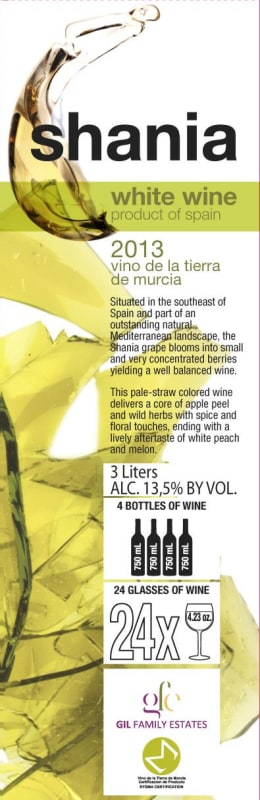

Winemaker Notes





Bodegas Juan Gil is the Gil Family Estate's flagship winery, founded in 1916 by Juan Gil Giménez. Over 107 years, the winery has been consolidated and improved, applying technological advancements to the traditional knowledge passed down through the years. Today the 4th and 5th generations of the Gil family run the winery and group. Located in Southeastern Spain, about 60 miles from the Mediterranean coast, the region experiences a continental climate which is quite extreme: summers are hot with intense sun and winter is long and cold. Diurnal temperature fluctuations are also extreme and rainfall is limited to about 12 inches per year. The vineyards are planted between 2,000 and 2,800 feet above sea level on sandy and rocky limestone soils that are very poor in nutrients, but have a great capacity to hold what little rain does fall. Organic and dry farming is quite typical in Jumilla due to these conditions. Jumilla is known for Monastrell, with over 80% of vineyards planted with it. The Gil family's vineyards are between 40 and 100 years old with very low yields (aprox. 2,200 lb/ac). Monastrell is a thick-skin grape that thrives in the harsh conditions of the climate and terrain of Jumilla, leading to wines with great structure and intense color and complex aromas.
All of the Gil family's estate vineyards are dry-farmed without the use of any pesticides or herbicides and the winery is fully solar powered and "Zero-Waste" (by product is composted, water recycled). The addition of sulfites is kept to the bare minimum to conserve the wines and no other additives are used. The Gil family's commitment to sustainable farming and winemaking doesn't stop there; they are also Gold members of the International Wineries for Climate Action, an international organization which holds the ambitious goal of reaching Net Zero emissions by 2050, all of which requires investments in renewable energy, further shifting agricultural and business practices to reduce their carbon footprint, as well as instilling a culture of sustainability across all aspects of their business.

White grapes are used in two famous types of Spanish wine, Sherry and Cava, but we will limit this discussion to still whites. Let’s begin with perhaps the best known and most highly regarded internationally, Albariño . Produced in the region of Rías Baixas, just above Portugal in northwestern Spain, Albariño typically sees no or little oak and is medium to medium-plus in body. Aroma and flavor notes often include citrus and peach, often with subtle floral notes and a suggestion of sea spray, giving the wine a zesty feel. Often bottled as a single varietal, Albariño is sometimes blended with other indigenous grapes like Loureira and Treixadura. Try one of these Spanish whites from Forjas del Salnes.
Let’s look at a few other Spanish white wines. Godello also hails from northwestern Spain and presents a profile of grapefruit, minerality and a slight smoky quality. Enjoy a bottle from Bodegas Avancia. The region of Rueda, northwest of Madrid, is home to Verdejo , which makes refreshing, un-oaked white wines whose herbal vibrancy recalls Sauvignon Blanc . Protos makes a tasty version. Up north in the Basque region, we find the wine called Txakoli (sometimes called Txakolina). Pronounced “sha-ko-LEE,” it’s made from a local grape called Hondurrabi Zuri and is light, fresh, citrusy, dry … and with razor sharp acidity that makes it a fantastic partner with local seafood and tapas. Ameztoi Gertariako is a good Spanish white wine producer to check out.
The Penedѐs region, best known for the oceans of delicious Cava it sends to the world, also produces still Spanish whites, sometimes from international varieties like Chardonnay , and often from the same grapes used for Cava. These include Parellada, Xarel-lo and Macabeo. Avaline produces a fine example of Penedes white. Finally, we visit the Rioja region. While it is historically and internationally famous for its reds, Rioja also produces fine Spanish white wines. These are usually based on Viura (the local name for Macabeo) and make good everyday sippers, although some aged versions can be stunningly complex. A good place to start is the white Rioja from Bodegas Muga.
As you can see, Spanish white wines offer a vast opportunity for exploration!