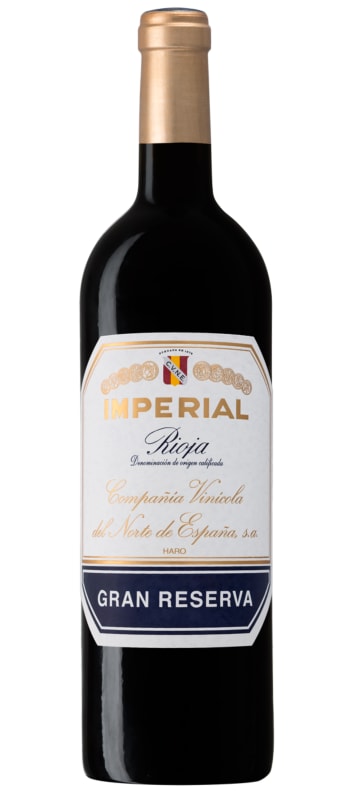


Winemaker Notes
Blend: 85% Tempranillo, 10% Graciano, 5% Mazuelo
Professional Ratings
-
James Suckling
Fresh blackberries, plums, smoked spices, graphite and cocoa powder. So juicy and firm, with fresh, abundant tannins coming from the fruit and spicy oak, but all woven in a fine-grained form, which clearly shows aging potential. Medium- to full-bodied with a very long finish. Try after 2026.
-
Robert Parker's Wine Advocate
The 2018 Imperial Gran Reserva was cropped from a year with the weather from yesteryear, a cold winter with frost, snow and abundant rain, a cool spring and mild summer that resulted in a long vegetative cycle of 180 days and a late harvest between October 8th and 26th. It has similar parameters to the 2017 I tasted next to it, with 14% alcohol, a pH of 3.55 and 6.03 grams of acidity, but it shows fresher. It feels very complete, fresh and vibrant, with more depth and tannin. It's still quite young and should develop nicely in bottle with that extra kick from the cooler year.
Rating: 95+ -
Wine Spectator
A lovely, harmonious red, with a lush quality to the chopped mulberry and cherry fruit that's trimmed nicely by plum skin acidity and fine-grained, sinewy tannins. Violet, licorice, iron, olive and herb details add complexity and appeal, echoing on the vibrant finish. Tempranillo, Graciano and Mazuelo. Drink now through 2038.





Cvne, is situated in Rioja in the traditional neighborhood of the station, where the oldest wineries of Rioja Alta established themselves, for the main reason of transporting their goods to the port of Bilbao.
In 1879, two brothers decided to set up a business in the recently flourishing trade of the wine business. C.V.N.E., Compañía Vinicola del Norte de España (The Northern Spanish Wine Company) or la Cuné, as it is commonly known in Haro, was created. This cellar still reflects the origins of the company and is kept in the traditional neighborhood of the Haro station.
The Cune winery in Haro, is made up of a group of buildings, mostly from the 19th century and arranged around a courtyard surrounded by pavilions for the purpose of wine production, aging, and bottling.

Hailed as the star red variety in Spain’s most celebrated wine region, Tempranillo from Rioja, or simply labeled, “Rioja,” produces elegant wines with complex notes of red and black fruit, crushed rock, leather, toast and tobacco, whose best examples are fully capable of decades of improvement in the cellar.
Rioja wines are typically a blend of fruit from its three sub-regions: Rioja Alta, Rioja Alavesa and Rioja Oriental, although specific sub-region (zonas), village (municipios) and vineyard (viñedo singular) wines can now be labeled. Rioja Alta and Alavesa, at the highest elevations, are considered to be the source of the brightest, most elegant fruit, while grapes from the warmer and drier, Rioja Oriental, produce wines with deep color, great body and richness.