

Winemaker Notes
Professional Ratings
-
Decanter
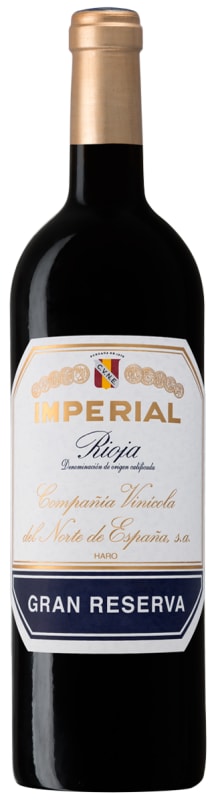
Imperial was first bottled in 1920 and has gained a reputation as one of the best known wines of Rioja. The name traces its origins back to a special bottling intended for the English market which was called Pinta Imperial, or 'Imperial pint'. The grapes come from CVNE’s 28ha of vineyards, as well as from selected sites in Rioja Alta, where the vines are on average 20 years old. Ageing in French and American oak lasts for 24 months, with another 48 months in bottle. Pedro Ballesteros Torres MW: Dense, highly concentrated style that’s already very impressive and will please many. One hopes that its concentration of fruit will come to terms with the heavy oak with some more time in bottle. Sarah Jane Evans MW: Aromatically bursting with red fruits, this is a very perfumed, full-flavoured wine with notes of cranberries. It is a mouthwatering, confident wine that will last a long time. Pierre Mansour: Spicy new oak floats across the dense and layered palate, giving a chunky, compact wine with lovely plum fruit. Complete.
-
James Suckling
This is very ripe with dried fruits and dried flowers. Exuberant aromas. Full body, round and silky, chewy tannins. Bright and exciting. Wonderful fruit. Shows tension and beauty. Needs time to soften and little. So gorgeous. Decant two hours in advance.
-
Wine Spectator
Plum and currant flavors mingle with notes of espresso, tobacco, dried herb and spice in this solid red. Firm tannins and orange peel acidity give this structure and balance. Lovely fruit and floral accents linger. Drink now through 2024.
-
Wine Enthusiast
Blackberry, cassis, coffee and charred aromas make for a smoky, healthy, attractive bouquet. This is dense, deep, tannic and a bit rubbery and bouncy in feel. Tea, herb, chocolate and baked blackberry flavors end with cocoa and herbal, earthy notes. Drink this ripe gran reserva through 2023.





Cvne, is situated in Rioja in the traditional neighborhood of the station, where the oldest wineries of Rioja Alta established themselves, for the main reason of transporting their goods to the port of Bilbao.
In 1879, two brothers decided to set up a business in the recently flourishing trade of the wine business. C.V.N.E., Compañía Vinicola del Norte de España (The Northern Spanish Wine Company) or la Cuné, as it is commonly known in Haro, was created. This cellar still reflects the origins of the company and is kept in the traditional neighborhood of the Haro station.
The Cune winery in Haro, is made up of a group of buildings, mostly from the 19th century and arranged around a courtyard surrounded by pavilions for the purpose of wine production, aging, and bottling.

Hailed as the star red variety in Spain’s most celebrated wine region, Tempranillo from Rioja, or simply labeled, “Rioja,” produces elegant wines with complex notes of red and black fruit, crushed rock, leather, toast and tobacco, whose best examples are fully capable of decades of improvement in the cellar.
Rioja wines are typically a blend of fruit from its three sub-regions: Rioja Alta, Rioja Alavesa and Rioja Oriental, although specific sub-region (zonas), village (municipios) and vineyard (viñedo singular) wines can now be labeled. Rioja Alta and Alavesa, at the highest elevations, are considered to be the source of the brightest, most elegant fruit, while grapes from the warmer and drier, Rioja Oriental, produce wines with deep color, great body and richness.