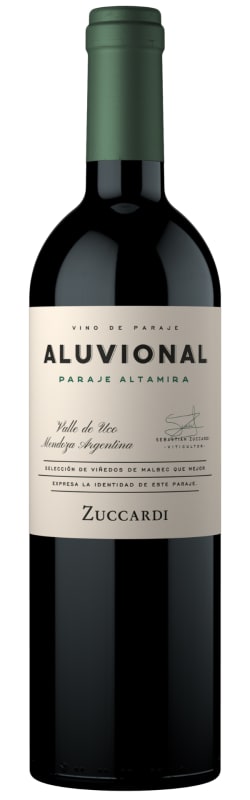


Winemaker Notes
Blend: 100% Malbec
Professional Ratings
-
Robert Parker's Wine Advocate
The 2019 Aluvional Paraje Altamira comes from the south of Altamira or "new Altamira" (Altamira is not yet divided, but they have ideas...), and they used 80% to 100% full clusters and stems—one of the highest, because there's a lot of limestone. But this wine is always foot trodden because they want to avoid carbonic maceration, or sometimes they destem the grapes and add the stems back in a kind of lasagna, with layers. It matured exclusively in their raw concrete vats. The wine is serious, with an austere nose and some serious fruit (it's slightly lower in alcohol than the other two). It's very chalky and has very fine tannins and a texture that can be reminiscent of a Barolo, with some flowers emerging after some time in the glass.
-
James Suckling
Deep blackberries, blueberries, flint and minerals, white pepper and some meaty spices. Some dried lavender, too. This is a full-bodied red, tightly wound by a mouthful of chalky tannins. But the texture of the tannins really make it taste lighter and more linear. Focused, salty and long, but never trying to flatter, just like the rest of Zuccardi’s wines. Impressive. Drinkable now, but better after 2023.
-
Vinous
The 2019 Malbec Aluvional Paraje Altamira from the Uco Valley changed its label this year and was a third aged in foudres. Purple in the glass. The vividly bold aromatic profile offers notes of thyme and violet over sweet and sour cherry. Creamy in feel initially, it grows more compact as the flow gains in vigor, delivering juicy intensity and a chalky sensation that eventually takes over. Will improve in the bottle. The 2019 is a wine that reveals how comfortable its maker is in Paraje Altamira.
-
Wine Enthusiast
Limestone soils are typical of Paraje Altamira, where distinctive, vibrant wines are born. This Malbec shows the essence of this place in Uco Valley, with a floral nose that includes ripe berries and a fresh palate backed by finely-grained tannins. Strawberries, blackberries, mulberries, dried flowers and crushed black pepper give a sense of ripeness and depth. Drink now–2035.
Editors' Choice -
Wine Spectator
A deep, rich and structured red, offering a wealth of violet-laced black cherry and berry preserves, with subtle herbal nuances folding in around firming tannins. The finish is marked by a floral hint and a wave of chalky minerality. Drink now through 2032.
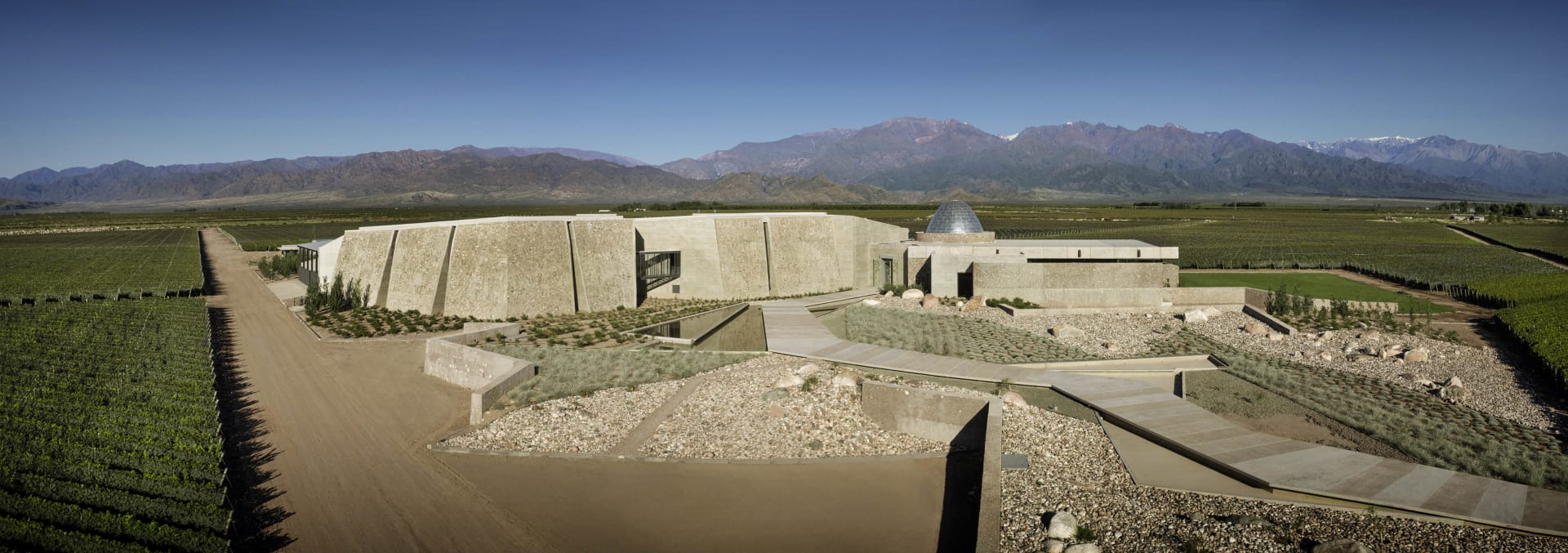





A few years before 1950, Ing. Alberto Zuccardi reaches Mendoza from his homeland in Tucuman where their great-grandparents had settled upon arriving in the Italian region of AveIino. In 1963, Alberto implanted a vineyard in the region of Maipu not knowing that it would begin the great passion of his life, the wine industry. In 1990, his son, Jose Alberto Zuccardi, assumed the General Director of the company.
In 2005, Sebastian Zuccardi, third generation of the family, lead the development of the new stage of the wines of the winery expansion into the Uco Valley. On his initiative, since 2008 the winery has an area of Research and Development dedicated to the study of the terroir and the different variables that affect wine production. In 2013 the construction of the new Zuccardi winery in the Uco Valley began. It opened in March 2016 with the premise of producing wines with identity, through the continuous exploration of the different terroirs of the Uco Valley.
The Zuccardi family’s approach to sustainability starts with the environment and people before any product. They’re dedicated to producing the highest quality wines through sustainable practices such as a focus on nurturing biodiversity, organic farming, efficient irrigation practices, composting, water treatment, comprehensive waste and recycling efforts, and the use of solar energy. The winery itself is designed to be naturally energy efficient by maximizing natural light and minimizing electricity consumption. Its concrete walls fulfill the function of a thermal insulator, the movements of liquid are caused by gravity and the concrete-designed vessels allow for a natural control of the temperature of the wine. As a third generation family-owned winery, the Zuccardi’s take seriously their responsibility to protect the environment, support the land, the farmers and uplift the local community. Through building schools, offering free education, fostering equality, banning child labor, and subsidizing health care, they’re not only elevating their wines and the Uco Valley as a world class wine region, but also giving the people who have contributed to their success a path forward and upward mobility for their own families.

Celebrated for its bold flavors and supple texture, Malbec has enjoyed runaway success in Argentina since the late 20th century. The grape originated in Bordeaux, France, where it historically contributed color and tannin to blends. A French agronomist, who saw great potential for the variety in Mendoza’s hot, high-altitude landscape, brought Malbec to Argentina in 1868. Somm Secret—If you’re trying to please a crowd, Malbec is generally a safe bet with its combination of dense fruit and soft tannins.

With a winning combination of cool weather, high elevation and well-draining alluvial soils, it is no surprise that Mendoza’s Uco Valley is one of the most exciting up-and-coming wine regions in Argentina. Healthy, easy-to-manage vines produce low yields of high-quality fruit, which in turn create flavorful, full-bodied wines with generous acidity.
This is the source of some of the best Malbec in Mendoza, which can range from value-priced to ultra-premium. Cabernet Sauvignon, Cabernet Franc and Chardonnay also perform well here.