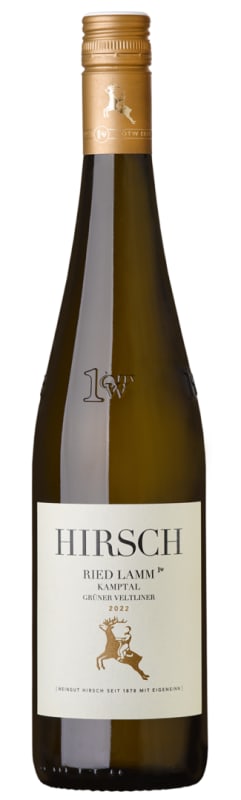


Winemaker Notes
The vineyard site is located on the south-eastern slope toe of the Heiligenstein mountain, and is one of the warmest sites in this wine-growing region. The soil, which is calcareous and loamy, has derived from the underlying loess. In the higher parts of the vineyard, towards the Heiligenstein mountain, siltstones and sandstones of the Zöbing Formation, which contain little or no lime, reach close to the surface.
Professional Ratings
-
Wine Spectator
Hirsch's citrus-colored Kammern 2022 Grüner Veltliner Ried Lamm 1ÖTW opens with a medium-intense, fresh and finely spicy bouquet of citrusy white fruits, lentils and crushed almonds. Medium to full-bodied on the palate, this is a lush, quite dense and elegant Lamm with delicate tannins and tart lime bitters on the finish that reveals fine, mineral acidity and medium length. This is a very elegant Veltliner to be paired with spicy yet too hot and spicy dishes. 13% stated alcohol. Screw cap. Tasted in December 2023.


Fun to say and delightfully easy to drink, Grüner Veltliner calls Austria its homeland. While some easily quaffable Grüners come in a one-liter—a convenient size—many high caliber single vineyard bottlings can benefit from cellar aging. Somm Secret—About 75% of the world’s Grüner Veltliner comes from Austria but the variety is gaining ground in other countries, namely Hungary, the Czech Republic, Slovakia and the United States.

Climbing north and slightly east of the Kremstal region, Kamptal has very little vineyard area bordering the Danube River (unlike Wachau and Kremstal, whose vineyards run along it). The region takes its name from the river called Kamp, which traverses it north and south. Kamptal’s densely planted vineyards represent eight percent of Austria’s total.
The area experiences wide diurnal temperature variations like the Wachau but with less rain and more frost. Its vast geologic diversity makes it suitable for various experimentations with other varieties besides Grüner Veltliner and Riesling, such as Chardonnay, Pinot Blanc (Weissburgunder), Sauvignon Blanc, Pinot Noir, St. Laurent and Zweigelt.
But the region is probably most noted for the beautiful and expansive terraced Heiligenstein, arguably one of the world’s top Riesling sites, as well as some of Austria’s most extraordinary Grüner Veltliner vineyards. Kamptal’s soils, which are mostly loess and sand with some gravel and rocks, make it suitable for Grüner Veltliner, so much so that actually half of the zone is planted to that grape.