


Winemaker Notes
Professional Ratings
-
Connoisseurs' Guide
By any and all measures, this is an exciting Chardonnay that is as vibrant as it is wonderfully deep in precise, optimally ripened, varietal fruit, and, despite the fact that it is yet marked by a bit of youthful restraint, its certain promise of developing complexity is indelible. It is a wine of great volume, and it is hard to imagine that it could be any better balanced than it is. While there are many tasty Chardonnays that are sure to age well, there are also a definitively collectable few such as this that, in no uncertain terms, beg for time in the cellar. This one’s future is so very bright that we cannot urge for upwards of a half-decade of patience strongly enough. It is that good.
-
Tasting Panel
Silky and rich with dense meaty underpinnings; complex and layered, long, balanced and intense; cellar worthy.
-
Wilfred Wong of Wine.com
COMMENTARY: The 2019 Three Sticks Gap's Crown Chardonnay offers excellent presence and persistence on the palate. TASTING NOTES: This wine exhibits heady aromas and flavors of racy green apple and mineral notes, as well as an accent of oak. Enjoy it with grilled, panko-breaded halibut. (Tasted: March 22, 2021, San Francisco, CA)
-
Jeb Dunnuck
Moving to the three Chardonnay, the 2018 Chardonnay Gap's Crown Vineyard comes from a remarkable site on the Sonoma Coast and has a rich, textured style as well as classy notes of honeyed orchard fruits, chamomile, buttered lemons, and toasted bread. There's always an exotic edge in the Chardonnays from this site, and this is a complex, subtle, nuanced Chardonnay to enjoy over the coming 5-7 years.
-
Robert Parker's Wine Advocate
The 2018 Chardonnay Gap's Crown Vineyard is crafted differently than the other Chardonnays in the Three Sticks portfolio. From Dijon clone vines, it is barrel fermented and aged 11 months in oak with lees stirring, and it goes through malolactic fermentation. It has a pretty savory character, with toast, flint, honey and hazelnuts anchored by white peaches and floral perfume. The medium-bodied palate is silky in texture and provides a great foil to the richness of the nose, with bright, gently leesy fruits and a long, juicy finish.


Three Sticks Wines is a boutique, family-owned winery recognized for pinot noir and chardonnay. Proprietor Bill Price III (nicknamed “Billy Three Sticks”) owns six Grand Cru level estate vineyards in Sonoma County, including three Heritage vineyards–Durell, Gap’s Crown, and Walala and three Monopole vineyards–One Sky, Alana, and William James. An intimate relationship with each property shines through in each of the Three Sticks wines, reflecting a keen understanding of how working with great vineyards, along with a meticulous winemaking style, produces inspiring results.
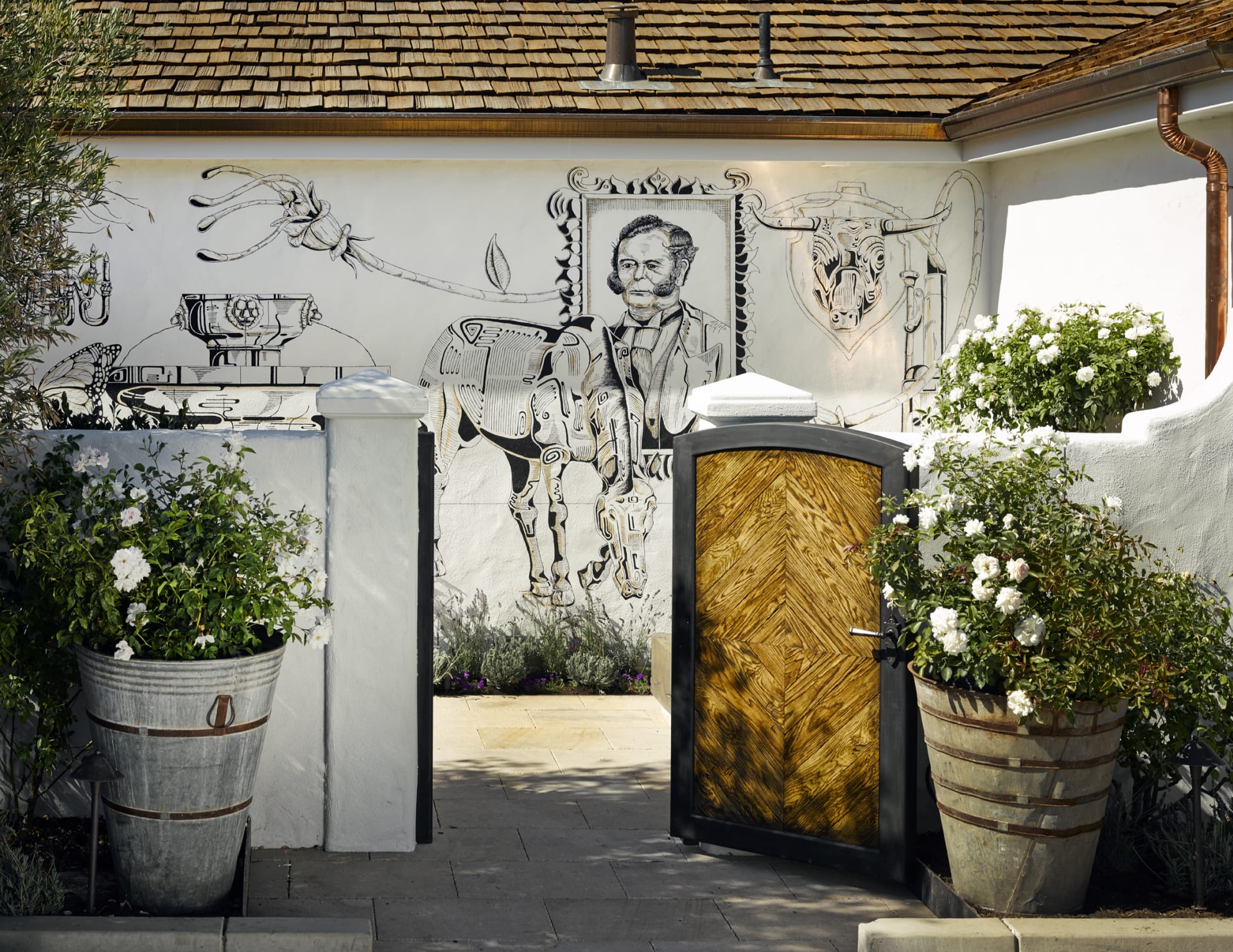
The Vallejo-Castenada Adobe (built in 1842) was built by Captain Salvador Vallejo, brother of General Mariano Guadalupe Vallejo, the Commandante Generale of the northern territory of Mexico (modern day Sonoma). The Prices purchased the property in 2012 and embarked on a two-year preservation project. The Three Sticks team worked with Sonoma historians and the Sonoma League for Historic Preservation to restore and protect the fabric of the property. They commissioned San Francisco-based designer Ken Fulk and his team to design the ambience of the Adobe, as it is known locally. The historic landmark in downtown Sonoma is now home to the hospitality of Three Sticks.

One of the most popular and versatile white wine grapes, Chardonnay offers a wide range of flavors and styles depending on where it is grown and how it is made. While it tends to flourish in most environments, Chardonnay from its Burgundian homeland produces some of the most remarkable and longest lived examples. California produces both oaky, buttery styles and leaner, European-inspired wines. Somm Secret—The Burgundian subregion of Chablis, while typically using older oak barrels, produces a bright style similar to the unoaked style. Anyone who doesn't like oaky Chardonnay would likely enjoy Chablis.

A vast appellation covering Sonoma County’s Pacific coastline, the Sonoma Coast AVA runs all the way from the Mendocino County border, south to the San Pablo Bay. The region can actually be divided into two sections—the actual coastal vineyards, marked by marine soils, cool temperatures and saline ocean breezes—and the warmer, drier vineyards further inland, which are still heavily influenced by the Pacific but not quite with same intensity.
Contained within the appellation are the much smaller Fort Ross-Seaview and Petaluma Gap AVAs.
The Sonoma Coast is highly regarded for elegant Pinot Noir, Chardonnay, and, increasingly, cool-climate Syrah. The wines have high acidity, moderate alcohol, firm tannin, and balanced ripeness.