

Winemaker Notes
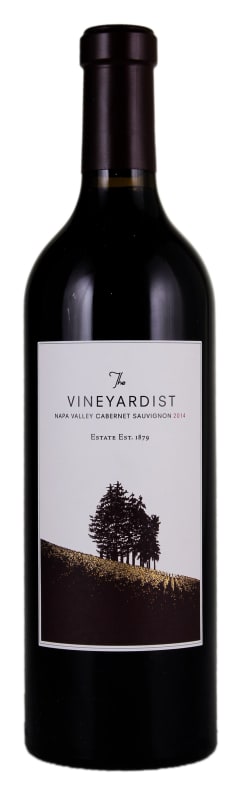
The 2014 Vineyardist is made entirely from estate grown Cabernet Sauvignon grapes in the Diamond Mountain AVA at elevations up to 1,300 feet. Using the oldest of the estate's vines, grapes were harvested at yields close to 1 ton per acre and barrel aged for 22 months in 100% new French oak. This is a complex wine with aromas of ripe blackberries, mountain berries, graphite, black cherries, violets and crushed stone. Hints of suede, espresso, rose petals, and fruitcake fill the nose. The mouth is huge with flavors expressing currants, black strawberries and gooseberries. This is contrasted by the substantial tannins, which are supple and velvety. This is a beautifully balanced wine: concentrated, plush, rich and candied, complemented by seamless tannins and a profound finish.
Professional Ratings
-
Robert Parker's Wine Advocate
The 2014 Cabernet Sauvignon The Vineyardist, which spent 21 months in 100% new French oak--mostly Taransaud, but some Darnajou--is a small cuvée of only 125 cases. It is s big-time winner for the vintage and, as spectacular as it is, the owners may have eclipsed it with their 2015, but let’s wait until that latter vintage is in bottle. The 2014 reveals loads of minerality, nice smoky, earthy notes intermixed with pen ink, blackcurrant, graphite and spice box. It is dense and rich with terrific fruit extract and in many ways behaves more like a 2013 than your more supple and fruit-forward 2014s. This is a great effort from Diamond Mountain, capable of lasting 25-35 years.


A noble variety bestowed with both power and concentration, Cabernet Sauvignon enjoys success all over the globe, its best examples showing potential to age beautifully for decades. Cabernet Sauvignon flourishes in Bordeaux's Medoc where it is often blended with Merlot and smaller amounts of some combination of Cabernet Franc, Malbecand Petit Verdot. In the Napa Valley, ‘Cab’ is responsible for some of the world’s most prestigious, age-worthy and sought-after “cult” wines. Somm Secret—DNA profiling in 1997 revealed that Cabernet Sauvignon was born from a spontaneous crossing of Cabernet Franc and Sauvignon Blanc in 17th century southwest France.

Diamond Mountain is the northernmost mountain appellation in the Mayacamas Range, on the northwest side of the valley floor, above the town of Calistoga. Defined mainly by elevation, vineyards are planted at 400 to 2,200 feet.
Diamond Mountain vineyards receive plenty of sunshine at these elevations and are typically above the coastal fog line. But given its western proximity, the area still easily cools down from early morning and late afternoon Pacific Ocean breezes. The AVA (American Viticultural Area) covers 5,000 acres but just over 500 acres are under vine.
Diamond Mountain soils, mainly weathered, red sedimentary rock and decomposed, volcanic ash, are infertile, quick-draining and produce small, thick-skinned grapes, bursting with chewy tannins.
Cabernet Sauvignon, Merlot, Cabernet Franc, Malbec, Petit Verdot and Zinfandel have great success here.
Like other sub-appellations in Napa Valley, the Diamond Mountain area had no shortage of pioneer winemakers. Rudy von Strasser led the effort for Diamond Mountain to acquire AVA status in 1999.