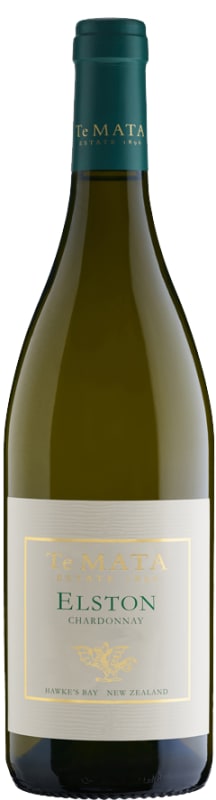


Winemaker Notes
Pale lemon in color with a brilliant, diamond-like clarity, Elston Chardonnay 2018 shows captivating notes of roasted hazelnuts, cashews and citrus fruits on the nose, alongside creme brûlée and nougat. Tropical fruit, intense white peach and ripe lemon all radiate across the palate. Elston Chardonnay 2018, with its signature balance, moreish acidity and fine, lingering finish is lush and powerful. Exceptionally appealing with superb ripeness and length.
Professional Ratings
-
Robert Parker's Wine Advocate
Sourced primarily from the Havelock Hills, but with contributions from Bridge Pa and the Dartmoor Valley, the 2018 Elston Chardonnay artfully combines toasty, smoky notes with peach and pineapple fruit. The result is something akin to roasted hazelnuts or cashews and grilled fruit. Medium to full-bodied and generous without seeming overly rich, the wine remains focused and long on the mouthwatering finish. It's probably the best Elston to date.
-
James Suckling
A rich nose of peach and pear with honeysuckle, bread dough and grilled hazelnut. The palate has smooth, creamy texture with flavors of peach custard and toasted hazelnut. Holds shape long and smooth.
-
Wine Enthusiast
This is a riper, more approachable vintage than the 2017 Elston. It opens with appealing notes of melon, apricot marmalade and barrel-driven butterscotch aromas. Marmalade is the dominant flavor on the full-figured palate as well, providing a pithy bite of refreshment amid a broad, slippery texture. Drink now–2026.




One of the most popular and versatile white wine grapes, Chardonnay offers a wide range of flavors and styles depending on where it is grown and how it is made. While it tends to flourish in most environments, Chardonnay from its Burgundian homeland produces some of the most remarkable and longest lived examples. California produces both oaky, buttery styles and leaner, European-inspired wines. Somm Secret—The Burgundian subregion of Chablis, while typically using older oak barrels, produces a bright style similar to the unoaked style. Anyone who doesn't like oaky Chardonnay would likely enjoy Chablis.

An eclectic region on the east coast of the North Island, Hawkes Bay extends from wide, fertile, coastal plains, inland, to the coast range, whose peaks reach as high as 5,300 feet. While the flatter areas were historically more popular because they are easier to cultivate, their alluvial soils can be too fertile for vines. In the late 20th century, the drive for quality led growers to the hills where soils are free-draining, limestone-rich and more suited to producing high quality wines.
Over the passing of time, the old Ngaruroro River laid down deep, gravelly beds, which were subsequently exposed after a huge flood in the 1860’s. In the 1980s growers identified this stretch, which continues for approximately 800 ha, and named it the Gimblett Gravels. The zone has proven to be ideal for the production of excellent red wines, particularly Cabernet Sauvignon, Merlot and Syrah.
Today the area takes well-earned recognition for its Bordeaux blends and other reds. Expressive of intense stewed red and black berry with gentle herbaceous characters, Gimblett Gravels wines are suggestive of their cool climate origin, and on par with other top-notch Bordeaux blends around the globe.
Chardonnay is the top white grape in Hawkes Bay, making elegant wines, strong in stone fruit character. Sauvignon blanc comes in close behind, notable for its tropical, fruit forward qualities.