

Winemaker Notes
This wine pairs beautifully with blueberry or banana pancakes, Puget Sound oysters, and smoked salmon with or without the bagel.
Professional Ratings
-
Jeb Dunnuck
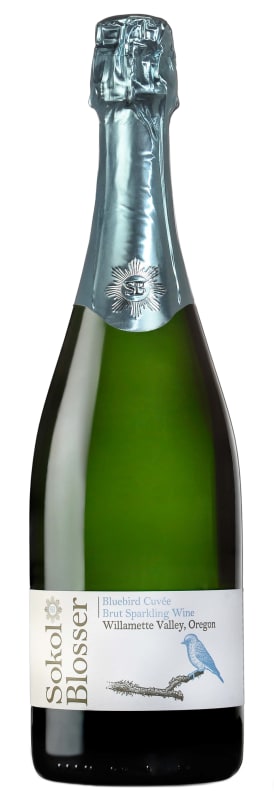
The label on this wine showcases Sokol Blosser’s long-time support of the Prescott Western Bluebird Recovery Project to preserve breeding habitat for the native bird. Pouring a hue, the bright straw-colored 2021 Bluebird Cuvee Brut Sparkling Wine is fresh with aromas of white peach, citrus blossoms, and fresh pastry dough. Medium-bodied, it offers candied green apple fruit up front and tapers to fresh acidity, a dry finish.
-
James Suckling
Attractive green apples, lemon pith, white flowers and crushed stone. Fresh and crispy with a medium body and fine bubbles. Smooth and delicate.


Representing the topmost expression of a Champagne house, a vintage Champagne is one made from the produce of a single, superior harvest year. Vintage Champagnes account for a mere 5% of total Champagne production and are produced about three times in a decade. Champagne is typically made as a blend of multiple years in order to preserve the house style; these will have non-vintage, or simply, NV on the label. The term, "vintage," as it applies to all wine, simply means a single harvest year.

From Alabama to Wyoming, each of the fifty United States produces wine—with varying degrees of success. Many of the colder northeastern states focus primarily on American or French-American hybrid varieties like Concord and Vidal, while Muscadine is the grape species of the warm, humid southeast. In Alaska, grapes are grown indoors in greenhouses; other states specialize in fruit wines, like the pineapple wine of Hawaii. New York and Virginia have thriving wine industries, and New Mexico, Arizona, Texas, Michigan, Idaho, and Ohio are all worth keeping an eye on.