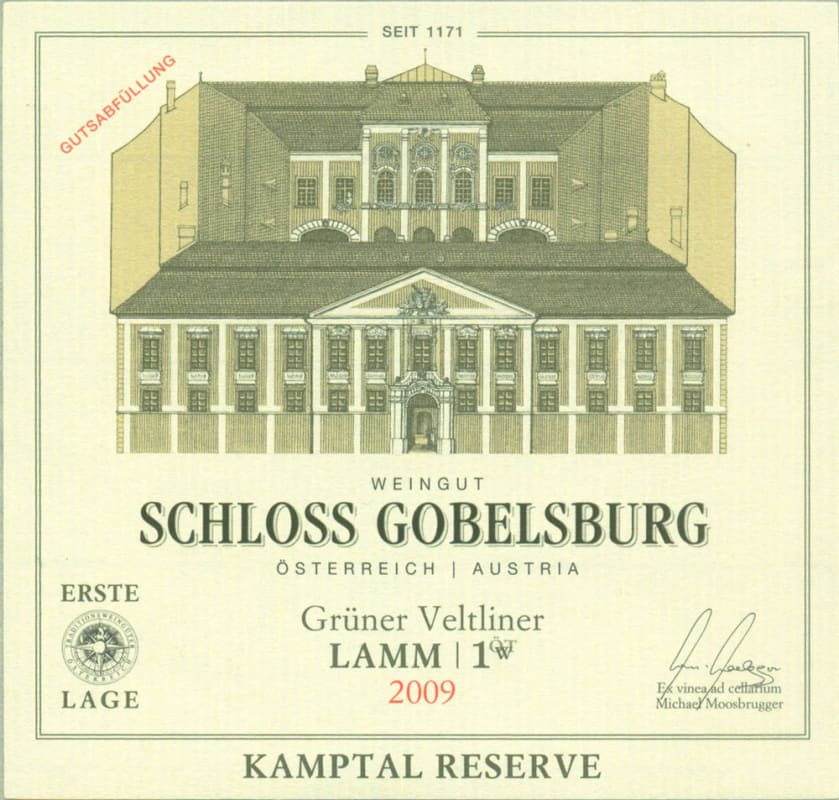

Winemaker Notes
This takes the aromas of power-pack GrüVe and disperses them into a skein of detail, which is always striking for such a big wine – not to mention the quality of the aromas. This, again, is great wine, more moderate than '07 or '06, more melting and accommodating. Bründlmayer's Lamm is analog and enveloping; this one is digital while being just as hospitable. Is it as great as the '06 and '07 were? I don't know, but I'll buy more of this for myself, and will get more joy from it.
Professional Ratings
-
Wine & Spirits
The deep, loamy soils of the Lamm Vineyard give powerful, elegantly rich wines, and this one shows creamy depth and an expansive dimension of flavor. It takes the better part of a day to fully emerge, bringing out varietal notes of red berry, citrus and lentil—long, confident and impeccably refined on the finish.
-
Wine Spectator
A creamy, lush and tropical-tasting white, with concentrated aromas and flavors of pineapple, guava, apricot and hints of pecan. The rich finish is powerfully smoky and spicy, with a delicate, minerally essence. Drink now through 2020. 67 cases imported.


Fun to say and delightfully easy to drink, Grüner Veltliner calls Austria its homeland. While some easily quaffable Grüners come in a one-liter—a convenient size—many high caliber single vineyard bottlings can benefit from cellar aging. Somm Secret—About 75% of the world’s Grüner Veltliner comes from Austria but the variety is gaining ground in other countries, namely Hungary, the Czech Republic, Slovakia and the United States.

Appreciated for superior wines made from indigenous varieties, Austria should be on the radar of any curious wine drinker. A rather cool and dry wine growing region, this country produces wine that is quintessentially European in style: food-friendly with racy acidity, moderate alcohol and fresh fruit flavors.
Austria’s viticultural history is rich and vast, dating back to Celtic tribes with first written record of winemaking starting with the Romans. But the 20th century brought Austria a series of winemaking obstacles, namely the plunder of both world wars, as well as its own self-imposed quality breach. In the mid 1980s, after a handful of shameless vintners were found to have added diethylene glycol (a toxic substance) to their sweet wines to imitate the unctuous qualities imparted by botrytis, Austria’s credibility as a wine-producing country was compromised. While no one was harmed, the incident forced the country to rebound and recover stronger than ever. By the 1990s, Austria was back on the playing field with exports and today is prized globally for its quality standards and dedication to purity and excellence.
Grüner Veltliner, known for its racy acidity and herbal, peppery aromatics, is Austria's most important white variety, comprising nearly a third of Austrian plantings. Riesling in Austria is high in quality but not quantity, planted on less than 5% of the country’s vineyard land. Austrian Rieslings are almost always dry and are full of bright citrus flavors and good acidity. Red varietal wines include the tart and peppery Zweigelt, spicy and dense Blaufränkisch and juicy Saint Laurent. These red varieties are also sometimes blended.