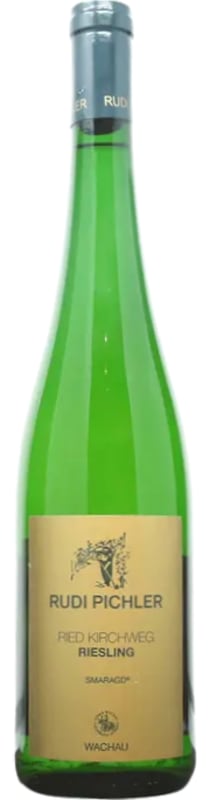


Winemaker Notes
Wachau Riesling is dry and often defined by high levels of dry extract (due to a lengthy ripening period) and a pleasing freshness (due to dramatic temperature swings between day and night). Sedimentary soils of sand and stone give Kirchweg Riesling a dense mineral texture and fine fruity flavors.
Professional Ratings
-
James Suckling
I love the deep and delicate, peachy nose of this extremely attractive Wachau dry riesling. Wonderful fresh fruit with a touch of mint and lemon balm on the ripe but rather sleek and very precise palate. The power and concentration show themselves first at the stunningly long and pristine finish.
-
Robert Parker's Wine Advocate
Pichler's 2021 Ried Kirchweg Riesling Smaragd offers clear, bright, elegant, concentrated and finely spiced fruit with depth and rocky notes but also phenolic aromas. Pure and salty on the palate, it's very grippy, almost grassy, with little texture and juice. It's not a wine for hedonists, but possibly for the patient?


Riesling possesses a remarkable ability to reflect the character of wherever it is grown while still maintaining its identity. A regal variety of incredible purity and precision, this versatile grape can be just as enjoyable dry or sweet, young or old, still or sparkling and can age longer than nearly any other white variety. Somm Secret—Given how difficult it is to discern the level of sweetness in a Riesling from the label, here are some clues to find the dry ones. First, look for the world “trocken.” (“Halbtrocken” or “feinherb” mean off-dry.) Also a higher abv usually indicates a drier Riesling.

As Austria’s most prestigious wine growing region, the landscape of the Wachau is—not surprisingly—one of its most dramatic. Millions of years ago, the Danube River chiseled its way through the earth, creating steep terraces of decomposed volcanic and metamorphic rock. Harsh Ice Age winds brought deposits of ancient glacial dust and loess to the terrace’s eastern faces. Today these steep surfaces of nutrient-poor and fast draining soil are home to some of Austria’s very best sites for both Grüner Veltliner and Riesling.
Wachau is small, comprising a mere three percent of Austria’s vine surface and, considering relatively low yields, represents a miniscule proportion of total wine production. Diurnal temperature shifts in Wachau facilitate great balance of sugar and phenolic ripeness in its grapes. At night cold air from the Alps and forests in the northwest displace warm afternoon air, which gets sucked upstream along the Danube.
Its sites are actually so varied and distinct that more emphasis is going into vineyard-designated offerings even despite grape variety. Grüner Veltliner and Riesling are most prominent, but the region produces Chardonnay, Pinot Blanc (Weissburgunder), Pinot Gris, Sauvignon Blanc and Zweigelt among other local variants.