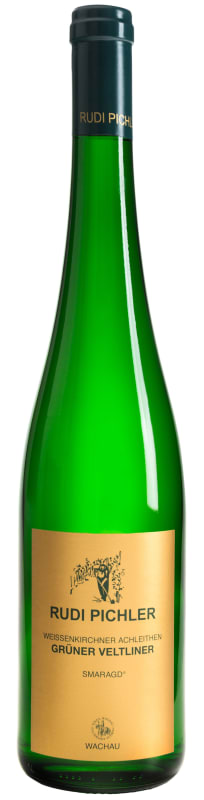


Winemaker Notes
Grüner Veltliner is the signature grape of Austria and produces a dry white wine with savory aromas, spicy flavors, and good acidity. Grüner Veltliner Smaragd from the Wachau is a full-bodied wine and is rich in style with notes of stone fruit, lemon, radish, and arugula.
Grüner Veltliner’s bright acidity and savory character make it an ideal partner to mildly spiced Vietnamese, Thai, and Chinese flavors. Fish and shellfish are accented by Grüner Veltliner’s citrus and mineral profile while its acidity cuts the richness of pork or ham. It can also work well with foods that are difficult to pair such as bitter greens and asparagus.
Professional Ratings
-
James Suckling
Slightly funky nose (from a hint of reduction), but that only adds to the excitement of this extraordinarily expressive gruner with enormous wet-stone minerality. The very radical structure and gigantic energy bowl you over. As it aerates, notes of lemon grass, vanilla bean and resin come through. Very long, breathtakingly intense finish. From vines that are 60 to 80 years old. Drinkable now, but best from 2023.
-
Wine Enthusiast
This white is fuller bodied with a gorgeous mouthfeel. All of its components are beautifully represented, with orange-blossom aromas that match the ripe citrus flavors at its core, while Red Delicious apple, yellow plum and dandelion glide along, adding to the intrigue. It is long and well-balanced. Drink now through 2032.
-
Wine Spectator
Very ripe, offering hints of lanolin along with peach, grapefruit, fennel and a touch of chamomile notes. Fluid and accessible, yet still firmly structured. Fine length. Drink now through 2028.


Fun to say and delightfully easy to drink, Grüner Veltliner calls Austria its homeland. While some easily quaffable Grüners come in a one-liter—a convenient size—many high caliber single vineyard bottlings can benefit from cellar aging. Somm Secret—About 75% of the world’s Grüner Veltliner comes from Austria but the variety is gaining ground in other countries, namely Hungary, the Czech Republic, Slovakia and the United States.

As Austria’s most prestigious wine growing region, the landscape of the Wachau is—not surprisingly—one of its most dramatic. Millions of years ago, the Danube River chiseled its way through the earth, creating steep terraces of decomposed volcanic and metamorphic rock. Harsh Ice Age winds brought deposits of ancient glacial dust and loess to the terrace’s eastern faces. Today these steep surfaces of nutrient-poor and fast draining soil are home to some of Austria’s very best sites for both Grüner Veltliner and Riesling.
Wachau is small, comprising a mere three percent of Austria’s vine surface and, considering relatively low yields, represents a miniscule proportion of total wine production. Diurnal temperature shifts in Wachau facilitate great balance of sugar and phenolic ripeness in its grapes. At night cold air from the Alps and forests in the northwest displace warm afternoon air, which gets sucked upstream along the Danube.
Its sites are actually so varied and distinct that more emphasis is going into vineyard-designated offerings even despite grape variety. Grüner Veltliner and Riesling are most prominent, but the region produces Chardonnay, Pinot Blanc (Weissburgunder), Pinot Gris, Sauvignon Blanc and Zweigelt among other local variants.