

Winemaker Notes
Professional Ratings
-
James Suckling
An energetic and vibrant riesling with sliced lemons, white peaches and hints of white pepper. Some cloves, too. It has a solid center-palate with firmness and tightness at the end. Needs some time to completely open.
-
Wine Enthusiast
Streamlined, heady and compact, this dry Riesling delivers a most compelling package of crushed white cherry, lime peel, wet slate and sliced fennel bulb. It's pure, pristine and powerful on the medium-bodied palate, showing great cohesion between the tangy lime and stone elements, the fleshy white cherry and quince flavors and the cool, refreshing accents of fennel and cucumber. It's a true delight that has the drive to hold well through 2027 at least.
Editors' Choice -
Robert Parker's Wine Advocate
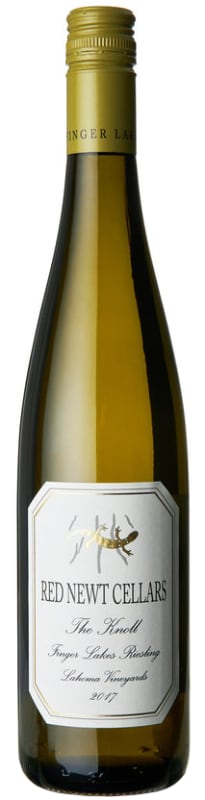
The 2017 Riesling The Knoll - Lahoma Vineyards is from Seneca Lake. It comes in with three grams of residual sugar, 7.9 of total acidity and 12.6% alcohol. Fresh, young and transparent, this shows fine concentration and a tasty finish with the fruit up front and the acidity a little more subtle. It is beautifully constructed and drinking pretty well, but it will not be released until the fall of 2020—so, start saving up. It looks like a winner. Honestly, I see no real reason to delay the release of this wine, but there you have it.


Riesling possesses a remarkable ability to reflect the character of wherever it is grown while still maintaining its identity. A regal variety of incredible purity and precision, this versatile grape can be just as enjoyable dry or sweet, young or old, still or sparkling and can age longer than nearly any other white variety. Somm Secret—Given how difficult it is to discern the level of sweetness in a Riesling from the label, here are some clues to find the dry ones. First, look for the world “trocken.” (“Halbtrocken” or “feinherb” mean off-dry.) Also a higher abv usually indicates a drier Riesling.

As the most historic wine-producing region in New York state, winemaking in the Finger Lakes area dates back to the 1820s and today as a region, accounts for 90% of the state’s total wine production.
Its narrow and deep lakes created by the movement of Ice Age glaciers create an environment similar to the classic Riesling-loving regions of Europe, namely Germany and Austria. The Finger Lakes retain summer heat that incidentally warms up cold winter air, making it fall down from the lakes’ steep slopes. When spring comes, the lakes, already cooled by cold winter weather, stave off vine budding until the danger of frost has subsided. The main lakes of the zone, that is those big enough to moderate the climate in this way, are the focal points of prime vineyard areas. They include Canandaigua, Keuka, Seneca and Cayuga.
While Riesling has fueled most of the region’s success, today Pinot Noir and Cabernet Franc enjoy some attention.