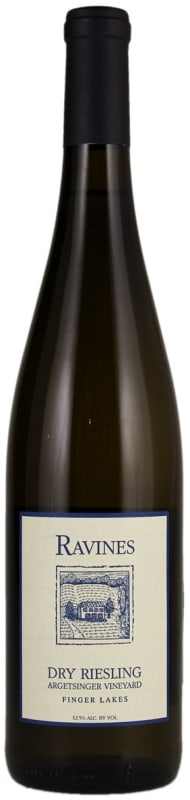


Winemaker Notes
Professional Ratings
-
Wine Spectator
A ripe style, with a core of Jonagold apple, pear and honeysuckle flavors that glide through easily, backed by a lingering chamomile note on the stylish finish.
-
Robert Parker's Wine Advocate
The 2015 Dry Riesling "Argetsinger Vineyard" has just three grams of sugar versus 8.1 of total acidity. It comes in at 12.6% alcohol. The driest and most austere of the Rieslings, this has those stony and metallic nuances of a sterner wine. This, unlike its siblings, is strictly a food wine. It broods a little too much to be a porch-sipper. That said, it is beautifully constructed and capable of aging well. OwnerMorton Hallgren said this would "easily" last 20 years. He is probably right. Sourced from 34-year-old vines, there were 408 cases produced.


Riesling possesses a remarkable ability to reflect the character of wherever it is grown while still maintaining its identity. A regal variety of incredible purity and precision, this versatile grape can be just as enjoyable dry or sweet, young or old, still or sparkling and can age longer than nearly any other white variety. Somm Secret—Given how difficult it is to discern the level of sweetness in a Riesling from the label, here are some clues to find the dry ones. First, look for the world “trocken.” (“Halbtrocken” or “feinherb” mean off-dry.) Also a higher abv usually indicates a drier Riesling.

As the most historic wine-producing region in New York state, winemaking in the Finger Lakes area dates back to the 1820s and today as a region, accounts for 90% of the state’s total wine production.
Its narrow and deep lakes created by the movement of Ice Age glaciers create an environment similar to the classic Riesling-loving regions of Europe, namely Germany and Austria. The Finger Lakes retain summer heat that incidentally warms up cold winter air, making it fall down from the lakes’ steep slopes. When spring comes, the lakes, already cooled by cold winter weather, stave off vine budding until the danger of frost has subsided. The main lakes of the zone, that is those big enough to moderate the climate in this way, are the focal points of prime vineyard areas. They include Canandaigua, Keuka, Seneca and Cayuga.
While Riesling has fueled most of the region’s success, today Pinot Noir and Cabernet Franc enjoy some attention.