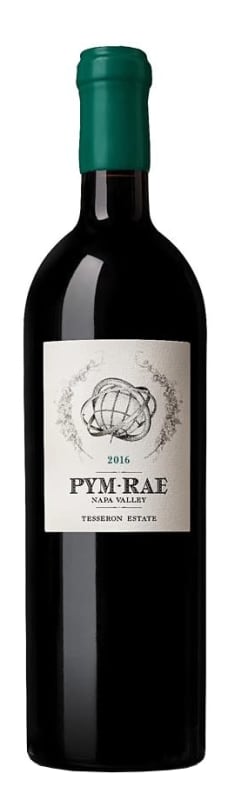


Winemaker Notes
Depth, balance and freshness: every detail is carefully considered to reveal the potential of this rare vineyard, and gracefully highlight its unique character. The first vintage of Pym-Rae stays true to the spirit of the Tesseron family, and is both the culmination of a long journey as well as the beginning of a new adventure.
Blend: 76% Cabernet Sauvignon, 17% Merlot, 7% Cabernet Franc
Professional Ratings
-
James Suckling
This is the debut vintage of this wine from the esteemed Bordeaux owner, Alfred Tesseron, who bought the property in the Napa mountains in 2016. Aromas of plums, wet earth, fresh herbs and tobacco. Some green olives. Turns to blueberries and blackberries. Full-bodied, yet reserved and layered with chocolate, walnuts and plums. Firm yet polished tannins give a framed sense to the wine. Savory. Racy and beautifully structured, it’s extremely drinkable already. Real wine.
-
Robert Parker's Wine Advocate
A blend of 76% Cabernet Sauvignon, 17% Merlot and 7% Cabernet Franc, the 2016 Pym-Rae displays a deep garnet-purple color and reveals wonderfully fragrant notes of candied violets, wilted roses, damp soil and black tea over a core of red and black currants, black cherries and warm blackberries plus touches of cigar box and camphor. Medium to full-bodied, the palate is evocatively singular, offering that rock-solid structure of mountain fruit, yet these are wonderfully ripe, silt-like tannins that beautifully support the elegant red and black fruit layers, finishing very long and very perfumed.
-
Jeb Dunnuck
The 2016 Pym-Rae comes from an estate on Mount Veeder and is 76% Cabernet Sauvignon, 17% Merlot, and the rest Cabernet Franc, all aged in 70% new French oak and the balance in concrete vats. The first vintage for this cuvée, it's named after the original estate owner's children, Pym and Rae, which were their middle names. The 2016 is a beautiful wine and has a unique, rich, meaty character as well as lots of dark fruits, mountain scrub brush, tobacco, and leather that develops nicely with time in the glass, showing more and more fruit and purity with air. Full-bodied, nicely concentrated, and textured, it has a mass of tannins, beautiful mid-palate depth, and a solid spine of acidity that keeps it lively and fresh. It offers pleasure today yet is going to benefit from 5-7 years in the cellar. My money is on it evolving for 25-30 years.
Rating: 96+ -
The Somm Journal
A blend of 76% Cabernet Sauvignon, 17% Merlot, and 7% Cabernet Franc, with stunning aromas of black cherry, caramel, and oak. The entry is feather light and almost ethereal, with black fruit descending softly on creamy, teeth-coating tannins. Cigar leaf and dark coffee further explore the depths of the wine’s primal heritage


One of the world’s most classic and popular styles of red wine, Bordeaux-inspired blends have spread from their homeland in France to nearly every corner of the New World. Typically based on either Cabernet Sauvignon or Merlot and supported by Cabernet Franc, Malbec and Petit Verdot, the best of these are densely hued, fragrant, full of fruit and boast a structure that begs for cellar time. Somm Secret—Blends from Bordeaux are generally earthier compared to those from the New World, which tend to be fruit-dominant.

Centered at the peak for which it is named, Mount Veeder is Napa’s largest sub-AVA. But even though the entire appellation spreads over 16,000 acres, vineyards cover a mere 1,000. Scattered among Douglas firs and bristlecone pines, Mount Veeder vineyards extend south from the upper elevations of the Mayacamas Mountains—the highest point at 2,400 feet—to the border of the Carneros region. Less than 25 wineries produce wine from Mount Veeder fruit.
Winemaking began early in this appellation. In 1864, Captain Stelham Wing presented the first Mount Veeder wine to the Napa County Fair; it came from today’s Wing Canyon Vineyard. Prohibition, of course, halted winemaking and viticulture wasn’t revitalized until the founding of Mayacamas Vineyards in 1951 and Bernstein Vineyards in 1964.
The Bernstein Vineyards was actually home to the first Petit Verdot in California, planted in 1975. Today most of the Petit Verdot in Napa Valley originates from this vineyard.
Rocky volcanic clay and ancient seabed matter dominate Mount Veeder soils—perfect for Bordeaux varieties. Cabernet Sauvignon, Merlot, Malbec, Cabernet Franc and Petit Verdot enjoy spectacular success. These varieties produce wines rich in brambly blackberry and black cherry fruit with herbal and floral aromatics. Structures are moderate to assertive and wines have great staying power.
Chardonnay from Mount Veeder is lush, full and balanced mineral and fresh citrus flavors.