

Winemaker Notes
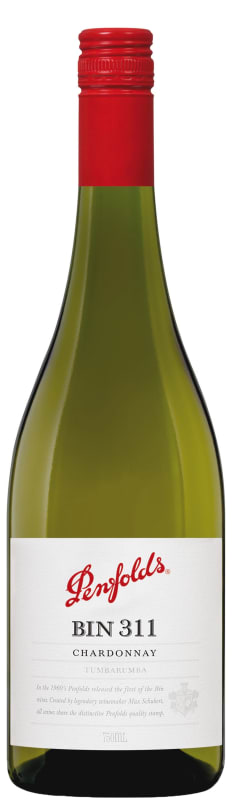
The 2019 Penfolds Bin 311 Chardonnay is a light straw color. The nose is full-flavored, endowed with a concentrated fruit spectrum of citrus, grapefruit and white peach. Hints of sherbet, camomile and goats cheese complex the aromatic offer – a chardonnay cast assembled from three States of Australia. Certainly, there’s quite the performance happening in the glass, with barely a swirl of the glass and some air required to light up the stage! First and foremost, this wine extolls freshness, yet not at the expense of an endearing richness and generosity of flavor. Whilst some may perceive it to be slightly ‘larger-framed’ than in previous years it nevertheless retains trademark Bin 311 mineral acidity and linearity. Rockmelon and white peach fruits are pronounced. Underlying sherbet and fresh lemon tart impressions coupled with a lovely creaminess add to the structural and flavor pool.
Professional Ratings
-
James Suckling
Aromas of toasted nuts, lemon confit, grapefruit peel, flint, orchard fruit and struck match. The palate is medium-bodied with bright, striking acidity and a vivid mouthfeel. Great tension and precision.
-
Wine Enthusiast
This is a likable, multi-regional Chardonnay blend that is at first tightly reined and straightforward in nature, but reveals more layers as it opens in the glass. It weaves stone fruit, pineapple, salted nuts and toasty characters into a slippery, creamy mouthfeel. The oak is present but not overwhelming and an appealing salted peach note lingers on the finish. It's a solid example of modern Aussie Chardonnay.
-
Robert Parker's Wine Advocate
Sourced from Tasmania, Adelaide Hills and Tumbarumba, Penfolds is seeking to position the 2019 Bin 311 Chardonnay as something of a "Junior Yattarna." I guess that's one way to characterize the stuff that doesn't make the cut for the flagship Chardonnay. In truth, this is a fine wine in its own right, boasting struck-match complexity on the nose alongside hints of apple, white peach and lime. Barrel fermented and matured in 35% new French oak, it's medium-bodied and silky textured, but it hides the oak well, ending in a lingering wash of citrus.
-
Decanter
Deceptively delicate, even though it has been framed within a quite sturdy oak outline. The body of the wine is quite fragile – a fine porcelain vase. A whiff of toasty oak rides ahead of very gentle peach blossom. The sliver of lemon has surprising persistence, revealing some pleasing roasted cashew and mineral bite before a squeeze of tart grapefruit providing pucker at the finish. It’s all very prim and elegant, straight-backed and on its best behaviour, but one wonders whether it can loosen up with age.
-
Wine Spectator
Fresh and citrusy up front, with lemon zest, tangerine and pomelo flavors that are clear and bright, on a juicy frame. Balanced, with notes of toasted hazelnut and spice on the finish, which gain momentum.




Since 1844, Penfolds has been grounded in experimentation, curiosity and uncompromising quality. Their success has been driven by a lineage of visionary winemakers. It began with Dr. Christopher and Mary Penfold, the pioneers who dreamed big, inventing tonics, brandies, and fortified wines made from grapes and Australian sunshine. It continued with celebrated winemaking legends including Max Schubert, who pushed the development to extraordinary, bold new heights. It is this pioneering spirit and curiosity that still rings true after nearly two centuries, it is what has helped Penfolds become one of the most celebrated winemakers in the world today.

One of the most popular and versatile white wine grapes, Chardonnay offers a wide range of flavors and styles depending on where it is grown and how it is made. While it tends to flourish in most environments, Chardonnay from its Burgundian homeland produces some of the most remarkable and longest lived examples. California produces both oaky, buttery styles and leaner, European-inspired wines. Somm Secret—The Burgundian subregion of Chablis, while typically using older oak barrels, produces a bright style similar to the unoaked style. Anyone who doesn't like oaky Chardonnay would likely enjoy Chablis.

A large, climatically diverse country with incredibly diverse terrain, producing just about every wine style imaginable, Australia has a grand winemaking history and some of the oldest vines on the planet. Both red wine and white wine from Australian are wildly popular and beloved. Most of Australia's wine regions are concentrated in the south of the country with those inland experiencing warm, dry conditions and those in coastal areas receiving tropical, maritime or Mediterranean weather patterns. Australia has for several decades been at the forefront of winemaking technology and has widely adopted the use of screwcaps, even for some premium and ultra-premium bottles. Thanks to the country’s relatively agreeable climate throughout and the openness of its people, experimentation is common and ongoing.
Shiraz is indeed Australia’s most celebrated and widely planted variety; Barossa Valley leads the way, producing exceptionally bold and supple versions. Cabernet Sauvignon, Australia's second most planted variety, can be blended with Shiraz but also shines on its own particularly in Coonawarra and Margaret River. Grenache and Mourvèdre are also popular, both on their own and alongside Shiraz in Rhône Blends. Chardonnay is common throughout the country and made in a wide range of styles. Sauvignon Blanc has recently surged in popularity to compete with New Zealand’s distinctive version and Semillon is often blended in Margaret River or shines on its own in the Hunter Valley. Riesling thrives in the cool-climate Clare and Eden Valleys. Sticky-sweet fortified wine Rutherglen is a beloved regional specialty of Victoria.