

Winemaker Notes
On the palate it is medium-bodied and youthful. Bright, fresh raspberry & elderberry fruits.. perhaps more evident upon sitting. Unobtrusive oak, totally absorbed and unwilling to reveal country of origin! White chocolate, fruit pastille, fruit jube..wishful or real? Powdery/talc-coating tannins and refreshing lively acididty await on the finish.
Professional Ratings
-
Robert Parker's Wine Advocate
Deep garnet-purple colored the 2009 Bin 128 Shiraz offers aromas of ripe blackberries and black cherries over notes of tar, loam and black pepper. Taut and well structured in the mouth, it offers a good amount of earthy / savory fruit supported by crisp acid and a medium to firm level of grainy tannins, finishing long and peppery. Drink it now to 2017.




Since 1844, Penfolds has been grounded in experimentation, curiosity and uncompromising quality. Their success has been driven by a lineage of visionary winemakers. It began with Dr. Christopher and Mary Penfold, the pioneers who dreamed big, inventing tonics, brandies, and fortified wines made from grapes and Australian sunshine. It continued with celebrated winemaking legends including Max Schubert, who pushed the development to extraordinary, bold new heights. It is this pioneering spirit and curiosity that still rings true after nearly two centuries, it is what has helped Penfolds become one of the most celebrated winemakers in the world today.

Marked by an unmistakable deep purple hue and savory aromatics, Syrah makes an intense, powerful and often age-worthy red. Native to the Northern Rhône, Syrah achieves its maximum potential in the steep village of Hermitage and plays an important component in the Red Rhône Blends of the south, adding color and structure to Grenache and Mourvèdre. Syrah is the most widely planted grape of Australia and is important in California and Washington. Sommelier Secret—Such a synergy these three create together, the Grenache, Syrah, Mourvedre trio often takes on the shorthand term, “GSM.”

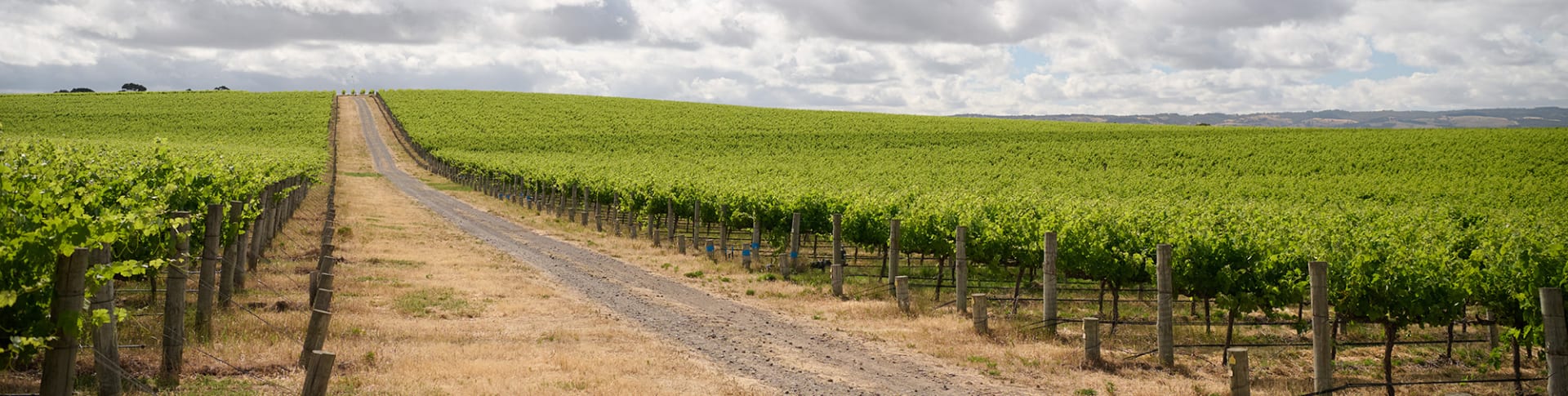
Distinguished by a thin, subterranean band of crumbled, red clay loam, Coonawarra is a fairly flat, otherwise unobtrusive region with a cool Mediterranean climate, actually not dissimilar to Bordeaux.
In Coonawarra, this unique layer of red clay is called, "terra rossa" and gets its color from iron oxide. The terra rossa soil overlies soft, penetrable limestone, in a continuous area that is part of the Limestone Coast zone of South Australia. This uncommon layering of soils creates a substrate that is both well draining and at the same time, offers good water retention to support vine roots through dry summers.
Not surprisingly, Coonawara experiences great success with the Bordeaux varieties, namely Cabernet Sauvignon and Merlot, but also Shiraz. However Cabernet reigns superior and accounts for half of the Coonawarra harvest each year. Coonawarra Cabernet Sauvignon develops powerful, yet polished tannins, ripe, red berry fruit and often sweet herb or dried mint qualities. The region has an increased focus on the individual expressions of single vineyards.