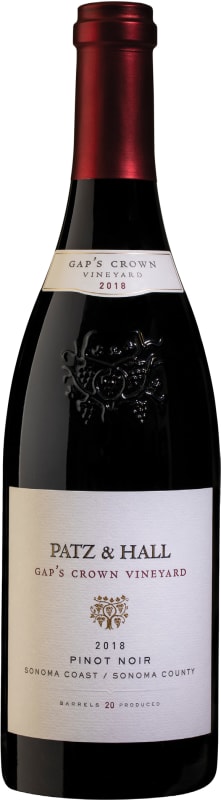


Winemaker Notes
This vineyard sits high on a rock strewn, windswept hill directly overlooking the Petaluma Gap, the coastal mountain feature that feeds the cool Pacific air into the Russian River basin. Usually the last vineyard they pick each year, and often the most tannic of our wines, the 2018 offering has intense aromas of black cherry, dried cranberry, cinnamon, dark cocoa along with hints of porcini mushroom forest floor intermingle and intertwine. The mouth is juicy, broad and generous with lingering plum, and cassis. Gap’s Crown Vineyard is a very long-lived wine that rewards patient cellaring for many years to come.




Thin-skinned, finicky and temperamental, Pinot Noir is also one of the most rewarding grapes to grow and remains a labor of love for some of the greatest vignerons in Burgundy. Fairly adaptable but highly reflective of the environment in which it is grown, Pinot Noir prefers a cool climate and requires low yields to achieve high quality. Outside of France, outstanding examples come from in Oregon, California and throughout specific locations in wine-producing world. Somm Secret—André Tchelistcheff, California’s most influential post-Prohibition winemaker decidedly stayed away from the grape, claiming “God made Cabernet. The Devil made Pinot Noir.”

A vast appellation covering Sonoma County’s Pacific coastline, the Sonoma Coast AVA runs all the way from the Mendocino County border, south to the San Pablo Bay. The region can actually be divided into two sections—the actual coastal vineyards, marked by marine soils, cool temperatures and saline ocean breezes—and the warmer, drier vineyards further inland, which are still heavily influenced by the Pacific but not quite with same intensity.
Contained within the appellation are the much smaller Fort Ross-Seaview and Petaluma Gap AVAs.
The Sonoma Coast is highly regarded for elegant Pinot Noir, Chardonnay, and, increasingly, cool-climate Syrah. The wines have high acidity, moderate alcohol, firm tannin, and balanced ripeness.