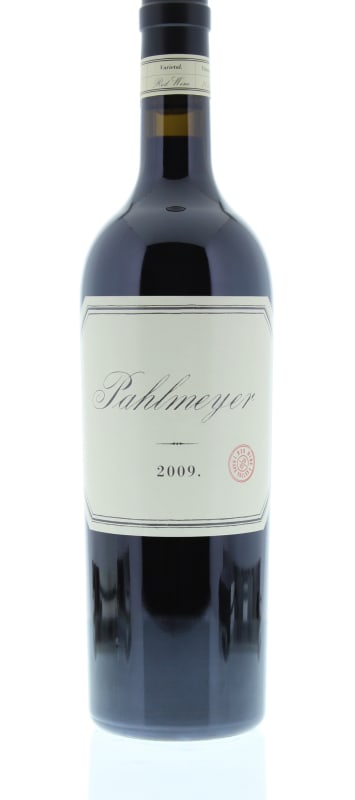


Winemaker Notes
Blend: 82% Cabernet Sauvignon, 7% Merlot, 7% Cabernet Franc,3% Petit Verdot, 1% Malbec
Professional Ratings
-
Robert Parker's Wine Advocate
The 2009 Pahlmeyer is made up of 82% Cabernet Sauvignon, 7% Merlot, 7% Cabernet Franc, 3% Petit Verdot and 1% Malbec. Deep garnet colored, the nose gives up provocative notes of candied violets, dark chocolate-covered cherries, licorice, dried lavender and dried Provence herbs over a core of warm cassis, prunes and blueberry compote plus a waft of cedar. Full-bodied, the big, rich, juicy palate has a well-played frame of fine-grained, plush tannins and tons of freshness, finishing long and fruity.
-
Wine Spectator
This cellar-worthy Bordeaux-like expression offers a mix of cedar-laced tobacco, dried berry, loamy earth and herbal notes. Young and tightly wound, this unfolds slowly and gracefully, and looks like an ideal choice to lay down. Cabernet Sauvignon, Merlot, Cabernet Franc, Petit Verdot and Malbec. Best from 2014 through 2028.
-
Connoisseurs' Guide
Although very much showing the winery's predictable predilection to ripeness, Pahlmeyer's newly released red blend is an immense, wonderfully well-filled wine that is as long on juicy fruit as it is ripe and rich in oak, and its themes of black cherries, root beer and sweet loamy soils seem to grow more intense as it crosses the palate. Some will find it too rich and outgoing, but this one is all Californian in style and shows why Napa Valley is so envied by many.


Undoubtedly proving its merit over and over, Napa Valley is a now a leading force in the world of prestigious red wine regions. Though Cabernet Sauvignon dominates Napa Valley, other red varieties certainly thrive here. Important but often overlooked include Merlot and other Bordeaux varieties well-regarded on their own as well as for their blending capacities. Very old vine Zinfandel represents an important historical stronghold for the region and Pinot noir is produced in the cooler southern parts, close to the San Pablo Bay.
Perfectly situated running north to south, the valley acts as a corridor, pulling cool, moist air up from the San Pablo Bay in the evenings during the hot days of the growing season, which leads to even and slow grape ripening. Furthermore the valley claims over 100 soil variations including layers of volcanic, gravel, sand and silt—a combination excellent for world-class red wine production.