Winemaker Notes
Professional Ratings
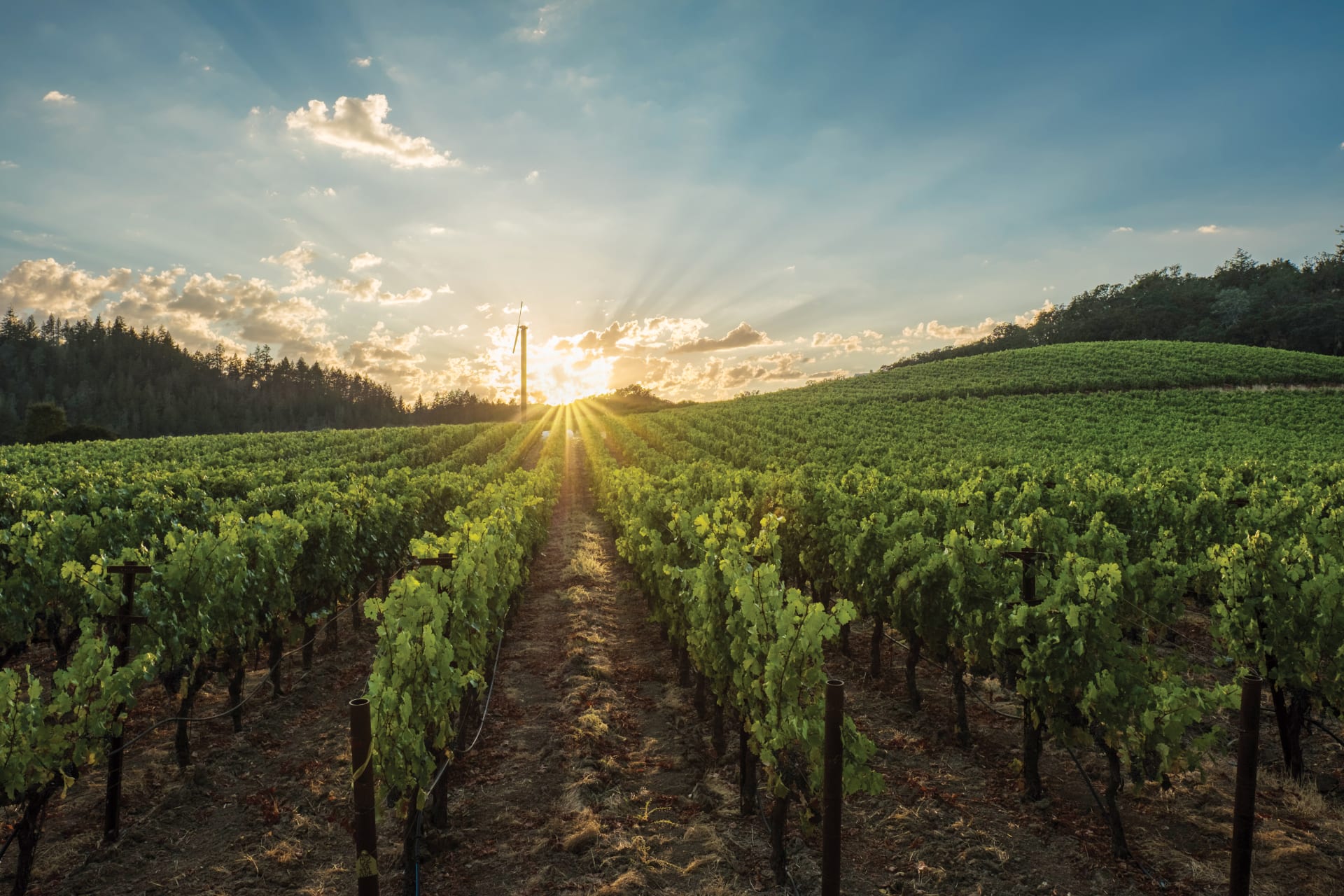



"In 1999, Bruce and Barbara Neyers purchased and renovated a winery on a thirty-acre parcel in the Sage Canyon area of Napa Valley. Over the next 14 months they built a modern, highly functional winery designed for traditional winemaking practices. They produced their first vintage in this state of the art facility in 2000. In 2002, Wine and Spirits Magazine named Neyers Vineyards the Artisan Winery of the Year.
About 25% of our production is Merlot and Cabernet Sauvignon grown on Bruce and Barbara’s 50-acre, Conn Valley ranch. They purchase additional grapes from a select group of growers, among them the Sangiacomo family of the Carneros District, Will Nord of Napa, the Rossi Ranch of Sonoma County, Markus Bokisch and the Evangelho family.
Even though Neyers Vineyards sits in the heart of the Napa Valley, Bruce's experience with French wine importer Kermit Lynch has had an undeniable influence on their wines. Many of the French producers Bruce has worked with farm organically, make their wines naturally without use of cultured yeast or laboratory designed malo-lactic starter, and bottle their wines without fining or filtration. Neyers barrels are made in France, to our specifications, from wood that we buy in bulk and air dry for three years, two years longer than normal. All of the grapes are picked by hand, into small bins that hold only one-half ton. They are then laboriously hand sorted and inspected at the winery as winemaker Tadeo Borchardt gently guides the winemaking process along. As Bruce says, “No expense has been spared in our grape growing, winemaking practices, or processing equipment, yet customers repeatedly tell us that our wines represent great value in today's highly competitive wine market.” Bruce Neyers produces his own content for the company blog, “Vintner Tales.” "

Unapologetically bold, spice-driven and jammy, Zinfandel has secured its title as the darling of California vintners by adapting well to the state's diverse microclimates and landscapes. Born in Croatia, it later made its way to southern Italy where it was named Primitivo. Fortunately, the imperial nursery of Vienna catalogued specimens of the vine, and it later made its way to New England in 1829. Parading the true American spirit, Zinfandel found a new home in California during the Gold Rush of 1849. Somm Secret—California's ancient vines of Zinfandel are those that survived the neglect of Prohibition; today these vines produce the most concentrated, ethereal and complex examples.

Increasingly garnering widespread and well-deserved attention, New York ranks third in wine production in the United States (after California and Washington). Divided into six AVAs—the Finger Lakes, Lake Erie, Hudson River, Long Island, Champlain Valley of New York and the Niagara Escarpment, which crosses over into Michigan as well as Ontario, Canada—the state experiences varied climates, but in general summers are warm and humid while winters are very cold and can carry the risk of frost well into the growing season.
The Finger Lakes region has long been responsible for some of the country’s finest Riesling, and is gaining traction with elegant, light-bodied Pinot Noir and Cabernet Franc. Experimentation with cold-hardy European varieties is common, and recent years have seen the successful planting of grapes like Grüner Veltliner and Saperavi (from the Eastern European country of Georgia). Long Island, on the other hand, has a more maritime climate influenced by the Atlantic Ocean, and shares some viticultural characteristics with Bordeaux. Accordingly, the best wines here are made from Merlot and Cabernet Franc. The Niagara Escarpment is responsible for excellent ice wines, usually made from the hybrid variety, Vidal.