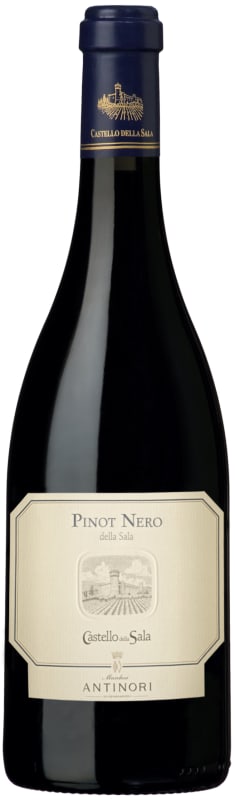


Winemaker Notes
Professional Ratings
-
Vinous
The 2018 Pinot Nero della Sala slowly blossoms in the glass with a smoky display that mixes wild herbs with dusty dried flowers, nuances of cherry and a hint of brown spice. It’s elegant and silky in feel, without a hard edge in sight, casting a balanced yet opulent wave of ripe red and black fruits across the palate. While this isn’t the deepest expression of Pinot Nero, it impresses instead with its harmony and sheer drinkability, tapering off incredibly fresh with a lingering twang of salty minerals and inner violet tones.
-
Wine Spectator
An elegant, light- to medium-bodied red, offering a fresh range of sun-dried cherry and wild strawberry fruit, with dried thyme and spice box notes. The smoke- and graphite-laced finish shows light, dusty tannins. Drink now through 2025. 90 cases imported.





The Antinori family has been committed to the art of winemaking for over six centuries since 1385 when Giovanni di Piero Antinori became a member of the "Arte Fiorentina dei Vinattieri," the Florentine Winemaker’s Guild. All throughout its history, twenty-six generations long, the Antinori family has managed the business directly making innovative and sometimes bold decisions while upholding the utmost respect for traditions and the environment.
Today, Albiera Antinori is the president of Marchesi Antinori with the continuous close support of her two sisters, Allegra and Alessia, all actively involved in first person in the business. Their father, Marchese Piero Antinori, is the current Honorary President of the company. Tradition, passion, and intuition are the three driving forces that led Marchesi Antinori to establish itself as one of the most important winemakers of elite Italian wine. The company is one of the Founding Members of the "Associazione Marchi Storici d’Italia," an association for the protection, support and promotion of Italian historical brands.
The family’s historical heritage lies in their estates in Tuscany and Umbria, however over the years they have invested in many other areas, both in Italy and abroad, well known for producing high quality wine, opening new opportunities to appreciate and develop unique new terroirs with great winemaking potential. Each vintage, each plot of land, each new idea to be advanced is a new beginning, a new pursuit for achieving higher quality standards. As Marchese Piero loves to say "Ancient family roots play an important part in our philosophy but they have never hindered our innovative spirit."

Thin-skinned, finicky and temperamental, Pinot Noir is also one of the most rewarding grapes to grow and remains a labor of love for some of the greatest vignerons in Burgundy. Fairly adaptable but highly reflective of the environment in which it is grown, Pinot Noir prefers a cool climate and requires low yields to achieve high quality. Outside of France, outstanding examples come from in Oregon, California and throughout specific locations in wine-producing world. Somm Secret—André Tchelistcheff, California’s most influential post-Prohibition winemaker decidedly stayed away from the grape, claiming “God made Cabernet. The Devil made Pinot Noir.”

Centered upon the lush Apennine Range in the center if the Italian peninsula, Umbria is one of the few completely landlocked regions in Italy. It’s star red grape variety, Sagrantino, finds its mecca around the striking, hilltop village of Montefalco. The resulting wine, Sagrantino di Montefalco, is an age-worthy, brawny, brambly red, bursting with jammy, blackberry fruit and earthy, pine forest aromas. By law this classified wine has to be aged over three years before it can be released from the winery and Sagrantino often needs a good 5-10 more years in bottle before it reaches its peak. Incidentally these wines often fall under the radar in the scene of high-end, age-begging, Italian reds, giving them an almost cult-classic appeal. They are undoubtedly worth the wait!
Rosso di Montefalco, on the other had, is composed mainly of Sangiovese and is a more fruit-driven, quaffable wine to enjoy while waiting for the Sagrantinos to mellow out.
Among its green mountains, perched upon a high cliff in the province of Terni, sits the town of Orvieto. Orvieto, the wine, is a blend of at least 60% Trebbiano in combination with Grechetto, with the possible addition of other local white varieties. Orvieto is the center of Umbria’s white wine production—and anchor of the region’s entire wine scene—producing over two thirds of Umbria’s wine. A great Orvieto will have clean aromas and flavors of green apple, melon and citrus, and have a crisp, mineral-dominant finish.