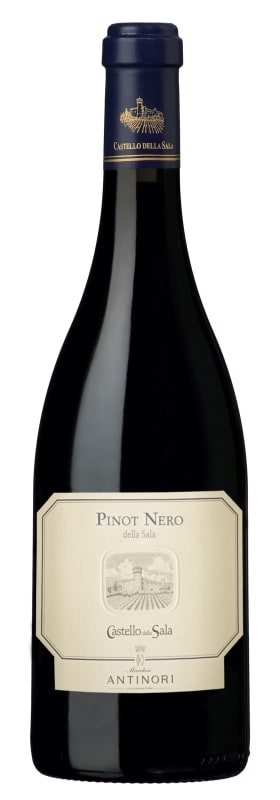


Winemaker Notes
Professional Ratings
-
Vinous
The 2021 Pinot Nero della Sala is dark and intense, with a seductive spice box bouquet that blends crushed blackberries with allspice, cloves, dried violets and blood orange. It’s feminine and graceful on the palate, with cool-toned acidity and silken waves of ripe red and blue fruits that give way to crunchy mineral tones and dark chocolate. The 2021 tapers off long and structured, leaving an air of sweet lavender and tangerine that keeps the taster looking back to the glass for more. Bravo.
-
Decanter
The grapes for this wine at Antinori's outpost in Umbria are grown on calcareous soils at 400 metres above sea level. Vinified in conical steel tanks then matured in barriques for several months before bottling, it has a warm earth and baked cherry aroma with lifted nuances of fresh and grilled herbs and balsam. Creamy and rich yet fresh and vertical, it has a powdery texture with a slightly chocolatey background and ripe red and black cherry and spice emerging on the finish. Class.
-
James Suckling
Aromas of bright cherries, ripe raspberries, cloves and cedar. The palate is medium-bodied with delicate, evenly distributed red fruit and a silky profile that concludes cleanly and seamlessly.
-
Wine Spectator
A refined red, with creamy tannins well-meshed with macerated black cherry, plum skin, woodsy herb, spice and mineral flavors. Fresh and focused, offering good length on the finish. Drink now through 2029.


Thin-skinned, finicky and temperamental, Pinot Noir is also one of the most rewarding grapes to grow and remains a labor of love for some of the greatest vignerons in Burgundy. Fairly adaptable but highly reflective of the environment in which it is grown, Pinot Noir prefers a cool climate and requires low yields to achieve high quality. Outside of France, outstanding examples come from in Oregon, California and throughout specific locations in wine-producing world. Somm Secret—André Tchelistcheff, California’s most influential post-Prohibition winemaker decidedly stayed away from the grape, claiming “God made Cabernet. The Devil made Pinot Noir.”

Centered upon the lush Apennine Range in the center if the Italian peninsula, Umbria is one of the few completely landlocked regions in Italy. It’s star red grape variety, Sagrantino, finds its mecca around the striking, hilltop village of Montefalco. The resulting wine, Sagrantino di Montefalco, is an age-worthy, brawny, brambly red, bursting with jammy, blackberry fruit and earthy, pine forest aromas. By law this classified wine has to be aged over three years before it can be released from the winery and Sagrantino often needs a good 5-10 more years in bottle before it reaches its peak. Incidentally these wines often fall under the radar in the scene of high-end, age-begging, Italian reds, giving them an almost cult-classic appeal. They are undoubtedly worth the wait!
Rosso di Montefalco, on the other had, is composed mainly of Sangiovese and is a more fruit-driven, quaffable wine to enjoy while waiting for the Sagrantinos to mellow out.
Among its green mountains, perched upon a high cliff in the province of Terni, sits the town of Orvieto. Orvieto, the wine, is a blend of at least 60% Trebbiano in combination with Grechetto, with the possible addition of other local white varieties. Orvieto is the center of Umbria’s white wine production—and anchor of the region’s entire wine scene—producing over two thirds of Umbria’s wine. A great Orvieto will have clean aromas and flavors of green apple, melon and citrus, and have a crisp, mineral-dominant finish.